Think of a time you cleaned out your home—maybe a cluttered closet or a garage packed with boxes. How did you feel afterward? Lighter? Freer? Getting rid of junk makes space for what matters.
Peter says the same is true for our spiritual lives. In 1 Peter 2, he calls us to clear our what distracts us from God and embrace a life that reflects His glory—even when it means submitting in ways that challenge our comfort. Holiness isn't just about avoiding sin; it's about craving what nourishes our souls and living in a way that points others to Christ.
Why This Matters
This was mentioned in the first part of this series [you can find the full blog here if you missed it], but Peter is writing to believers scattered across the Roman Empire, suffering under persecution. They were ostracized, imprisoned, and even executed for their faith. His message? Remember who you are.
In chapter 1, Peter reminded them that they are elect exiles—chosen by God yet strangers in the world. Their hope is anchored in eternity, not in present circumstances. Now, in chapter 2, Peter moves from identity to application: What does a holy life look like in a hostile world?

So put away all malice and all deceit and hypocrisy and envy and all slander. 2 Like newborn infants, long for the pure spiritual milk, that by it you may grow up into salvation— 3 if indeed you have tasted that the Lord is good. 4 As you come to him, a living stone rejected by men but in the sight of God chosen and precious, 5 you yourselves like living stones are being built up as a spiritual house, to be a holy priesthood, to offer spiritual sacrifices acceptable to God through Jesus Christ. 6 For it stands in Scripture: “Behold, I am laying in Zion a stone, a cornerstone chosen and precious, and whoever believes in him will not be put to shame.” 7 So the honor is for you who believe, but for those who do not believe, “The stone that the builders rejected has become the cornerstone,” 8 and “A stone of stumbling, and a rock of offense.” They stumble because they disobey the word, as they were destined to do. 9 But you are a chosen race, a royal priesthood, a holy nation, a people for his own possession, that you may proclaim the excellencies of him who called you out of darkness into his marvelous light. 10 Once you were not a people, but now you are God’s people; once you had not received mercy, but now you have received mercy. 11 Beloved, I urge you as sojourners and exiles to abstain from the passions of the flesh, which wage war against your soul. 12 Keep your conduct among the Gentiles honorable, so that when they speak against you as evildoers, they may see your good deeds and glorify God on the day of visitation. - 1 Peter 2: 1-12
Clear Out the Clutter
Peter begins with a list: malice, deceit, hypocrisy, envy, slander. These sins tear at relationships and fracture community. They're rooted in ill will; the opposite of the gospel's call to unity.
Think about this: if your home were filled with trash, you wouldn't just decorate over it. You'd clean it out first. The same principle applies spiritually. Before you can grow, we must remove what poisons our hearts.
Ask yourself:
- What attitudes or habits have I tolerated that need to go?
- How would my relationships change if I rid myself of these things?
Holiness starts with honesty about what doesn't belong.
Crave What Nourishes
Holiness isn't just subtraction—it's addition. Peter says to crave "pure spiritual milk" like newborns. Why? Because we've "tasted that the Lord is good" (v. 3).
Rules alone won't motivate us. Delight in God's will. When we experience His goodness, obedience becomes a joy rather than a burden. This is why Peter roots holiness in identity and experience, not in legalism.
True obedience flows from desire, not duty. We need the Holy Spirit to transform our hearts so that we love what God loves. Without that internal change, holiness becomes hollow.
Remember Who You Are
Peter returns to identity:
- Chosen people
- Royal priesthood
- Holy nation
Notice these are plural. We were made for community. Together, we declare God's praises—the One who called us out of darkness into His light. Our identity fuels our mission: to live in such a way that the world sees Christ in us.
This means holiness isn't just personal, it's communal. The way we treat one another either validates or undermines the gospel we proclaim.
Live to Display His Glory
Peter ends this section with a challenge: live so honorably that even when accused falsely, unbelievers see your good deeds and glorify God (v. 12).
Our lives should look different—not arrogantly, but humbly, reflecting the grace we've received. In a culture that prizes self-promotion, humility and holiness stand out as a powerful witness.

13 Be subject for the Lord’s sake to every human institution, whether it be to the emperor as supreme, 14 or to governors as sent by him to punish those who do evil and to praise those who do good. 15 For this is the will of God, that by doing good you should put to silence the ignorance of foolish people. 16 Live as people who are free, not using your freedom as a cover-up for evil, but living as servants of God. 17 Honor everyone. Love the brotherhood. Fear God. Honor the emperor. - 1 Peter 2: 13-17
The Call to Submit
Submission isn't easy. Everything in us resists it. Yet Peter says our obedience—even to imperfect authorities—displays the gospel. Why? Because it mirrors Christ's example.
Peter writes, "Be subject [submit] for the Lord's sake to every human institution" (v. 13). Notice the motivation: for the Lord's sake. We don't submit because governments or bosses are flawless. We submit because God is sovereign. Our posture toward authority reveals whether we trust Him more than our own comfort.
This was radical advice in Peter's day. The Roman government was corrupt and hostile toward Christians. Believers were falsely accused of insurrection, atheism, and immorality. Yet Peter calls them to live honorably so that their good deeds silence accusations (v. 15).
Submission isn't blind obedience. Scripture never condones sin or injustice. But it does call us to prioritize God's will above our sinful desire to do things on our own terms.
Submission in Hard Places: Slaves and Masters
18 Servants, be subject to your masters with all respect, not only to the good and gentle but also to the unjust. 19 For this is a gracious thing, when, mindful of God, one endures sorrows while suffering unjustly. 20 For what credit is it if, when you sin and are beaten for it, you endure? But if when you do good and suffer for it you endure, this is a gracious thing in the sight of God. 21 For to this you have been called, because Christ also suffered for you, leaving you an example, so that you might follow in his steps. 22 He committed no sin, neither was deceit found in his mouth. 23 When he was reviled, he did not revile in return; when he suffered, he did not threaten, but continued entrusting himself to him who judges justly. 24 He himself bore our sins in his body on the tree, that we might die to sin and live to righteousness. By his wounds you have been healed. 25 For you were straying like sheep, but have now returned to the Shepherd and Overseer of your souls. - 1 Peter 2: 18-25
Peter then addresses one of the most difficult contexts—slavery (v.18–25). These verses can feel uncomfortable, but we need to understand them in their historical setting.
- Biblical slavery differed from modern slavery–it wasn't race-based or fueled by kidnapping, but it was still harsh and oppressive.
- Peter's goal wasn't to endorse slavery but to transform hearts within broken systems. He focuses on personal obedience and Christlike character rather than social revolution.
Why? Because lasting change begins with the heart. Laws can restrain evil, but only Christ can renew the human soul.
Peter calls slaves to submit even when treated unjustly—not because injustice is good, but because their endurance reflects Christ’s example. Jesus suffered without retaliation, entrusting Himself to God (v.23). When believers respond with humility instead of hostility, they display the gospel’s power.
Modern Application
Most of us aren’t slaves, but we do serve under authority—employers, managers, government leaders. The principle still applies:
- Honor those in leadership where possible.
- Resist sinful desires like pride, rebellion, or bitterness.
- Prioritize God's will above personal comfort.
When we respond with grace in difficult workplaces or under flawed leadership, we echo Christ’s humility. Our obedience becomes a testimony that speaks louder than words.
Why This Matters
Peter reminds us: "For to this you have been called, because Christ also suffered for you, leaving you an example, so that you might follow in his steps" (v. 21).
Submission isn’t weakness—it’s courage. It means trusting God when life feels unfair. It means choosing faithfulness over retaliation. And it means believing that God can use our obedience to draw others to Himself.
Living it out
Peter’s message in chapter 2 is clear: holiness and submission are not optional—they’re essential. They flow from our identity as God’s people and serve as a witness to the world.
Here’s how to live this out:
- Pray: Ask God to reveal areas that need cleaning out and soften your heart toward obedience.
- Speak: Share what God has done in your life with someone this week.
- Honor: Find one practical way to honor a leader in your workplace or community—even if it’s hard.
- Accountability: Invite 2-3 trusted believers to help you pursue holiness and humility.
When we clear out spiritual clutter and choose submission over self-will, we declare the praises of the One who called us out of darkness into His marvelous light. That’s how exiles live with hope.
Through Christ, we’ve been called into the greatest story ever told—God’s redemptive work. Holiness and submission aren’t easy, but they’re powerful. They declare to the world that our hope isn’t in this life, but in the One who gave His life for us.
Cornerstone Impact Update
Start the year with a fresh orientation for your work life. In January, we jumped back into our Every Good Endeavor series. This blog explored:
- A different set of virtues
- A different view of humanity
- A different source of guidance
- A different audience
Discover how the gospel gives us a compass–not just rules–for navigating decisions, pressures, and ambitions.
 Courtney Dent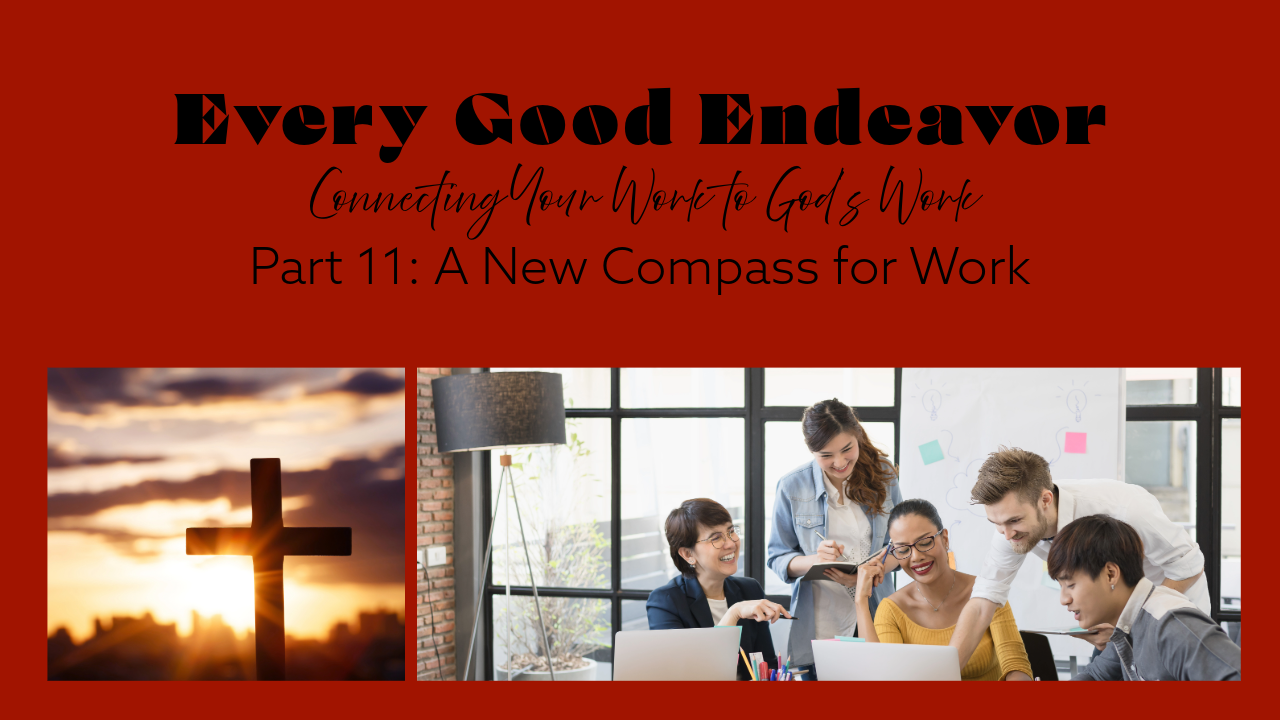
Inspire
Avoid, embrace, and engage are the three mandates for Biblically Responsible Investing. Our BRI partner, Inspire Investing goes above and beyond with engagement. They recently released their 2025 Corporate Engagement Report which details how their engagement efforts influenced policy decisions across some of the world's largest corporations.
During the last engagement season, Inspire engaged more than 1,100 companies across technology, retail, and financial services. Through their engagement, they were able to see tangible results. To learn more, you can read their full report below:
 Tim Schwarzenberger