If we're honest, most of us don't enjoy waiting.
As children, we counted down the days until our birthdays, Christmas morning, or the release of a movie we desperately wanted to see. As adults, the things we're waiting for may look different, but the struggle remains the same. We wait for healing. We wait for financial relief. We wait for relationships to improve. We wait for prayers to be answered. We wait for God to move.
In our last Cornerstone blog, we explored the idea that God's timing is often different from our timing. We were reminded that what feels like a delay may actually be God working behind the scenes in ways we cannot yet see. In this month's passage we look at this truth even further. Peter reminds us that God's timing isn't simply different than ours. God's perspective on time itself is entirely different.
In a world filled with suffering, injustice, and uncertainty, it can be tempting to wonder whether God has forgotten His promises. Yet 2 Peter 3:1-10 reminds believers that God's apparent delay is not evidence of His absence. Instead, it reveals His patience, mercy, and love.
This is now the second letter that I am writing to you, beloved. In both of them I am stirring up your sincere mind by way of reminder, 2 that you should remember the predictions of the holy prophets and the commandment of the Lord and Savior through your apostles, 3 knowing this first of all, that scoffers will come in the last days with scoffing, following their own sinful desires. 4 They will say, “Where is the promise of his coming? For ever since the fathers fell asleep, all things are continuing as they were from the beginning of creation.” 5 For they deliberately overlook this fact, that the heavens existed long ago, and the earth was formed out of water and through water by the word of God, 6 and that by means of these the world that then existed was deluged with water and perished. 7 But by the same word the heavens and earth that now exist are stored up for fire, being kept until the day of judgment and destruction of the ungodly.
8 But do not overlook this one fact, beloved, that with the Lord one day is as a thousand years, and a thousand years as one day. 9 The Lord is not slow to fulfill his promise as some count slowness, but is patient toward you, not wishing that any should perish, but that all should reach repentance. 10 But the day of the Lord will come like a thief, and then the heavens will pass away with a roar, and the heavenly bodies will be burned up and dissolved, and the earth and the works that are done on it will be exposed.
When Waiting Makes Us Doubt
Peter wrote this letter to encourage Christians who were facing opposition and growing weary. In the opening verses, he addresses people he calls "dear friends." That phrase may seem simple, but it reflects something powerful: the unique bond shared by those who follow Christ.
Believers often experience an immediate connection with one another because of what Jesus has done in their lives. Even when people come from different backgrounds, cultures, or experiences, there is a shared hope that brings them together.
Peter wanted these believers to maintain what he called a "wholesome" way of thinking. In other words, he wanted their minds aligned with God's truth rather than the voices surrounding them. That instruction was especially important because false teachers had begun mocking the promise of Christ's return.
Their argument sounded logical:
"Everything has continued the same way for generations. Jesus hasn't come back yet. Why should anyone believe He ever will?"
The scoffers looked at God's patience and mistakenly interpreted it as inactivity. Honestly, we can sometimes fall into the same pattern. When prayers go unanswered, when injustice continues, or when suffering seems to linger without explanation, we may find ourselves asking similar questions. We may never voice them out loud, but discouragement can quietly convince us that nothing will ever change.

Peter reminds us that when circumstances tempt us toward doubt, we must anchor ourselves in God's truth rather than our emotions.
God's Delays Are Not God's Absence
To counter the scoffers' claims, Peter points back to history. He reminds his readers of the flood in Genesis. While many people question why God doesn't act against evil and injustice, Peter points out that God has already demonstrated His willingness and ability to judge sin.
The flood serves as evidence that God is neither blind to evil nor indifferent toward it. This truth is important because many Christians wrestle with the same question:
"If God is good, why does He allow so much suffering and injustice?"

While Scripture doesn’t provide a simple answer to every situation, it does assure us that evil will not have the final word. The brokenness we see around us is a reminder that we live in a world affected by sin and under the influence of the evil one (1 John 5:19). Yet God's apparent delay should not be mistaken for His absence. He sees every injustice, and in His perfect timing, His justice will ultimately prevail.
For some, the thought of God's judgment creates fear. For others, it creates relief because it means that every wrong will one day be made right. The reality is that God's judgment cannot be separated from His holiness. A perfectly just God cannot ignore sin forever. One day, every act of evil, injustice, and rebellion will be addressed.
That promise gives believers hope, especially when the brokenness of the world feels overwhelming.
God's Perspective Is Different Than Ours
One of the most well-known verses in this passage says:
"But do not overlook this one fact, beloved, that with the Lord one day is as a thousand years, and a thousand years as one day." - 2 Peter 3:8
Peter isn't giving us a formula for understanding biblical timelines. Instead, he's reminding us that God exists outside of time in a way we simply cannot comprehend. We measure life in minutes, days, months, and years. God sees the full picture.
What feels painfully slow to us may not be slow at all from God's perspective. This truth connects directly to what we discussed in our previous blog on patience. Often, we assume God's timing should make sense to us. We want immediate answers, quick solutions, and visible progress. Yet throughout Scripture, God frequently works in ways that seem slower than we would choose.
The difference is that God isn't reacting to circumstances as they unfold. He already knows the beginning, the middle, and the end. His timing is never late. His timing is never rushed. His timing is always purposeful.
Why Hasn't God Acted Yet?
Peter gives an answer that is both surprising and deeply encouraging.
"The Lord is not slow to fulfill his promise as some count slowness, but is patient toward you, not wishing that any should perish, but that all should reach repentance." - 2 Peter 3:9
From a human perspective, God's delay can feel frustrating. From God's perspective, that delay is mercy.
The reason Christ has not yet returned isn't because God has forgotten His promise. It's because He desires more people to repent and come to Him. Think about the incredible kindness contained in that truth.
Every additional day is another opportunity for someone to hear the Gospel. Another opportunity for a prodigal child to return. Another opportunity for a friend, coworker, neighbor, or family member to place their faith in Christ.
What we often view as delay, God views as compassion.
That reality challenges us to adopt His perspective. Rather than becoming bitter over God's patience, we can celebrate it. After all, if God had chosen to execute final judgment earlier, where would any of us be?
God's patience is one of the greatest reasons we are able to experience His grace today.
Living While We Wait
Peter closes this section by reminding believers that Christ's return will come unexpectedly. We do not know the day. We do not know the hour. What we do know is that God will fulfill every promise He has made.
That means our responsibility is not to predict the future but to live faithfully in the present.
So how do we do that?
- Adjust Your Perspective on God's Timing
When God's answers seem delayed, remember that His perspective is greater than yours. What you see as waiting may be God accomplishing something you cannot yet understand.
- See Suffering Differently
While suffering is never easy, God's promises remind us that injustice and evil will not last forever. One day, every wrong will be made right.
- Live with Urgency About the Gospel
God's patience creates opportunities for repentance. As followers of Christ, we should share His desire to see others come to know Him.
- Live with Confident Hope
The world often feels uncertain, but God's promises are not. We can trust that He will accomplish exactly what He has said He will do.
It's easy to become impatient while waiting for God to act. We want answers now. We want justice now. We want relief now.
Yet 2 Peter 3:1-10 reminds us that God's apparent delay is not weakness, forgetfulness, or indifference. It is patience.
The same God who keeps every promise is also the God who lovingly gives people time to repent. His mercy does not negate His justice, and His patience does not cancel His plans. One day, Christ will return. Evil will be defeated. Every wrong will be made right.
Until then, we wait with confidence, truthing that God's timing is perfect and His promises are sure. What looks like delay today may actually be evidence of God's mercy at work.
Cornerstone Impact Update
Most of us can handle being busy. What we struggle with is waiting.
Waiting for answers, opportunities, healing, direction, or prayers to be answered.
Last month, I shared a personal story about a year-long home project and reflected on how God often uses seasons of waiting to teach us trust, perseverance, and dependence on Him.
 Courtney Dent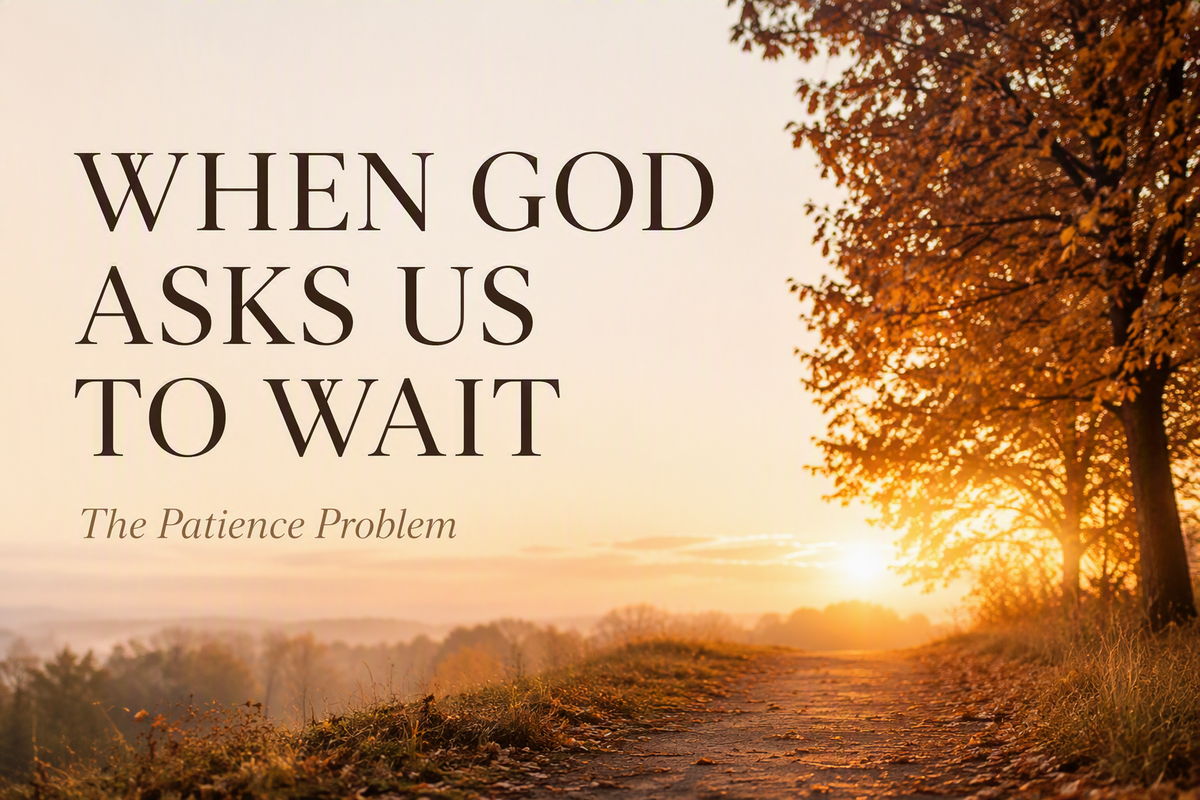
Inspire
How should people of faith be treated in today's workplace? Inspire Investing explores efforts to encourage equal treatment for religious employees and highlights examples of companies taking steps to support faith-based employee groups alongside other workplace communities.
 Tim Schwarzenberger, CFA
As medical, legal, and cultural perspectives continue to shift, Christians are left asking important questions about identity, the body, and compassionate care. This article explores these issues through a biblical lens while encouraging believers to approach the conversation with both conviction and grace.
 Chris Hubbard
As AI becomes increasingly woven into the economy, Christians are challenged to think carefully about both its benefits and its risks. This article examines how AI is impacting investment portfolios and how believers can evaluate these developments through a biblical lens of wisdom and stewardship.
 Chris Hubbard