Waiting is part of life.
We wait for the weekend. We look forward to a long-awaited trip or seeing friends we haven't seen in a while. We anticipate holidays, celebrations, milestones, and new seasons.
Having something to look forward to can change the way we experience the ordinary days leading up to it. But there are different ways we can wait. We can prepare diligently so we're ready when the thing we've been hoping for finally arrives. Or we can simply sit on our hands and let the time pass.
As we come to the end of our journey through 1 and 2 Peter, Peter leaves us with a similar question: How should Christians spend our time while we wait for Jesus to return?
Peter is nearing the end of his own life as he writes these words. His final instructions come from someone who understands that his time is running short, and he wants the church to understand how to live faithfully with the end in mind. His answer is not to obsess over when the end will come. It's to allow the certainty of what is coming to shape how we live right now.
Living with the end in mind
11 Since all these things are thus to be dissolved, what sort of people ought you to be in lives of holiness and godliness, 12 waiting for and hastening the coming of the day of God, because of which the heavens will be set on fire and dissolved, and the heavenly bodies will melt as they burn! 13 But according to his promise we are waiting for new heavens and a new earth in which righteousness dwells. 14 Therefore, beloved, since you are waiting for these, be diligent to be found by him without spot or blemish, and at peace.
In 2 Peter 3:11-14, Peter reminds his readers that the world as we know it will not last forever. Then he asks a simple but important question: What kind of people ought you to be? His answer is that we should live holy and godly lives.
For Christians, thinking about the end shouldn't primarily produce fear. Our security is not found in whether we have been good enough when Jesus returns. It is found in Jesus himself. Because of that security, the promise of his return can change the way we live today.
Peter says we are looking forward to "a new heaven and a new earth, where righteousness dwells." Scripture doesn't give us every detail we might want to know about his renewed creation, but it tells us enough to know that it will perfectly reflect the goodness and character of God. That promise should do two things in us: fuel our hope and motivate our holiness.
We aren't simply waiting for something better. We are allowing the promise of what is coming to transform the way we live while we wait. Peter tells us, "be diligent to be found by him without spot or blemish, and at peace."

That phrase, "be diligent" should sound familiar. Earlier in 2 Peter, he used the same language when encouraging Christians to grow in goodness, knowledge, self-control, perseverance, godliness, mutual affection, and love. Throughout this letter, Peter has shown us that following Jesus requires intentionality.
Our faith isn't supposed to occupy one carefully separated part of our lives. Following Jesus should shape our careers, relationships, entertainment choices, schedules, thoughts, priorities, and decisions. We don't become more like Jesus accidentally. We become more like him as we intentionally spend time with him, listen to his Word, depend on him, and allow him to transform every part of our lives.
Peter also reminds us that every day that passes without Jesus returning is not evidence that God has forgotten his promises. It is evidence of his patience. Peter writes that we should "count the patience of our Lord as salvation."
While we should long for Jesus to return and make all things new, we should also recognize the mercy in his waiting. More time means more opportunity for people to turn to him. That changes the way we view waiting. We aren't simply counting down the days until something better arrives. There is meaningful work to do now. There are people to love, truth to share, relationships to invest in, and opportunities to become more like Jesus.
The waiting itself is not wasted.
Grow in Grace and Knowledge
15 And count the patience of our Lord as salvation, just as our beloved brother Paul also wrote to you according to the wisdom given him, 16 as he does in all his letters when he speaks in them of these matters. There are some things in them that are hard to understand, which the ignorant and unstable twist to their own destruction, as they do the other Scriptures. 17 You therefore, beloved, knowing this beforehand, take care that you are not carried away with the error of lawless people and lose your own stability. 18 But grow in the grace and knowledge of our Lord and Savior Jesus Christ. To him be the glory both now and to the day of eternity. Amen. - 2 Peter 3:15-18
Peter uses his final words to return to one of the major warnings of this letter: false teaching. He even acknowledges something most of us can probably relate to. Some of Paul's writings are "hard to understand."
Rather than pretending Scripture is always easy to interpret, Peter acknowledges the difficulty. But he also warns that some people take advantage of that difficulty and distort Scripture. That is why he tells believers to "take care that you are not carried away." In other translations it says to "be on your guard." Peter understands that Christians can be led away from the truth if we aren't paying attention. His warning is just as important for us today.
We encounter messages about God, truth, morality, success, and identity constantly. Some sound almost right. Others use biblical language while slowly pulling us away from what Scripture actually teaches. Peter doesn't tell us to live suspiciously or fearfully, but he does tell us to remain alert.
Then he gives us one of the best defenses against being led astray:
"But grow in the grace and knowledge of our Lord and Savior Jesus Christ." (v. 18)
Growing in our knowledge of Jesus is about more than collecting facts about him. Think about any close relationship. The more time you spend with someone, the more deeply you know them. You learn what brings them joy, what they care about, and what matters to them. Shared experiences deepen affection. Our relationship with Jesus should grow in a similar way.
Time with him matters. Reading Scripture matters. Prayer matters. Worship matters. Learning to depend on him throughout ordinary moments matters. The closer we grow to Jesus, the more familiar his character becomes. And the better we know him, the easier it becomes to recognize teaching or ideas that don't reflect who he is.
Peter's solution to false teaching isn't simply know more. It's know Jesus more.
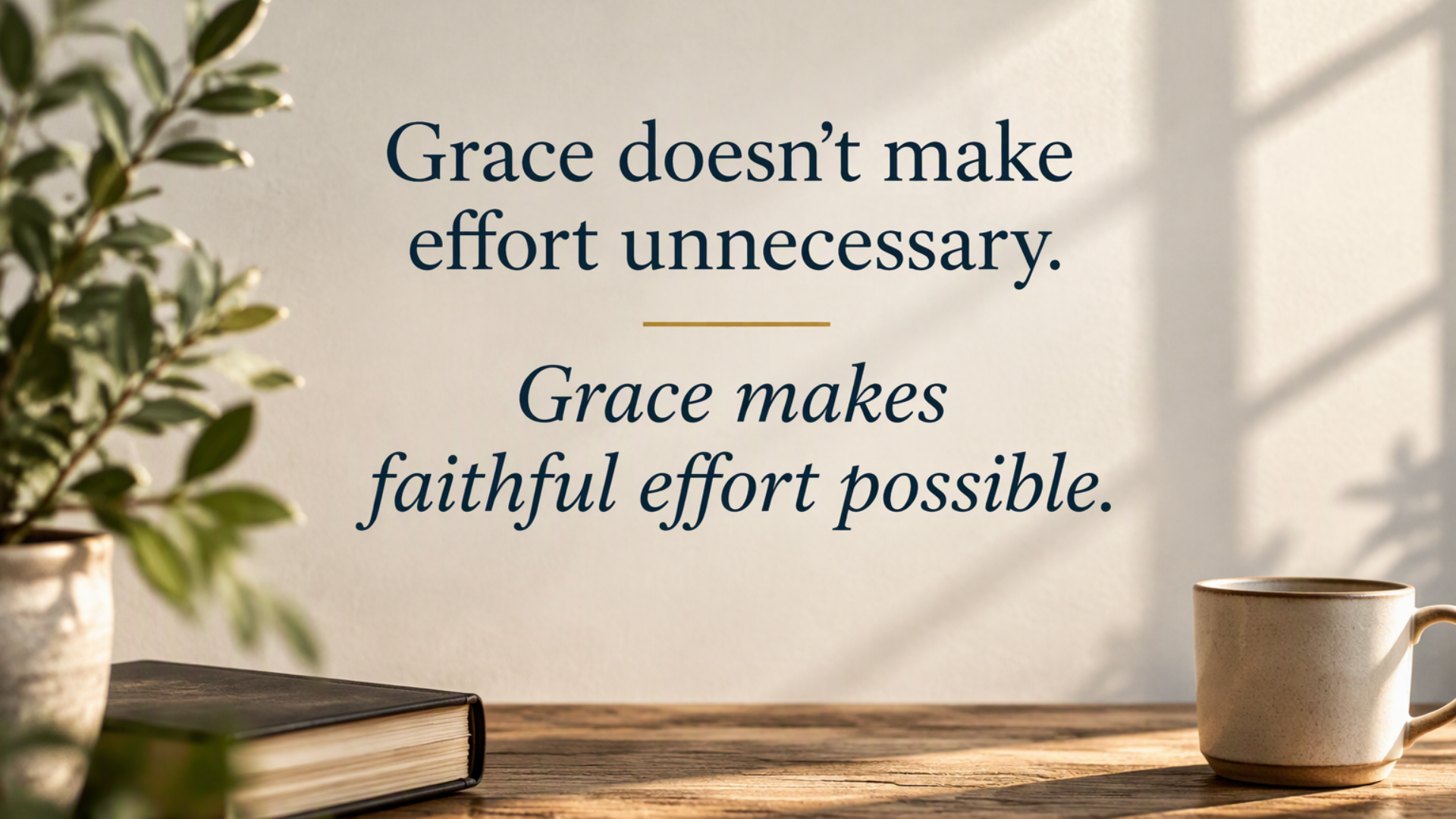
One theme has appeared again and again throughout Peter's letters: the Christian life is both a gift and a responsibility.
God has already given us "all things that pertain to life and godliness" (2 Peter 1:3). And yet Peter tells us to "make every effort" to grow (2 Peter 1:5). Then, as he closes his letter, he says it again in a slightly different way: "Be diligent" to live faithfully while waiting for Jesus (2 Peter 3:14).
Those ideas aren't contradictory. We are completely dependent on God, yet we are called to faithfully steward what he has given us. We don't earn our standing with God through our effort. Our security is found in Jesus. But because of what we have received through him, we have a responsibility to use our time wisely and continually grow to become more like him.
Considering the end of our lives or the end of all things can provoke a lot of emotions: fear, anxiety, curiosity, and uncertainty. But Peter ends somewhere different.
He ends in worship:
"To him be the glory both now and to the day of eternity. Amen."
Peter knows his own time is limited. He knows Jesus will return. And his response is to spend whatever time he has left glorifying him. That is a fitting place for us to end this series too.
Throughout 1 and 2 Peter, we've been reminded that following Jesus doesn't mean life will always be easy. We've been challenged to remain faithful through suffering, reject false teaching, trust God's timing, pursue holiness, and keep our eyes fixed on the hope ahead. Now Peter leaves us with a final challenge: Don't waste the waiting.
God has given us everything we need to live godly lives until Jesus returns. We don't know how much time we have, and we don't know exactly when he will return. But we know what we're called to do with the time we've been given.
Know Jesus. Grow in grace. Guard the truth. Love others. Live with eternity in mind. And worship Jesus through it all.
The question isn't simply what we are waiting for. It's how we will spend our waiting.
Cornerstone Impact Update
We are surrounded by voices. Notifications. Headlines. Social Media. Opinions. Advice.
With so much competing for our attention, how do we learn to recognize what is true?
In the last Cornerstone blog, we looked at what Scripture teaches us about discernment, making space for God, and becoming more familiar with His truth in a noisy world.
The world will always be noisy, but God's truth remains unchanged.
This blog ties in nicely to this series. Read the blog here:
 Courtney Dent

Inspire
Here are some of the recent articles from one of our BRI partners, Inspire Investing.
A values-based look at how sexually explicit content is moving from the margins of the internet toward the portfolios of ordinary investors, and what that should mean for Christian stewards.
 Chris Hubbard

When a franchise is built on glorifying car theft, gang violence, drug trafficking, and sexual exploitation, faith-based investors need to look harder.
 Chris Hubbard

Inspire filed or prepared 34 shareholder resolutions, resolving 68 percent of them. Policy changes seen support the protection of life, religious liberty, and fair treatment across corporate America.
 Tim Schwarzenberger, CFA
Eventide
The headlines are changing. The markets are moving. But the best investing principles hold steady. In a recent Portfolio Manager Spotlight, there were six investing truths shared:


Predatory lending and skyrocketing interest rates have made headlines and raised real questions about whether microfinance can still deliver on its promise.
Eventide's recent article weighs real stories of harm against the data on microfinance's transformative impact, and shows how global organizations are working to get it right.