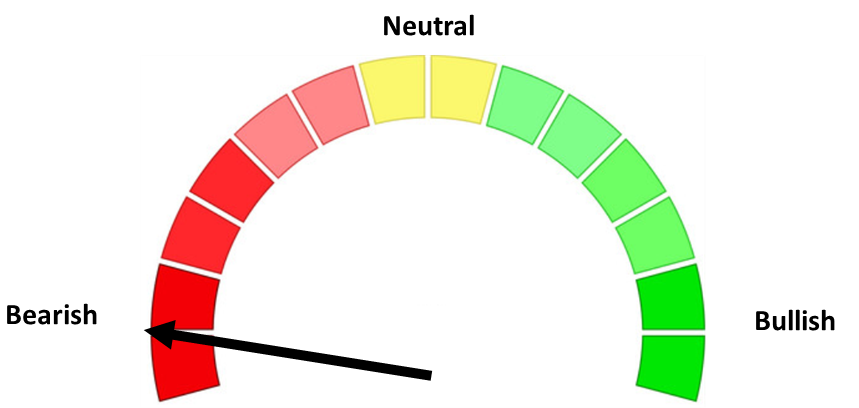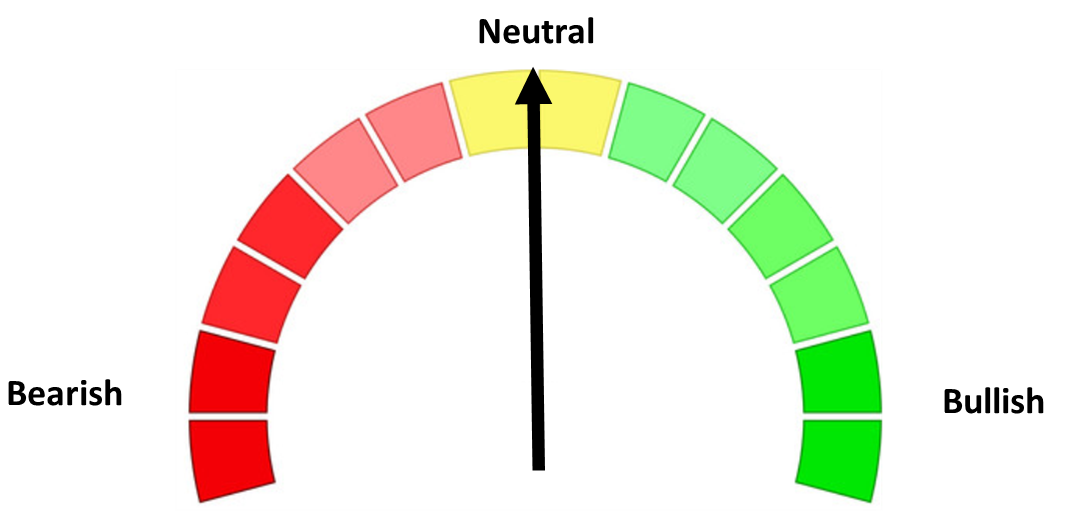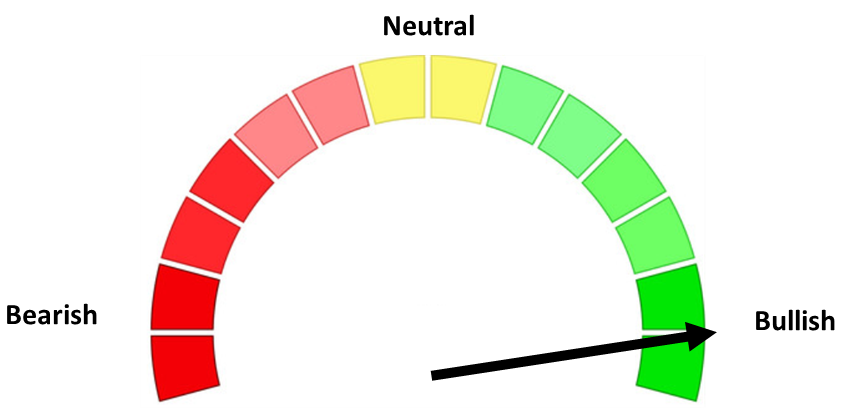
On Monday morning I had to add a BREAKING NEWS note after Nvidia's board brought Jensen Huang back as CEO. I said we'd be watching how the market reacted this week. We didn't have to wait long – Nvidia had one of the best days in its history, the S&P 500 had its best day since April 2025.......and on that same day one of our trend systems sold. Since those two things will probably come up around a lot of Thanksgiving tables (along with the GTA 6 discussion with younger friends and family members), I wanted to get a short post out before the holiday.
Here's the video version of the blog. Again, if you prefer the video format, please like, comment, and subscribe to the YouTube channel to signal to us you want more video1
Here are a few thoughts I had since Monday morning.....
1.) Mr. Huang's return changed the mood, but only half of the risks
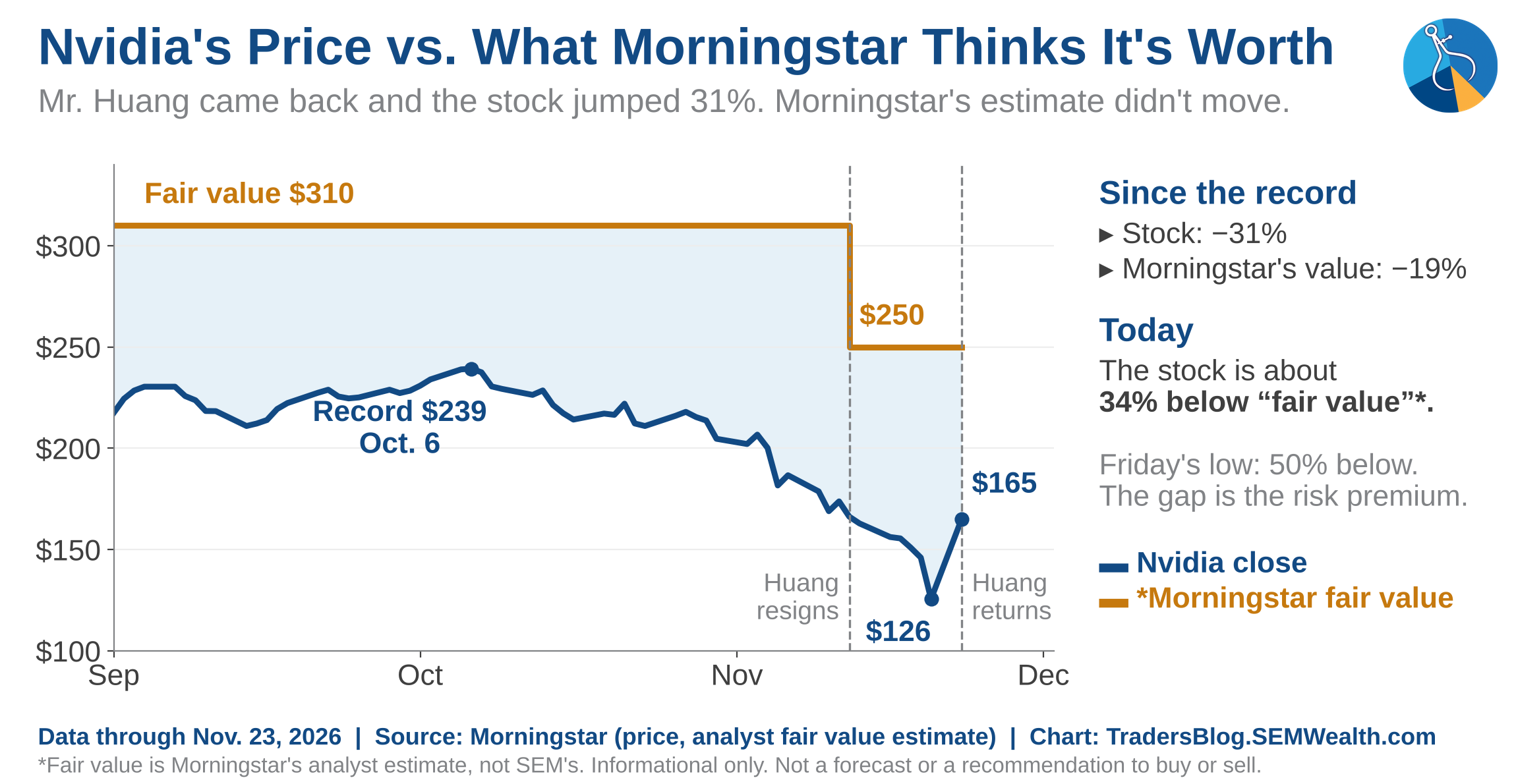
On Monday I said Nvidia's business didn't change when Mr. Huang left. Obviously now that he's back the mood is much better. Monday was about as clear a real-time test of that as you'll get. Nvidia closed at $165.05, up 31% for the day (its third-best day on record and nearly $1 trillion in market cap added!), which took it right back to where it closed the day he resigned. That one stock provided more than a third of the S&P 500's 4.7% gain, and the index finished about 7% below its October record, out of "correction" territory after just one day. The Nasdaq 100 index (QQQ) rose about 7% Monday. Nvidia was approximately 1/4 of that gain.
The one thing that didn't move was Morningstar's value for the company. Their analysts kept their $250 "fair value" on Monday, saying his return probably lowers the risk to Nvidia's product road map, but that other risks still remain. Even after its best day in decades, Nvidia is still about 34% below Morningstar's "fair value," compared to 50% below at Friday's low.
On Monday I listed 4 risks that emerged for Nvidia. Here is where they stand with Mr. Huang's return:
- Regulatory: the SEC is still looking into Nvidia's accounting and disclosures, and Nvidia's own "independent" investigation of Mr. Huang continues. The board also added a new National Security and Export Control Committee. (Still open.)
- Geopolitical: the new export license rules for chips going to Southeast Asia are still in place. The board said it received input from senior levels of the U.S. government and is confident his return poses no national security risk, but that eases the concern about the man, not the rules. (Rules still in force.)
- Competitive: Nvidia's biggest customers are still building their own chips, but the worry that more of them would "diversify" without Mr. Huang running the company should fade. (Eased.)
- Execution (confidence): I haven't seen any report that the $500 billion financing pledge has funded a deal yet, and the $118 billion of guarantees didn't change. What did change is the tone – Fortune reported that AI startups were worried Nvidia's money would dry up under the interim CEO, and his return calmed those fears. (Tone eased, numbers unchanged.)
On the regulatory front, the SEC also isn't as independent from the White House as it used to be, so how that investigation ends may depend as much on Washington as on the accounting. On the other side, reports are that members of the administration were divided on this action (Treasury Secretary Bessent wanted an outside CEO and Secretary of State Rubio expressed security concerns.)
Lawmakers from both parties criticized the decision on Monday, from House Democratic leader Hakeem Jeffries, who promised a congressional investigation, to Republican Senators Pete Ricketts and John Curtis, and Mr. Huang is scheduled to testify before the Senate Banking Committee on December 3rd.
Unfortunately, this is more political than I think most of us would like, but we can't change that, which is why we always say, "do not let your political opinions influence your investment decisions."
Two of the four risks were about Mr. Huang being gone, and those eased. The other two are about Washington and China, and Monday didn't change either of them.
Of course, one great day doesn't mean the selling is over. Nomura's Charlie McElligott called Monday a "mechanical bounce" driven by short covering and options hedges being unwound, and by Tuesday mid-day Nvidia and the Nasdaq were already giving some of it back. The Fed is also still expected to raise rates on December 9th, and nothing about Monday changes that.
This is not investment advice or a recommendation on Nvidia or any security mentioned.
2.) Why one of our trend systems sold on the best day in 19 months
If you checked your account holdings or transactions this morning, you may be asking – "did you really sell on the best day since April 2025?"
Yes, we did, and here's why that's exactly how the system is supposed to work.
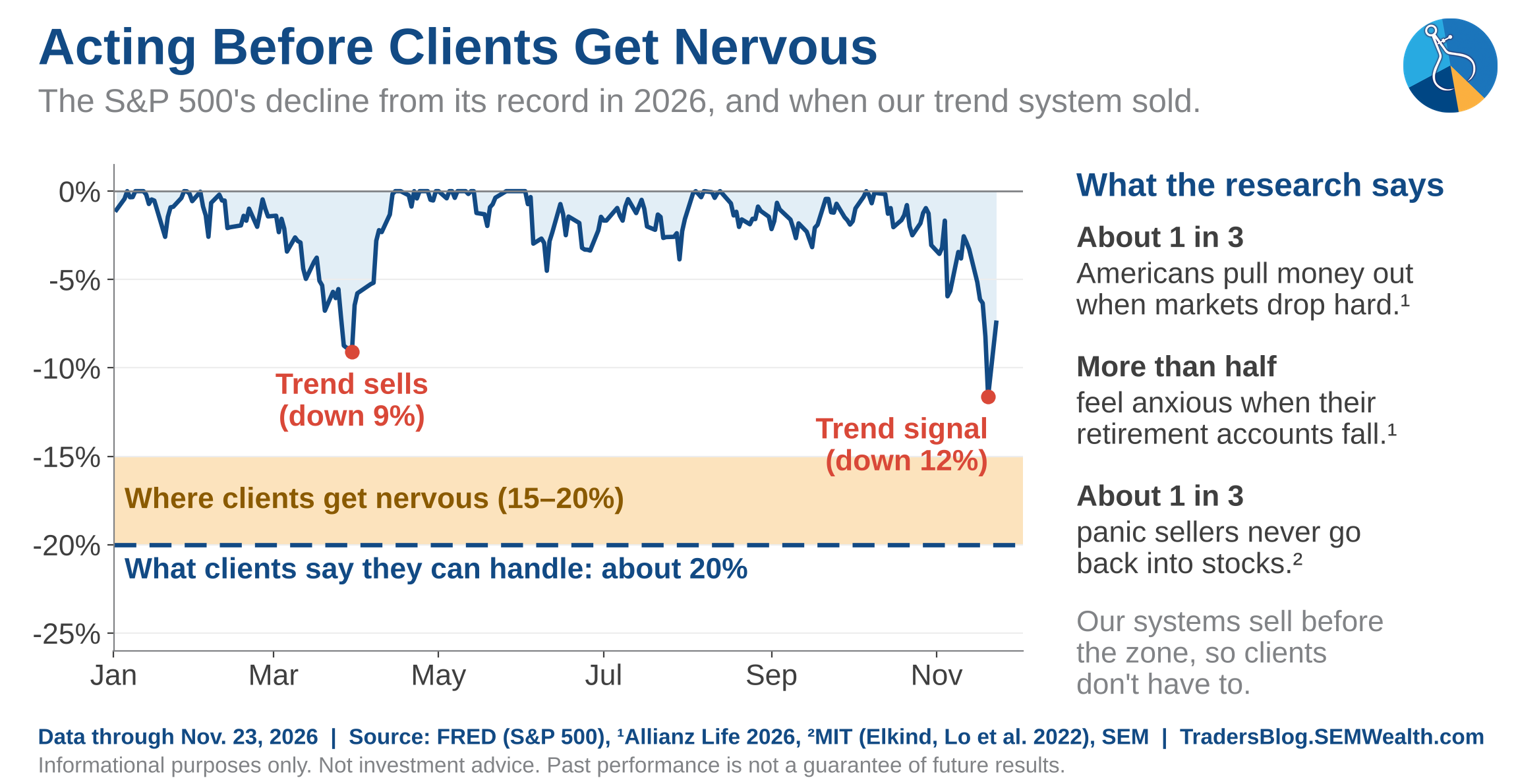
What happened: Friday's close (the lowest close of this decline, about 12% below the October record) triggered a sell signal in the trend system inside AmeriGuard (Balanced, Moderate and Growth) and Cornerstone (Balanced and Growth). The rule trades at the NEXT close, no matter what that day does, so we sold Monday at the close, which happened to be about 5% higher than Friday. Growth went from 100% to 85% in stocks, Moderate from 90% to 70% and Balanced from 70% to 50%, with the proceeds going to cash. The second system in these models, our Momentum System, is still invested, so the overlay is only half out. AmeriGuard Max and Cornerstone Max don't use either system and didn't change.
Why we have these systems in the first place: Wall Street preaches two mantras that contradict each other – always buy and hold, and buy the dip. Our question has always been, if I'm always invested, what money do I use to buy the dip? The purpose of these two overlays is to have cash on the sidelines to buy the dip while keeping the core of the model invested.
The other reason is human nature. My 28+ years of experience says clients start getting nervous somewhere around a 15–20% loss. This week we pulled the stated risk tolerance from the suitability questionnaires on 2,641 of our active accounts, and more than half of our clients say the most they can handle is a 20% loss or less (the typical answer is about 18%).
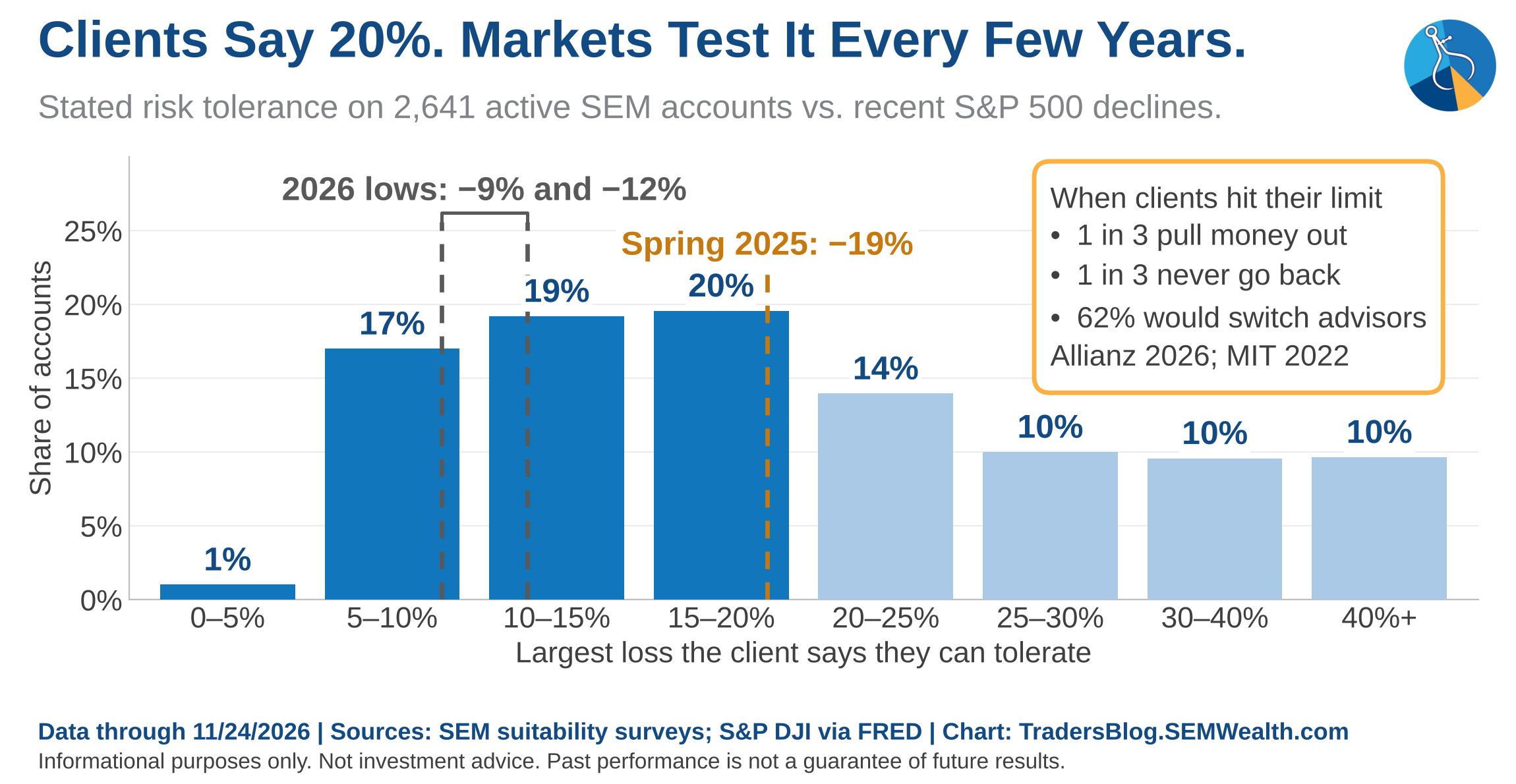
When people get nervous, our brains tend to react emotionally, and the research backs that up. In a survey earlier this year, about 1 in 3 Americans said they typically pull money out of their investments during a big market drop. An MIT study of more than 650,000 brokerage accounts found panic selling bunches up during sharp declines, and about a third of those panic sellers never went back into stocks. The trend and momentum systems are designed to act BEFORE clients reach that point, so they don't feel like they have to act on their own.
What the record shows: We run two systems because each one is wrong sometimes, and they tend to be wrong at different times. Since 2000, both systems have been in stocks about 70% of the time, one has been out about 15% of the time and both have been out about 15% of the time.
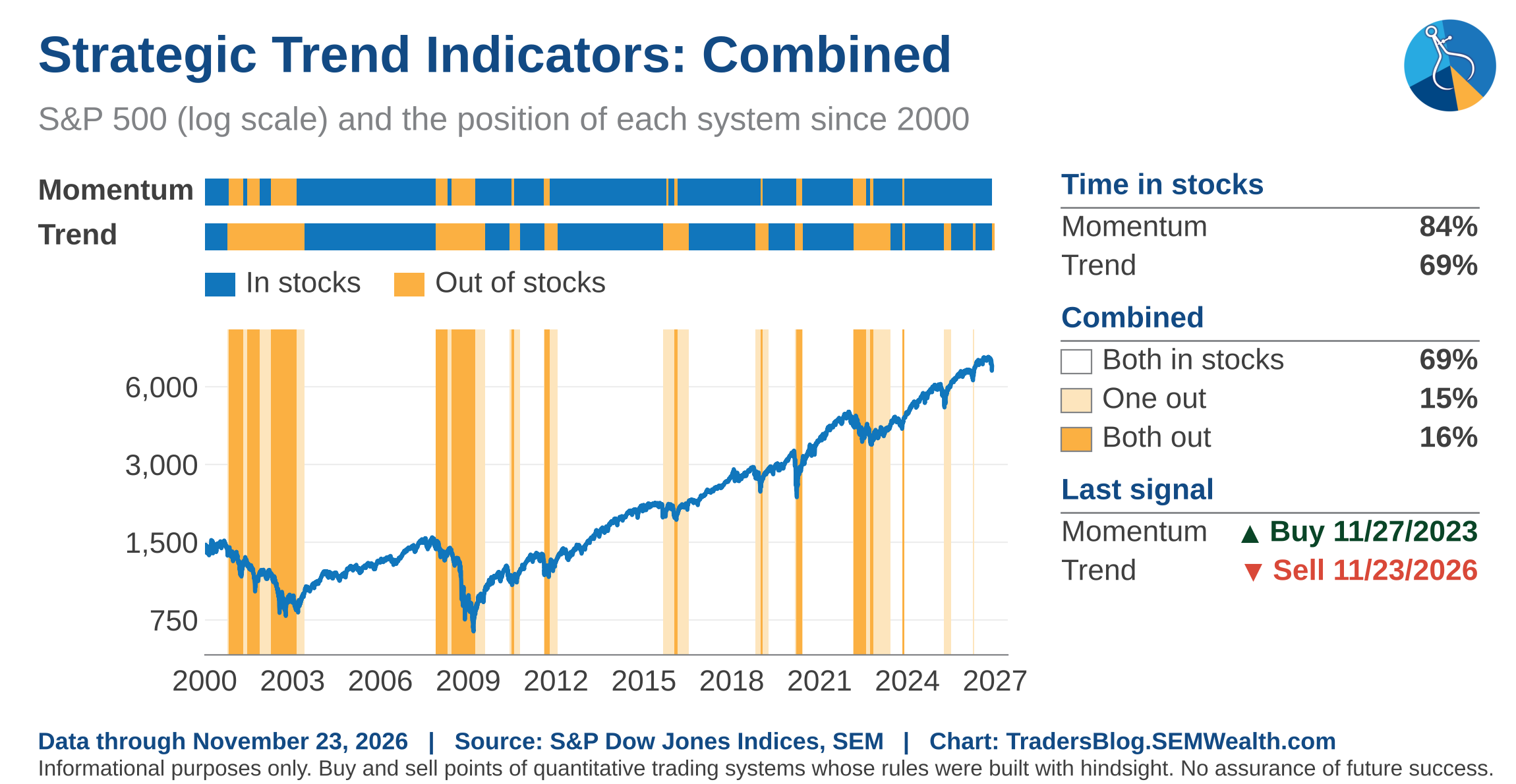
In the four bear markets since 2000 (2000-02, 2007-09, 2020 and 2022), the trend system's rule avoided roughly 90%, 90%, 60% and 60% of the S&P 500's loss on the money it controls. Going back to 1950, about 4 in 10 corrections turned into bear markets (11 of 26), and the trend system sold in all 11. Each system has one bear market where it missed (the trend system in the one-day 1987 crash and the Momentum System, which sold late in 2020), but holding half in each still avoided at least 40% of the loss in every bear market since 1980. As my partner Rick has always said when making decisions, "when in doubt, do half," and that's exactly where these portfolios are today.
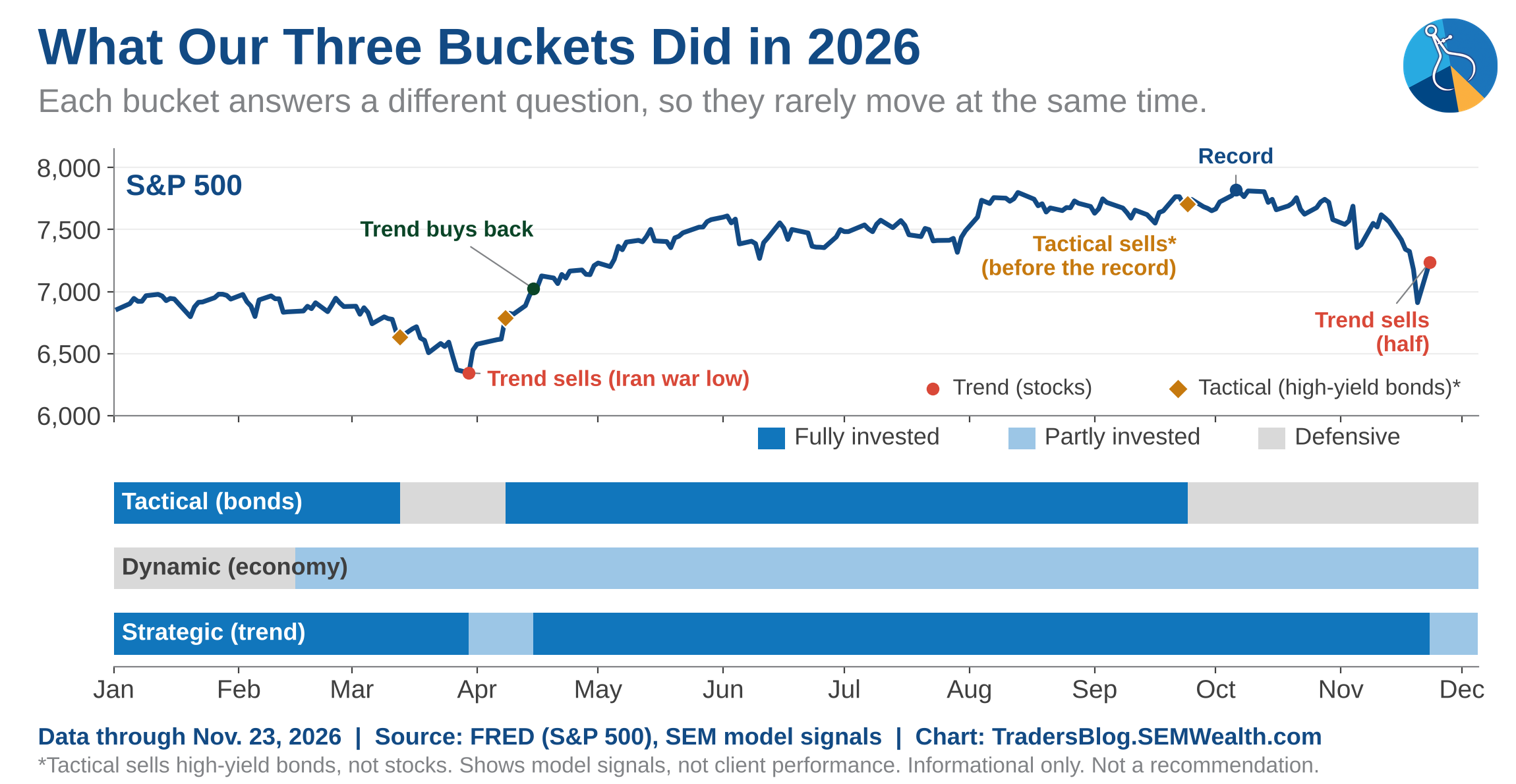
What it costs: About 7 in 10 sells end up being bought back at a higher price. That's the premium we pay for the protection, not a sign the system is broken. This spring is a good (and painful) example – the trend system sold on March 30th, which turned out to be the exact closing low of the Iran war selloff, and bought back on April 15th about 11% higher during the V-bottom I wrote about in April. We followed that signal, and we'll follow the next one the same way.
What happens next: Our Momentum System updates again next Monday (11/30). When both systems have sold (10 times since 1980), six of those turned into bear markets, so if it follows next week that would be the more serious signal. If the trend turns back up, we'll buy back in the same disciplined way. (Side note for those with Balanced clients: even with both systems out, Balanced would still own about half the stocks of a traditional 60/40 portfolio, and when trends are positive it owns more.)
Trend System and Momentum System results are hypothetical, based on applying each system's rules to the S&P 500 (total return, cash when out of stocks, no fees). They are not client results, and the rules were built with hindsight. Momentum System history before June 2017 is its published record.
What matters most
We use a "bucket" approach so each part of a client's portfolio has its own job, and 2026 has been a good example of the buckets moving at different times. Our most defensive bucket, the tactical high yield bond models, sold on September 24th, about two weeks BEFORE the stock market's October 6th peak. Our "dynamic" models, which follow our economic model, have been neutral since February. Our long-term "strategic" bucket has stayed mostly invested all year, and as of Monday is half out on the trend overlay.
Things are moving quickly, and as always we stand ready to take additional action as the DATA dictates (not our emotions or opinions). We are here watching and adjusting so you don't have to. Happy Thanksgiving!
Brainstorming, research, data gathering, charts, images, and proofreading assisted by my interns, Chip (Claude) and Scout (ChatGPT). Final content, including any mistakes, is mine. Information was obtained from sources believed to be reliable at the time of writing (economic data is subject to revisions), but its accuracy is not guaranteed. This post is for informational purposes only and is not investment advice or a recommendation to buy or sell any security. Past performance does not guarantee future results.