What's your most cherished gift you've ever received? Maybe it's an old family recipe passed down from your grandmother or a framed photo from a memorable trip with a close friend. One of my parents' favorite gifts from us was a sentimental one: we recreated an old picture of us older four kids and placed it side-by-side with the original. That gift wasn't just about the photo—it was about the memories and the meaning behind it.

Gifts remind us of relationship and moments that matter. In the same way, Peter's words in 2 Peter 1:12-21 serve as a gift to the early church—a reminder of truths that would sustain them long after Peter was gone. These truths weren't new, but they were essential.
Why reminders matter
Peter begins by saying:
"Therefore I intend always to remind you of these qualities, though you know them and are established in the truth that you have." (2 Peter 1:12)
Peter acknowledges that his audience already knows these truths and is standing firm in them. Yet he insists on reminding them. Why? Because we tend toward "spiritual amnesia."
Think about your own life: What truths would you say are foundational to your faith? How can you best determine what's foundational and what's not?
Even mature believers need reminders. Jesus warned in Matthew 13:22 that the message can be "crowded out by the worries of this life." Distractions (even good ones) can cause us to forget what's most true about God, ourselves, and the world.
Two foundational promises
Peter emphasizes two promises that need to become the heartbeat of our faith:
- The promise of Christ's return
In verse 11, Peter hints at the future unfolding when Jesus returns:
"For in this way there will be richly provided for you an entrance into the eternal kingdom of our Lord and Savior Jesus Christ." (2 Peter 1:11)
Christ's return gives us hope. It reminds us that the brokenness we see isn't the end of the story. How can the promise of Christ's return give you hope when you're uncertain about what's going on around you?
- The promise of our entrance into God's kingdom
Not only does our future give us hope, it gives us purpose. We live as citizens of a kingdom that is already here and yet to come. Peter knows his time is short and says:
"And I will make every effort so that after my departure you may be able at any time to recall these things." (2 Peter 1:15)
This raises a question: Considering our purpose to live as members of God's kingdom, what legacy are we leaving for those who know us best and love us most?
Eyewitness testimony and the reliability of Scripture
Peter doesn't just remind his readers of promises, he grounds them in reality. He writes:
"For we did not follow cleverly devises myths when we made known to you the power and coming of our Lord Jesus Christ, but we were eyewitnesses of his majesty." (2 Peter 1:16)
Peter recalls the Transfiguration (Matthew 17), where he and others saw Jesus in glory. Notice the repeated "we" language in verses 16-18. This isn't a private experience; it's a shared, historical event. In a world where truth is often reduced to personal preference, Peter assures us that the gospel is rooted in fact.
When you're unsure about faith, where do you turn for support? What are your sources?
After his personal testimony, Peter points to Scripture:
"And we have the prophetic word more fully confirmed, to which you will do well to pay attention as to a lamp shining in a dark place…" (2 Peter 1:19)
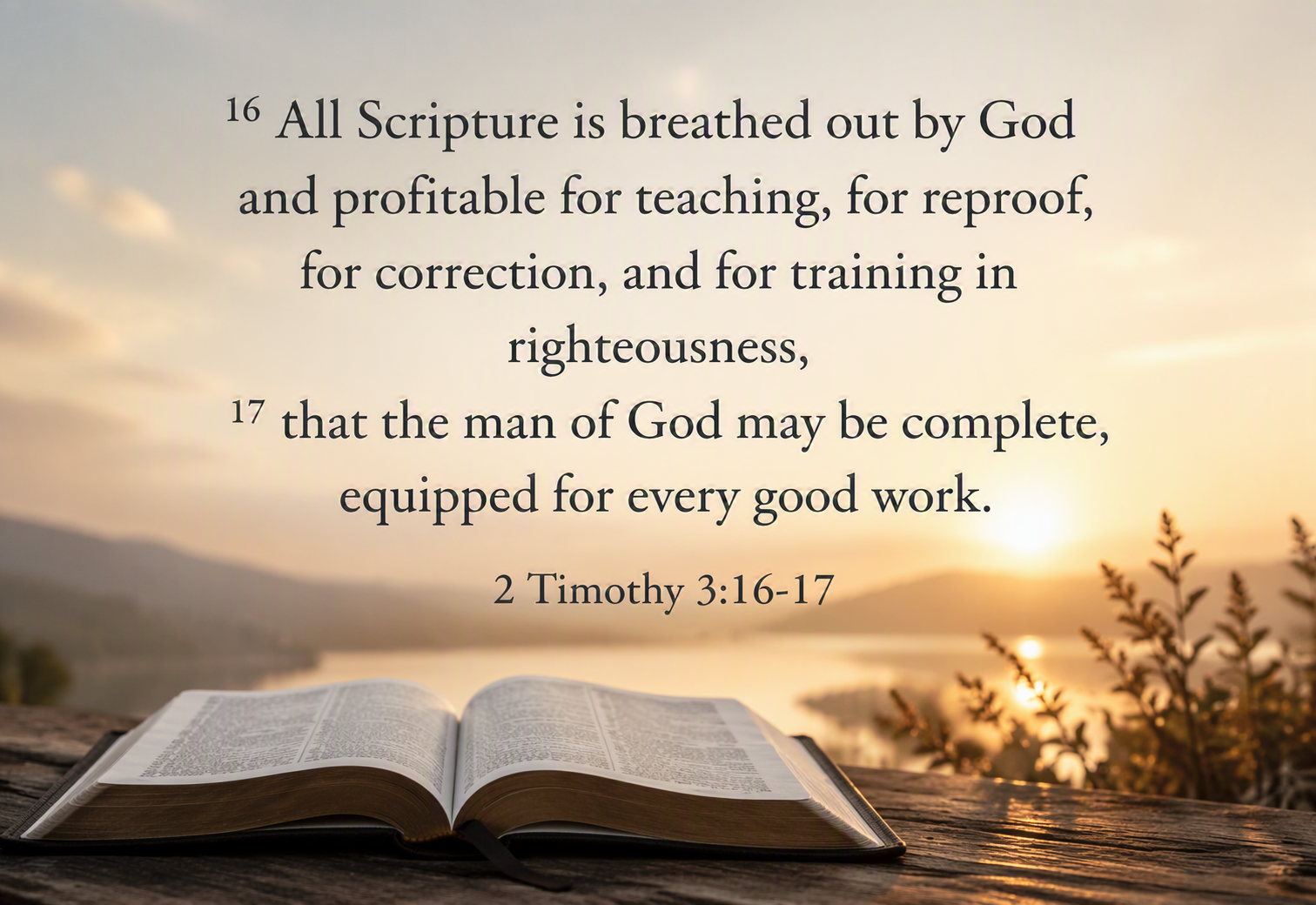
Scripture is like a lamp in the darkness—giving enough light for the next step. We may not know everything, but we have what we need to live faithfully (see 2 Timothy 3:16-17).
The divine author behind human words
Peter explains how Scripture came to be:
"For no prophecy was ever produced by the will of man, but men spoke from God as they were carried along by the Holy Spirit." (2 Peter 1:21)
Picture a ship propelled by wind. The ship moves, but the power and direction come from the wind. In the same way, the Holy Spirit carried along human authors to write God's Word. When we read Scripture, we encounter both human voices and the divine Author.
How does knowing the Spirit inspired Scripture change the way you approach reading the Bible?
Living it out: paying close attention to Scripture
Peter's application is clear:
"You will do well to pay attention…" (2 Peter 1:19)
Here are three practical ways to obey this command:
- Make Scripture reading a daily rhythm.
- Memorize key passages.
- Surround yourself with voices that remind you of God's truth.
Which of these practices feels most doable for you right now? Which one would stretch you the most?
The heartbeat of our faith
The reliability of Scripture and the promise of Christ's return aren't new ideas, but they are foundational. They need to become the heartbeat of our faith. In a world obsessed with novelty, we must not neglect the simple truths that sustain us. Whatever way you choose to pay closer attention to Scripture, remember this miracle: God not only communicates with us through His Word—He wants to. We can trust Him and His message.
Cornerstone Impact Update
Did you miss part 4 of our Ruthless Elimination of Hurry study last month? It was focused on Sabbath.
Sabbath isn't about doing nothing perfectly. It's about stopping, resting, delighting, and worshiping without guilt. From the very beginning, God set apart a day... not as a burden, but as a blessing.
Jesus reminds us, "The Sabbath was made for man, not man for the Sabbath" (Mark 2:27, ESV). What if rest is actually an act of trust?
If you're tired of feeling rushed, overwhelmed, or guilty for slowing down, this one is for you.
Read the full blog and consider: what might God want to restore in you through the Sabbath?
 Courtney Dent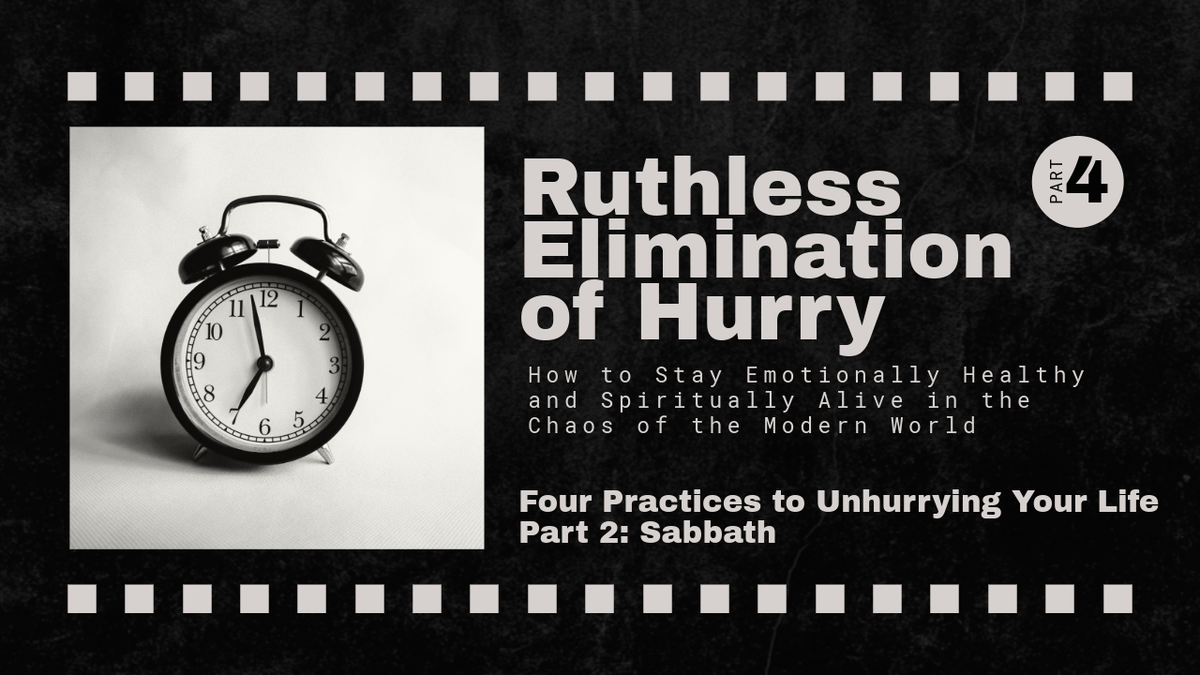
Inspire
What if "doing something different" applies to company values as much as stock selection? This thought-provoking article considers whether businesses that focus on serving customers, shareholders, and their communities with integrity may offer a compelling alternative to today's corporate status quo:
 Robert Netzly
SpaceX may be one of the most anticipated IPOs in recent history, but this article explains why Inspire has chosen not to include it in its ETFs. This article explores the idea that investing is more than pursuing financial returns. It's also about stewardship, ownership, and aligning investments with biblical values (why we started our Cornerstone Portfolios). It challenges readers to consider not only what a company does, but also what their investment ultimately supports.
 Daniel Mastrolonardo
With financial stress at an all-time high, this article points readers to three biblical truths that offer lasting peace. Discover how God's promises as our Shepherd, Father, and Provider can help ease money anxiety and strengthen your trust in His care.
 Shane Enete, Ph.D., CFA, CFP
Eventide
Here's another look at SpaceX from another Christian-based company's perspective: