Most of us don't think of ourselves as greedy or materialistic. We're just living normal lives in a fast-paced world. We buy things we enjoy, sign up for activities that seem good, and say yes to opportunities that feel responsible or necessary. But every so often, it's worth slowing down long enough to ask an honest question:
What was the last "fun" purchase you made?
Did it make you feel complete, or just briefly satisfied? Why do you think that is?
Things themselves are not evil. Scripture never teaches that possessions are bad. But our culture is intentionally designed around accumulation. We are constantly told that happiness is just one purchase away, one upgrade, one subscription, one lifestyle improvement. Whether it's the newest phone, a bigger house, trendier clothes, or even more followers on social media, the message is the same: more will finally be enough.
The problem is not what we own, it's what owns us.
When our desires go unchecked, our hearts slowly become consumed by the hunt for "more." And hurry feeds that hunger. When life moves fast, we don't pause to ask why we want what we want. We just keep consuming.
In this part of our series, we turn our attention to simplicity—a practice that creates space in our lives to receive the low of God and, in turn, freely give that love to others. Simplicity is not about deprivation; it's about freedom. It's about choosing contentment over accumulation and joy over excess.
Do you find yourself consuming or accumulating things you don't actually need? Why do you think that might be the case?
Why Simplicity Matters
In The Ruthless Elimination of Hurry, John Mark Comer points out that the average American home contains hundreds of thousands of items, and yet storage units across the country are overflowing. We tend to assume consumerism is someone else's problem. It's easy to label others as frivolous or greedy while overlooking how deeply this mindset has shaped us, even within the church.
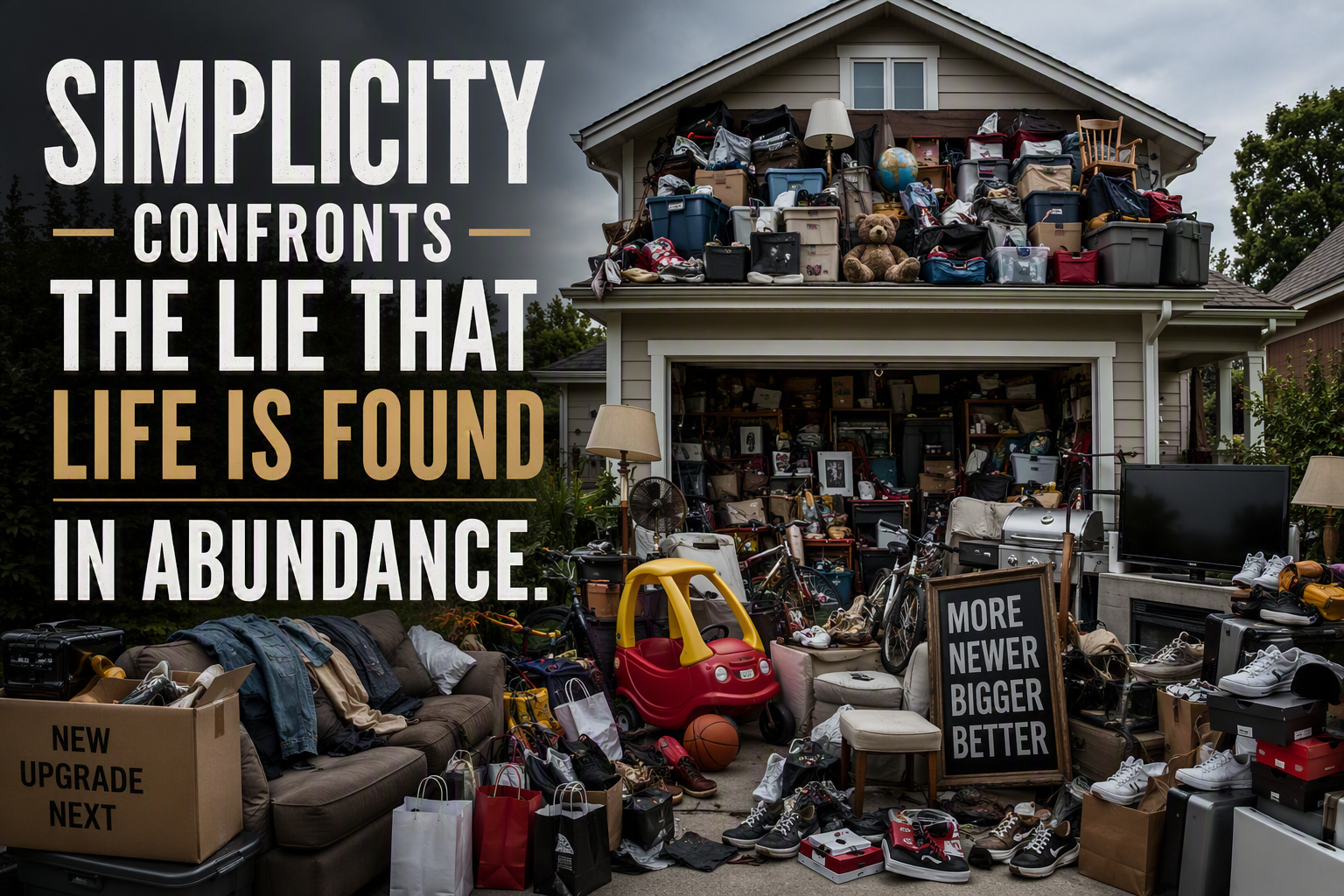
Simplicity confronts the lie that life is found in abundance. Instead, it aligns us with Jesus' countercultural vision of a joyful, generous, unburdened life.
The apostle Paul, quoting Jesus, says in Acts 20:35, "It is more blessed to give than to receive." John Mark notes that the Greek word for "blessed" can also be translated as happy. In other words, Jesus teaches that happiness is not found in getting, but in giving.
Think of a time you were open and generous.
How did it feel to meet a need for someone else? Now compare that to the last time you bought something just for yourself. Did one experience leave a deeper sense of joy than the other? Why do you think that is?
If we want to live free from the constant pull of dissatisfaction, we must intentionally pursue simplicity.
Step One: Reduce Your Consumption
John Mark defines simplicity as "limiting the number of our possessions, expenses, activities, and social obligations to a level where we are free to live joyfully in the kingdom of Jesus."
That definition expands simplicity beyond closets and garages. It includes calendars, commitments, and emotional bandwidth.
How often do you buy things you want instead of what you truly need? What might happen if you paused before purchasing and asked whether that item will actually serve your life with God or crowd it out?
Reducing consumption creates margin. Less stuff means fewer distractions, fewer repairs, fewer decisions, and less anxiety about protecting what we own. The same is true of our schedules.
Being a consumer isn't limited to shopping. We can consume experiences, commitments, and obligations just as quickly. Activities that seem good, even spiritual, can quietly distract us from God if they leave no room for rest, prayer, or presence.
In what ways could extra responsibilities be pulling your attention away from God? How does the way you spend your time, energy, and money reveal what you value most?
Simplicity invites us to honestly evaluate what is necessary and what is merely expected.
Step Two: Practice Generosity
If the first step toward simplicity is reducing our consumption, the second is just as important: practicing generosity. Simplicity is not only about what we remove from our lives; it's also about what we intentionally give away. Generosity trains our hearts to loosen their grip on what we own and to trust God as our ultimate provider.
Practicing generosity means regularly giving our money, our belongings, and our time for the good of others. And if we're honest, this practice doesn't always sound appealing. John Mark Comer admits that generosity doesn't exactly feel fun or natural, especially in a culture that celebrates personal comfort and financial security. Yet generosity is unmistakably the way of Jesus.
Even when simplicity doesn't feel exciting, it leads us somewhere better: toward happiness and contentment that accumulation can never provide.
When you think about generosity, what emotions surface first? Do you feel joy? Resistance? Fear? What might those reactions reveal about where you're currently placing your trust?
Where We Place Our Hope
When we ask our possessions to make us happy and satisfied, we are placing our hope and security in things that were never meant to carry that weight. Possessions can be useful and enjoyable, but they are also temporary. They can be stolen, broken, or simply lose their appeal. The only truly secure place for our faith and hope is found in Jesus.
Jesus addresses this directly in Matthew 6:19-21

He warns against storing up treasures that won't last—things vulnerable to decay, loss, and theft. Instead, He invites us to invest in what is eternal. His conclusion is simple but piercing: where our treasure is, our heart will follow.
That truth invites reflection.
How does knowing that material goods will eventually fall apart shape the way you view what you own? In what ways might it change how you think about accumulating new things or holding tightly to what you already have?
Overconsumption often reveals something deeper happening beneath the surface. When we continually seek comfort, identity, or satisfaction through what we buy, it exposes disordered desires. Instead of being content in God, we try to fill our hearts with things.
What kinds of things are you most tempted to buy when you're feeling stressed, discouraged, or emotionally drained? In what ways might you be trying to satisfy a longing that only God can truly meet?
When our treasure takes a higher place in our hearts than God, it becomes an idol. Even good gifts can become ultimate things if they begin to compete with Jesus for our attention, trust or affection.
Are there possessions, habits, or consumeristic patters that quietly compete with Jesus in your life? Is there anything you fear He might ask you to give up?
At its core, consumerism is a form of worship, but worship directed toward things rather than God. We offer our time, money, and energy in exchange for promises of comfort, peace, control, or status. Yet those promises never fully deliver.
When you're feeling unnoticed, anxious, or unloved, what might it look like to turn to Jesus instead of turning to consumption? How could generosity or simplicity become an act of trust in those moments?
Choosing the Way of Simplicity
In a society shaped by consumerism, simplicity is a radical commitment to following the way of Jesus. It runs against the grain of everything we're told will make us happy. But when we intentionally limit our possessions and practice generosity, we begin to experience the joy and freedom Jesus promises.
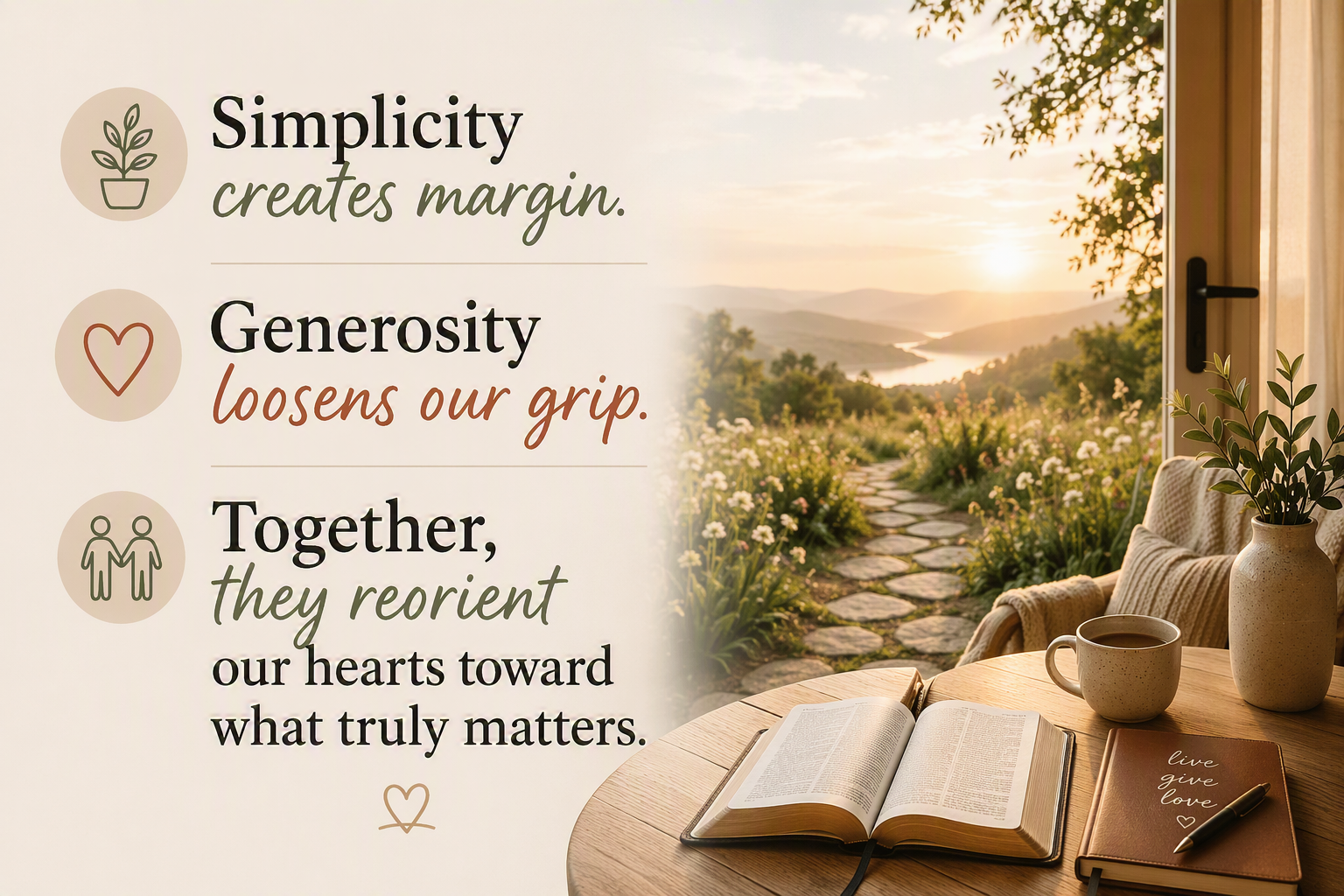
As you examine your habits this month, consider what it might look like to limit your intake and increase your giving, not out of guilt or obligation, but as a response to God's generosity toward you. Ask God to help you set one or two small, concrete goals and to show you the joy that comes from living with open hands.
Jesus reminds us in Luke 12:15 that life does not consist in the abundance of possessions. True life—full, free, joyful life—is found in trusting Him.
And as we learn to live simply, we make space for that life to take root.