We live in a world that rarely stops talking. Background noise hums through nearly every moment of our day... notifications buzzing, podcasts running, televisions humming, music filling the car, and conversations happening around us. And for many of us, the idea of being truly alone and quiet (no phone, no music, no TV, no scrolling) sounds more unsettling than restful.
But learning to be quiet is a core part of learning to live unhurried. It's not simply about stepping away from work; it's about stepping away from noise, both around us and inside of us. Silence and solitude aren't luxuries reserved for those with light schedules, they're essential practices for anyone who wants a spiritually healthy life.
John Mark Comer puts it bluntly:
"The noise of the modern world makes us deaf to the voice of God, drowning out the one input we most need."
So the question becomes: What happens to our souls when we never let ourselves be quiet enough to hear God?
The Disappearance of Boredom
Think about the last time you stood in line, waited for water to boil, or sat in the driveway before heading into the house. Did you sit in silence? Or did your hand instinctively reach for your phone?

Technology has removed boredom entirely from our lives. At first glance, that feels like a win—more entertainment, more information, more efficiency. But the subtle cost is significant: We've lost the little pockets of quiet that used to become quiet invitations into God's presence.
So ask yourself: When you feel the slightest hint of boredom, what do you reach for? And what might God be inviting you to reach for instead?
External Silence: Turning Down the Noise
There are two kinds of silence. The first is external silence. Simply, the absence of noise. Things like the TV humming in the background, music in the kitchen, or the constant scroll of social media make it nearly impossible to focus.
What noise in your life makes it hard for you to be present? Present to God? Present to people? Present to your own soul?
Imagine what would happen if, even for five minutes a day, you turned those noises off; not to be productive, but to be present.
How might silence shape the way you pray or sit with Scripture? What would change about your ability to hear God's voice?
Internal Silence: Quieting the Inside
External noise is one thing, but internal noise might be even louder.
Even when we sit down to pray, our thoughts start racing:
Did I send that email? I need to pick up groceries. What if this situation doesn't work out? I really need to handle that task today…
This internal restlessness can make silence uncomfortable. It's easier to stay busy than to sit with our anxious thoughts. But if we don't learn internal silence—if we don't let our souls take a breath—we will always struggle to rest in God's presence.
What "what ifs" tend to dominate your mind? And how often do those "what ifs" pull you away from God instead of toward Him?
Sometimes, silence reveals that we're deeper in worry, self-reliance, or fear than we realized. But it also opens the door for God to speak peace into places we've ignored.
Solitude: Not Isolation, but Presence
Solitude is not loneliness. Solitude is not isolation. Solitude is chosen separation from noise and busyness so we can be intentionally present with God.
Think about your closest relationships: your spouse, your best friend, your kids, your family. What would happen if you never spent quality time with them? How would those relationships suffer? And in contrast, how do those relationships flourish when they receive your undivided attention?
Our relationship with God works the same way. Solitude isn't something we do for God; It's something we do to be with Him.
And the good news is: you don't start with an hour. You start wherever you are. Five minutes before bed. A quiet moment at lunch. A brief pause before the day begins. Solitude grows with practice.
Jesus' Rhythm of Withdrawal

In Mark 1:29-37, we watch Jesus navigate an incredibly busy day. He heals people, teaches, meets needs, responds to requests. Then, the very next morning, while the disciples are already looking for Him, He withdraws to a solitary place to pray.
As His demands increased, His time alone with God increased. Jesus was busy, but He wasn't hurried.
It's worth asking: What would it look like for you to build small moments of solitude into your week? Where could it fit, even imperfectly?
Letting Go of Overworking and Trusting God
Overworking often reveals something deeper, internal unrest. We worry: If I don't do enough, I won't have enough. If I slow down, something will fall apart. If I stop, will things still get done?
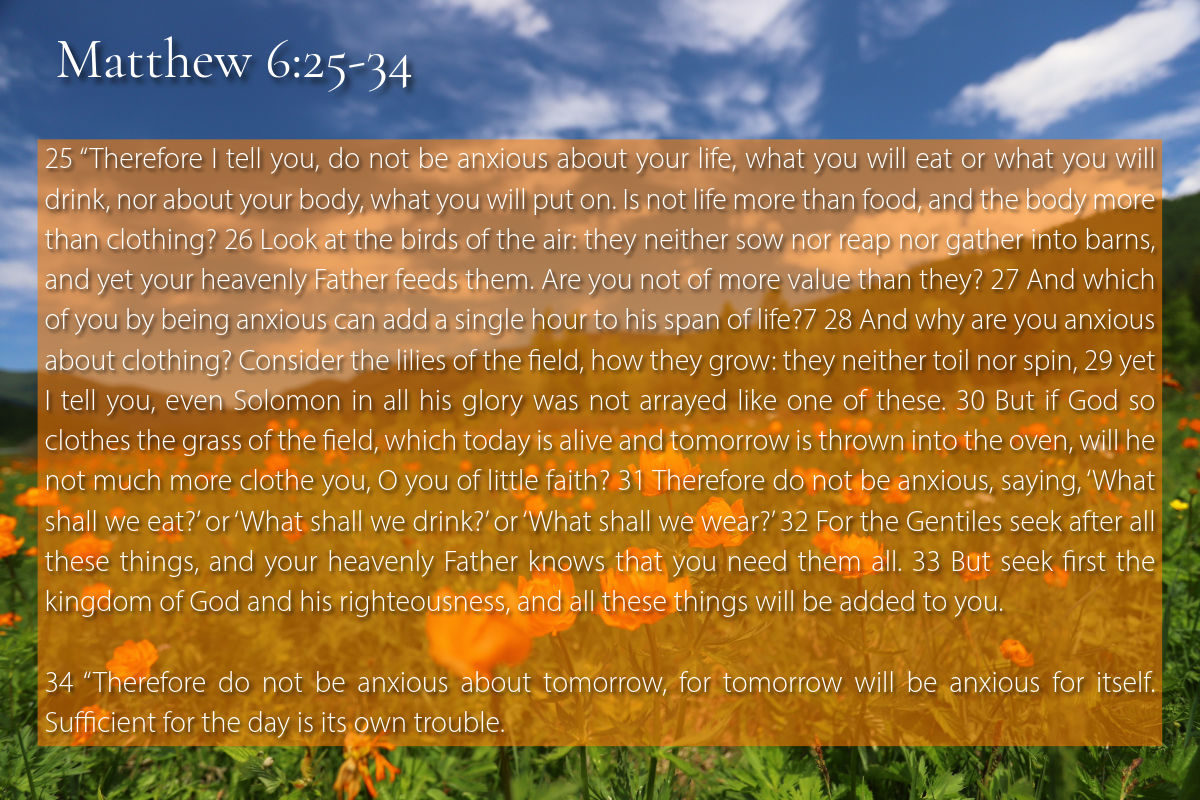
But Jesus speaks to these exact worries in Matthew 6:25-34, reminding us that the same God who feeds the birds and clothes the flowers cares even more deeply for you.
What needs are you afraid won't be met if you slow down long enough to be alone with God? And what might it look like to trust Him more in that area?
Silence exposes where we're relying on ourselves more than God. Solitude re-centers us around the truth that God is the one who sustains our lives, not our own effort.
Start Small. Start Now.
Living unhurried doesn't begin with a massive schedule overhaul. It begins with a simple step: choosing to be quiet long enough to be with God.
If five minutes is all you can offer right now, start there.
If the only quiet moment in your day is your morning drive, begin there.
If you can pause before you reach for your phone, embrace that pause.
God honors the moments we give Him, no matter how small, and He delights in meeting us in the quiet.
Your soul was made for communion with Him. Silence and solitude simply create the space for it to flourish.