If you had to describe the pace of your life in one word, what would it be?
For many of us, the answer would probably be "busy." Our calendars are packed, our phones constantly compete for our attention, and there always seems to be somewhere else we need to be or something else we need to accomplish. We move quickly from one responsibility to the next, often measuring a successful day by how much we managed to get done.
In a culture that celebrates productivity and efficiency, slowing down can feel uncomfortable. In fact, waiting may be one of our least favorite activities. Whether we're sitting in traffic, standing in a long grocery store line, waiting for a customer service representative, or anticipating an important life event… most of us don't enjoy delays or the unknown. I know this was especially true for me at the end of both of my pregnancies not knowing when the baby would make her arrival. And now, constantly torn between cuddling baby with a contact nap, or putting her down for the nap to be "productive." After my first very quickly preferred her own space in her crib versus contact naps, I will choose the baby cuddles as much as possible… laundry, cooking, cleaning, etc. can wait!
But when we look at the life of Jesus, we see someone who was never hurried. Jesus lived with purpose, but He never seemed rushed. He was fully present wherever He was and with whoever stood before Him. Even when people demanded His attention or timelines seemed urgent, He moved at a different pace than those around Him.
If our goal is to become more like Jesus, we may need to learn something many of us have forgotten: how to slow down.
As we conclude our "Ruthless Elimination of Hurry" series, author John Mark Comer introduces the final practice of slowing. This practice reminds us that physically slowing down can train our souls to resist hurry, increase our capacity for patience, and help us become more present to both God and the people around us.
Your Soul Includes Your Body
One of the most helpful insights from this lesson comes from the Hebrew word for soul: nephesh.
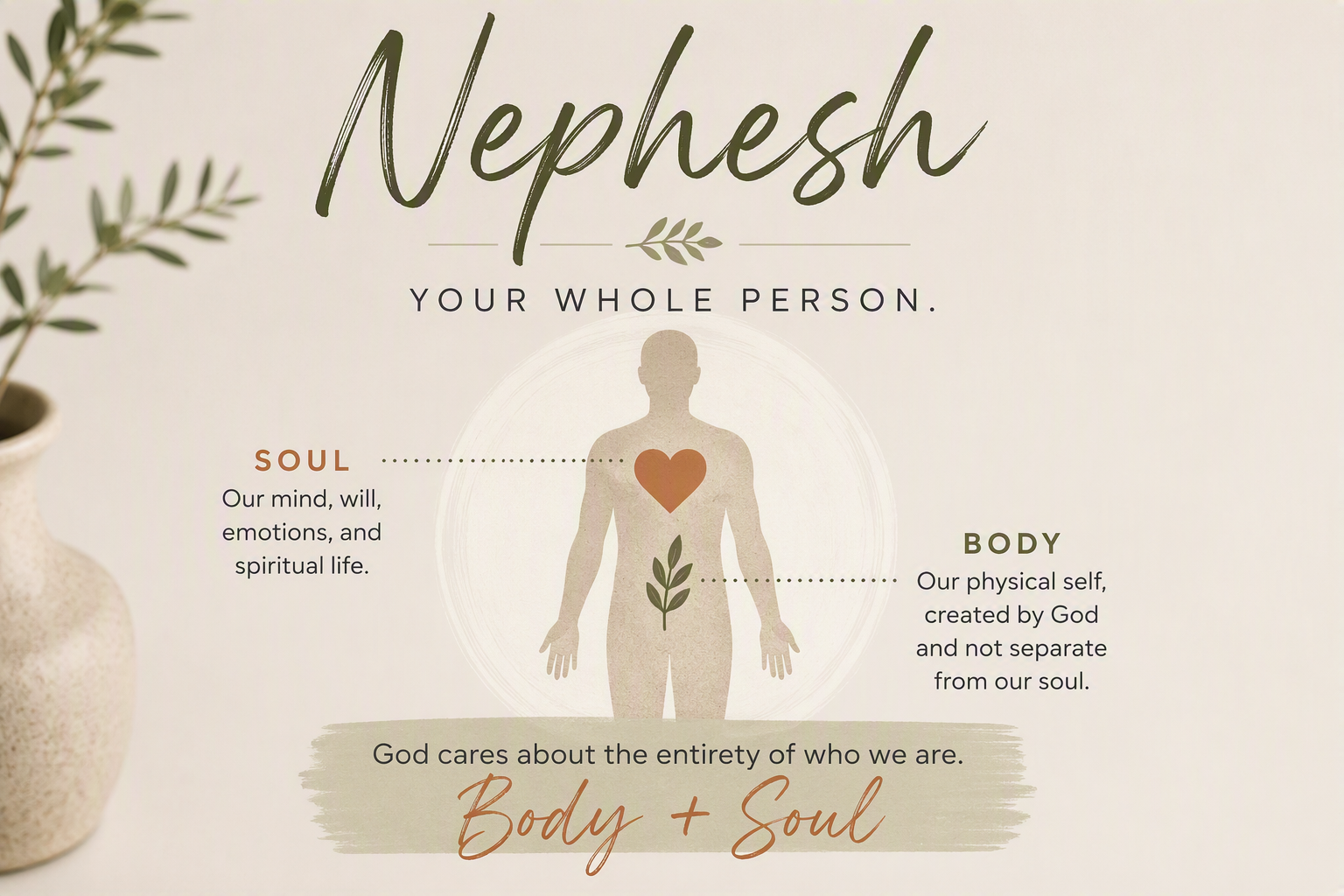
Unlike the way many people think about the soul today, nephesh refers to the whole person. It encompasses both body and soul together. In Scripture, people are not divided into a physical self and a "real" spiritual self. God cares about the entirety of who we are.
This truth is important because many Christians unintentionally treat spiritual growth as something that only happens in their minds or hearts. We focus on learning more, praying more, or reading more Scripture, while overlooking the role our physical bodies play in our relationship with God.
Yet, God created us as embodied beings.
The way we use our bodies impacts our spiritual lives. The pace we keep, the habits we choose, and the rhythms we establish all influence our ability to connect with God.
Paul alludes to this reality in Romans 12:1 when he encourages believers to present their bodies as living sacrifices. What might it look like to offer your physical activity, schedule, and habits to God? What if following Jesus involved not only changing what we believe, but also changing how we move through your day?
These questions matter because our bodies often reveal the condition of our hearts.
Why Slowing Down Feels So Hard
John Mark Comer defines slowing as "cultivating patience by deliberately choosing to place ourselves in positions where we simply have to wait." That might sound simple, but most of us find it surprisingly difficult. Hurry has become so normal that slowing down can feel almost irresponsible.
We often assume faster is better. Faster internet. Faster deliveries. Faster responses. Faster results.
Yet have you ever noticed how quickly frustration rises when something interrupts that expected speed?
Maybe it's a slow driver in front of you, a checkout line that isn't moving, or a delayed answer to a prayer you've been praying for months. These moments often expose how dependent we've become on control and efficiency.
What would happen if we viewed those interruptions differently? Instead of seeing them as obstacles, perhaps they could become opportunities to practice patience. The truth is that slowing down often reveals things we'd rather not face. Restlessness. Anxiety. Impatience. Fear. When we're constantly moving, we can avoid confronting what's happening beneath the surface. But when we slow down, those deeper realities have a way of coming into view.
While uncomfortable at first, that's actually a gift. God cannot heal what we're unwilling to acknowledge.
Our Relationship with Technology
One of the most common ways we avoid slowing down is through technology. Think about your average day. How often do you instinctively reach for your phone the moment you experience a few seconds of free time?
Standing in line. Waiting for a meeting to start. Sitting in a waiting room. Riding in an elevator.
Many of us have eliminated nearly every moment of boredom from our lives. The issue isn't that technology is inherently bad. Phone are incredible tools when used appropriately. The challenge occurs when they become our automatic response to every moment of stillness.
John Mark encourages us to "parent our phones" rather than allowing our phones to parent us. That might mean setting boundaries around notifications, limiting screen time, or putting your phone away during meals. Some people even establish a nightly routine of putting their phones "to bed" at a designated time so they are not endlessly available to every alert, message, and distraction.

The goal isn't legalism. The goal is freedom.
When our attention is constantly fragmented, it becomes increasingly difficult to be present. We struggle to pay attention to conversations, enjoy God's creation, or focus during prayer because our minds have been trained to expect continuous stimulation.
Learning to slow down often begins by reclaiming our attention.
The Power of Focal Practices
To help counter digital distraction, John Mark recommends developing what he calls a focal practice. A focal practice is an activity that centers our attention and roots us in the present moment. Examples include gardening, exercising, painting, woodworking, playing an instrument, cooking, or other activities that require focused engagement.
These practices help retrain our minds. Instead of constantly multitasking, we learn how to give our full attention to one thing at a time. What activity could become a focal practice in your current season of life?
The answer doesn't need to be complicated. The value comes from being fully present with the activity itself rather than constantly dividing your attention among countless distractions. As we develop these practices, something surprising begins to happen. Our capacity to be present with God grows as well.
Learning to Be Present in Prayer
Many believers struggle with distraction during prayer. We begin praying and suddenly remember a task we forgot to complete. Our minds drift toward an upcoming conversation, a current worry, or something we saw online earlier that day.
Staying present can be difficult.
Yet the ability to focus our attention during everyday life directly impacts our ability to focus during prayer. When we practice slowing down, we create space to become more attentive to God's presence. Prayer becomes less about rushing through a list of requests and more about simply being with God. And often that's where transformation happens most deeply.
Waiting Well
Of course, sometimes slowing isn't a choice. Life occasionally forces us into seasons of waiting.
A medical diagnosis. A job opportunity. A relationship restoration. A financial breakthrough. A prayer you've carrier for years.
In James 5:7-8, believers are encouraged to be patient like farmers waiting for rain. Farmers understand something we often resist: there are aspects of life that simply cannot be rushed.
The farmer can prepare the soil, plant the seed, and tend the field, but ultimately the harvest depends on factors beyond his control. The same is true for us. What area of your life feels beyond your control right now?
Our natural response is often worry. We replay scenarios, imagine outcomes, and attempt to solve problems we cannot actually fix. But what if waiting became an invitation to trust God rather than an opportunity for anxiety?
The farmer waits because he believes rain will come. Likewise, followers of Christ wait because they trust God's faithfulness… Not because they know exactly when the answer will arrive, but because they know the character of the One they are waiting on.
Trusting God's Timing
One of the hardest spiritual lessons we learn is that God's timing rarely matches ours. We want answers immediately. God often works gradually.
We want clarity now. God frequently asks us to trust Him one step at a time. We want a quick resolution. God uses the process to shape our hearts.
Sometimes God's answer is yes. Sometimes it's wait. Sometimes it's no. And while "no" may be the answer we least want to hear, it is still an answer given by a loving Father who sees more than we do.
Psalm 33 reminds us that God sees every person and understands every heart. Nothing escapes His notice. No prayer is overlooked. No season of waiting is invisible to Him.
When we truly believe God sees us, waiting becomes a little easier. Not necessarily easier emotionally, but easier spiritually. We begin to trust that His delays are not indications of absence. He's present, even when He's asking us to wait.
And perhaps our hurried culture makes God's timing feel slower than it actually is. When every aspect of life operates at maximum speed, God's patient, intentional work can feel delayed. Yet His perspective is eternal, and His timing is perfect.
A Final Invitation
As we conclude this series, take a moment to consider how hurry has affected your spiritual life. Has busyness crowded out meaningful time with God? Has distraction weakened your ability to be present? Has your pace made it difficult to notice the people and opportunities God has placed around you?
Throughout this series, we've explored four practices designed to help us resist hurry and cultivate deeper intimacy with Jesus: Silence and Solitude, Sabbath, Simplicity, and Slowing.
These are not rules to follow or boxes to check. They are invitations.
Invitations to rest. Invitations to trust. Invitations to slow down enough to experience God's presence in a deeper way.
The good news is that you don't have to implement all four at once. Start with one. Which of these practices could you intentionally add to your weekly rhythm?
As you do, remember that the goal isn't simply a less busy life. The goal is a life that is more connected to Jesus. Because in a hurried world, slowing down may be one of the most powerful ways we follow Him.
Missed a Blog in the Series?
Catch up on the previous ones:
 Courtney Dent