Have you ever fallen for something that seemed too good to be true?
Maybe it was a social media post with a shocking headline. Perhaps it was an advertisement promising dramatic results with almost no effort. Maybe it was a story that confirmed what you already wanted to believe, so you accepted it without asking too many questions.
Most of us can think of a time when we were deceived. The reality is that we are all susceptible to believing things we want to be true. Whether it's celebrity gossip, a political headline, or a marketing campaign that promises happiness through a purchase, we often allow our desires to influence our judgment. We listen to our hearts before engaging our minds.
Unfortunately, that tendency doesn't stop when it comes to spiritual matters.
In 2 Peter 2:1-10, Peter warns believers about the danger of false teaching. His message is not directed at unbelievers on the outside but as Christians within the church. He wants us to understand that false teaching is attractive, deceptive, and dangerous. At the same time, he reminds us that God sees everything and will ultimately deal with those who distort the truth.
The main idea of this passage is simple yet important: We treat false teaching as a serious threat by identifying it, speaking about it, and having confidence that God will ultimately judge it.
The Real Danger of False Teaching
Darkness and deception exist in the world around us, but they become especially dangerous when they enter the church.
There is something uniquely troubling about people who claim to represent Christ while promoting ideas and lifestyles that run contrary to God's Word. The deception feels more insidious because it comes wrapped in religious language and spiritual authority.
The Bible consistently treats false teaching as a serious issue. Jesus warned His followers, "Beware of false prophets who come disguised as harmless sheep but are really vicious wolves" (Matthew 7:15). Paul similarly instructed believers to watch out for those who create division through deceptive teaching (Romans 16:17-18). In 2 Corinthians 11:12-15, he even describes false teachers as servants of Satan who disguise themselves as servants of righteousness.

That's strong language!
Yet many Christians today tend to treat doctrinal error as a minor concern. We often assume that as long as someone is sincere, it doesn't really matter what they teach. While we should certainly be humble and charitable, Scripture never suggests that truth is optional.
If Jesus, Peter, and Paul repeatedly warned about false teaching, shouldn't we take it seriously too?
What would it look like if we approached incorrect doctrine with the same concern we see in Scripture? It would mean carefully examining what we hear, being willing to ask hard questions, and refusing to accept ideas simply because they are popular.
Deception is Not a New Strategy
False teaching didn't begin in the first century, and it certainly didn't begin in our generation.
In many ways, it started in the Garden of Eden.
When Satan approached Eve, he didn't openly deny God at first. Instead, he subtly distorted what God had said. He introduced doubt. He questioned God's goodness. He suggested that God was withholding something desirable.
This is usually how deception works.
Rarely does false teaching announce itself as false. Instead, it mixes truth with error. It sounds reasonable. It appeals to our desires. It offers something attractive.
Peter recognizes this pattern. In the opening verses of chapter 2, he describes false teachers as people who secretly introduce destructive ideas. Their message often gains followers because it offers promises people want to hear.
But false prophets also arose among the people, just as there will be false teachers among you, who will secretly bring in destructive heresies, even denying the Master who bought them, bringing upon themselves swift destruction. 2 And many will follow their sensuality, and because of them the way of truth will be blasphemed. 3 And in their greed they will exploit you with false words. Their condemnation from long ago is not idle, and their destruction is not asleep.
That dynamic still exists today.
Some teachers promise prosperity, happiness, wealth, or success if we simply follow their instructions. Others promote messages that affirm whatever people already want to believe. Rather than calling people to repentance and obedience, they tell people exactly what their hearts desire.
Paul warned timothy about this very thing:
3 For the time is coming when people will not endure sound teaching, but having itching ears they will accumulate for themselves teachers to suit their own passions, 4 and will turn away from listening to the truth and wander off into myths. - 2 Timothy 4:3-4
The problem isn't only that false teachers exist. The problem is that people often want what false teachers are selling.
That's why Peter's warning should lead us to examine our own hearts. Are there teachings we gravitate toward simply because they make us comfortable? Are there parts of Scripture we ignore because they challenge our preferences?
False teaching thrives when people prioritize personal desires over God's truth.
Who is the hero of the story?
One of the simplest ways to identify false teaching is to ask a very important question:
Who is being elevated?
Healthy biblical teaching consistently points people to Jesus. It calls attention to His glory, His work, His authority, and His grace. False teaching often does the opposite.
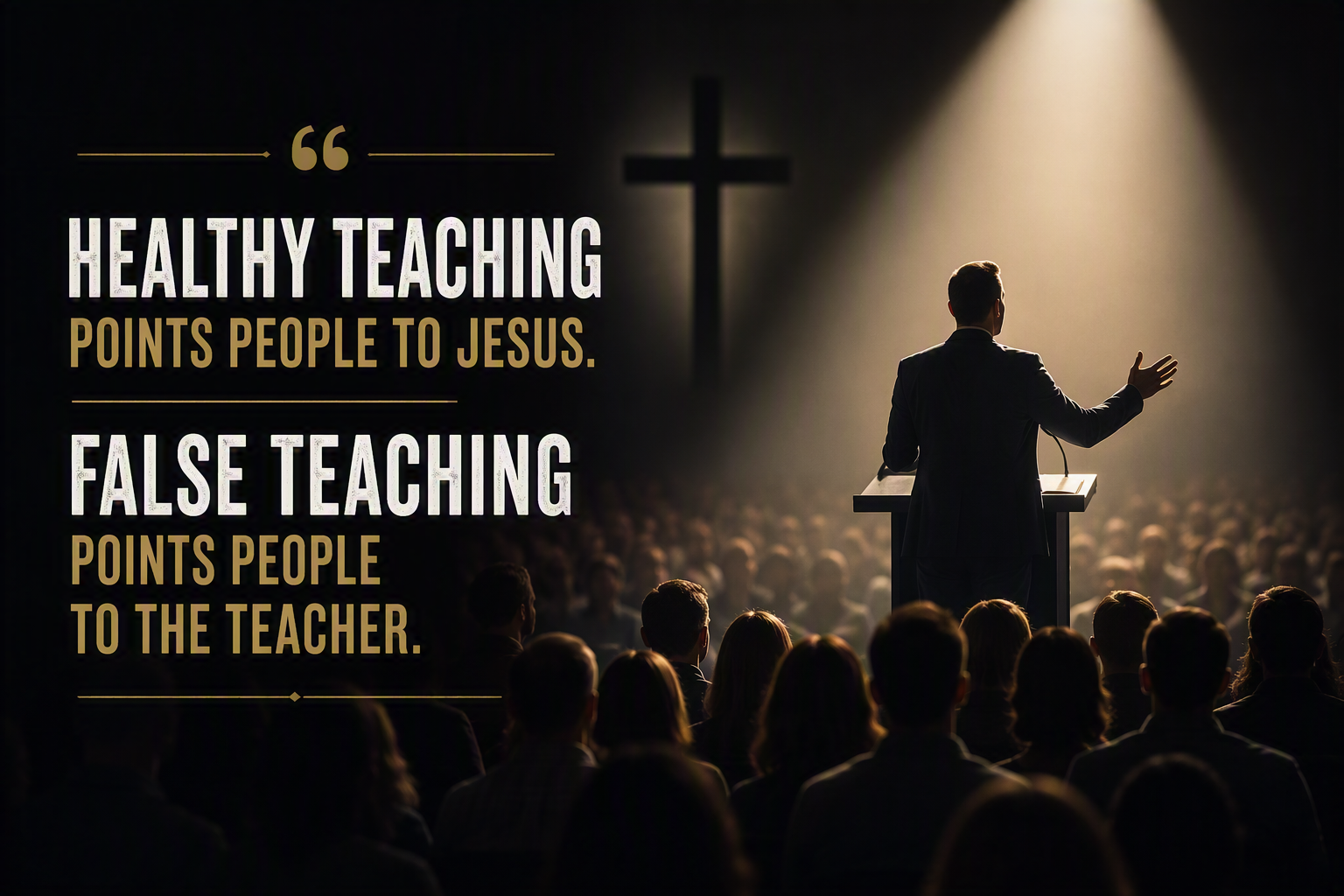
Instead of focusing on Christ, it tends to focus on the teacher. The focus shifts from God's greatness to human greatness. The preacher becomes the hero of the story. People are encouraged to admire the individual rather than worship the Savior.
Peter also connects false teaching with greed. Many false teachers use religious influence for personal gain. Sometimes the motivation is financial. Other times it's power, control, recognition, or influence.
Regardless of the form, the focus becomes self-centered rather than Christ-centered.
When evaluating any teacher, ministry, podcast, author, or influencer, it is worth asking: Does this consistently point me toward Jesus, or does it point me toward the person delivering the message? The answer often reveals more than we realize.
God Sees and God Will Judge
One of the challenges believers face when confronting false teaching is the apparent success of those spreading it.
Why do deception leaders often gain large followings?
Why does error seem to flourish?
Why doesn't God stop it immediately?
Peter addresses those questions in verses 4-10 by pointing to examples from history. He reminds readers of three situations where God eventually judged rebellion and wickedness.
4 For if God did not spare angels when they sinned, but cast them into hell and committed them to chains of gloomy darkness to be kept until the judgment; 5 if he did not spare the ancient world, but preserved Noah, a herald of righteousness, with seven others, when he brought a flood upon the world of the ungodly; 6 if by turning the cities of Sodom and Gomorrah to ashes he condemned them to extinction, making them an example of what is going to happen to the ungodly; 7 and if he rescued righteous Lot, greatly distressed by the sensual conduct of the wicked 8 (for as that righteous man lived among them day after day, he was tormenting his righteous soul over their lawless deeds that he saw and heard); 9 then the Lord knows how to rescue the godly from trials, and to keep the unrighteous under punishment until the day of judgment, 10 and especially those who indulge in the lust of defiling passion and despise authority.
First, God judged the angels who rebelled against Him (v.4). Second, God judged the generation that rejected His warnings during Noah's day (v. 5). Third, God judged the cities of Sodom and Gomorrah (vv. 6-8).
In each example, evil appeared to prosper for a time. Yet God ultimately acted.
Peter's point is clear: False teachers will not get away with deception forever.
God knows the difference between truth and lies. He knows who faithfully follows Him and who intentionally leads others astray. Nothing escapes His attention. That truth should both comfort and challenge us.
It comforts us because we don't carry the responsibility of final judgment. God sees what we cannot see, and He will administer perfect justice. It challenges us because God's timing rarely matches our expectations. When we see deception spreading, our instinct is often to ask, "God, why don't You do something now?"
Peter reminds us that God's patience should not be mistaken for indifference.
A Culture that Encourages Deception
Peter specifically mentions two characteristics that often accompany false teaching: following sinful desires and rejecting authority (v. 10). Those descriptions feel remarkably relevant today. We live in a culture that constantly encourages people to follow their feelings above all else. At the same time, there is increasing resistance to authority, especially God's authority.
The message of our culture often says, "Trust yourself. Define truth for yourself. Live however you want." The gospel says something very different. The gospel calls us to submit ourselves to God's wisdom, trust His design, and follow His commands even when they challenge our personal preferences. That's not always easy.
Every one of us has areas where we are tempted to choose our own desires over God's Word. None of us are immune. That's why Peter's warning should not only make us aware of false teachers out there, it should also make us attentive to our own hearts.
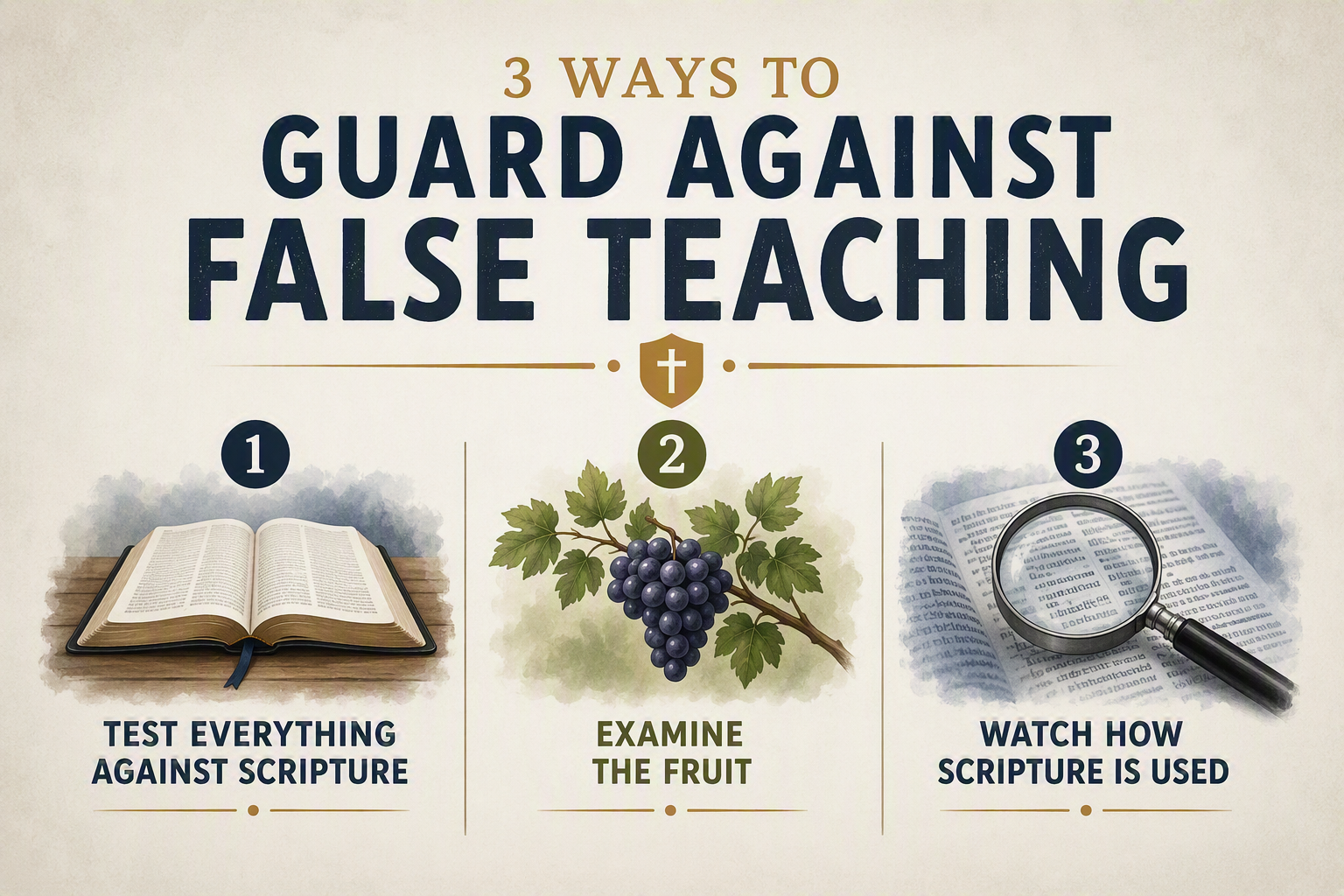
Three practical ways to guard against false teaching
So, how do we protect ourselves?
Peter's warning isn't meant to make us fearful or suspicious of everyone around us. Instead, it should motivate us to pursue discernment. Here are three practical ways we can guard against deception:
- Always test teaching against Scripture
No pastor, author, speaker, or ministry should be accepted unquestioningly. Everything we hear should be evaluated through the lens of God's Word. Scripture is our authority, not personalities, popularity, or personal experiences.
The more familiar we are with God's Word, the easier it becomes to recognize teachings that distort it.
- Pay attention to the fruit
Jesus said that false prophets would be recognized by their fruit. What kind of character does a false teacher display? Is there evidence of humility, integrity, and submission to Christ? Or is there evidence of greed, pride, manipulation, and self-promotion?
Right doctrine and godly character belong together.
- Recognize when Scripture becomes superficial
One warning sign of false teaching is when Scripture is used only as a supporting prop rather than the foundation of the message. When biblical passages are consistently taken out of context, oversimplified, or used primarily to support personal opinions, caution is needed.
Healthy teaching doesn't merely mention Scripture, it faithfully explains and applies it.
Truth, Love, and Confidence
As believers, we must do more than simply identify false teaching… we must respond appropriately.
That means speaking the truth in love. It means helping others discern error without becoming cynical or combative. If we focus on only spotting false teaching but never act with grace, we can easily become judgmental, bitter, or paranoid.
Thankfully, Peter doesn't leave us with fear. He leaves us with hope.
God sees every distortion of His truth. He sees every faithful believer trying to follow Him. He knows those who are leading others astray, and He will hold them accountable. Even His delay in judgment reflects His mercy. As Peter later writes,
"The Lord isn't really being slow about his promise… He is being patient for your sake. He does not want anyone to be destroyed, but wants everyone to repent" (2 Peter 3:9).
As you seek to guard yourself against the allure of false teaching, remember that God has not left you alone. He has given you His Word, His Spirit, and His people. When something sounds spiritual but leaves you feeling uncertain, don't navigate those questions in isolation. Run to Scripture. Lean into biblical community. Seek wisdom from faithful believers who love God's Word.
In a world full of confusing voices, God's truth remains trustworthy. Hold tightly to it, and trust that the God of truth will ultimately make all things right.
Cornerstone Impact Update
What if true joy isn't found in getting more but in needing less?
Our last "Ruthless Elimination of Hurry Blog" explored the way of simplicity in a culture shaped by consumption. Not a call to minimalism for minimalism's sake, but an invitation to freedom, generosity, and deeper trust in Jesus.
When we slow down, reduce our consumption, and practice generosity, we make space for the life Jesus promises—full, joyful, and unburdened.
Read now and reflect: Where might "more" be crowding out what matters most?
 Courtney Dent
Eventide
Inspire
What if your relationship with your financial advisor looked more like the relationship you have with your doctor? Inspire Investing's Dr. Erik Davidson introduces the concept of "wealthcare," highlighting how trust, expertise, communication, and personalized guidance can help individuals pursue long-term financial well-being.
 Dr. Erik Davidson, CFA, CTFA
We offer a FREE financial assessment at WhatsMyScore.net. After completing the assessment, you can work with our in-house financial advisor, Cody Hybiak for FREE!


Inspire Investing highlights how shareholder engagement can drive meaningful change beyond a single company. This article explores how years of dialogue with financial institutions contributed to policy updates, industry conversations, and broader discussions around fair access to financial services.
 Tim Schwarzenberger
For Christians who want their investments to reflect their values, this article offers a helpful starting point. Learn how Biblically Responsible Investing can help you evaluate your portfolio, pursue faith-aligned investment options, and steward your resources in a way that reflects your beliefs.
We would love to help you get started!
 Robert Netzly