Things are always changing. Depending on your level of restlessness or adaptability that could be a good or a bad thing. For me, it simply depends on what is changing. I would certainly be okay if the weather decided to stop being 100 degrees every day for the next several months. If that could change, that would be perfect. A change I didn’t need was the existence of yet another Toy Story. Will you see me catching the new one when it releases? Probably not. We’ll see if my son is interested, or if people tell me it’s good. I guess change is okay as long as it’s a good change. If only we could pick and choose which changes around us we want to make. Rarely do we actually get to make that choice.
One of the changes that is taking place is the conflict in the Middle East. As the end of the war with Iran appears imminent, the relief felt outside of peace should come at the gas pump. With the war being viewed mostly negatively, there should be a change in consumer sentiment to possibly aid the market. The question remains on the timing of when we will see real change in prices. How quickly will things go back to normal? Will things go back to the normal as we remember them, or will there be scars for this conflict that won’t fully heal? The details are still fresh as to what this “peace resolution” truly means.
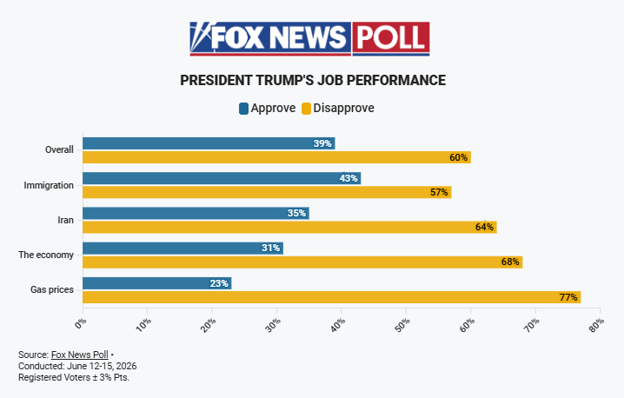
While the war on Iran was viewed as unpopular to Americans, it wasn’t the primary concern people had. Much like the previous election cycle, the primary concern for many is the state of the economy. This was always an advantage afforded to Trump and Republicans as a whole, but in many polls it is viewed as the biggest weak point for the presidential administration currently.
**NOTE TO READERS: Yes this is a Fox News poll but the way Fox News conducts their polls is up to the standard of the good unbiased pollsters, and Fox News the print media is far different than Fox News the TV station. SEM is a-political and sticks to the data and regardless of who is asking, this is simply the latest poll that says Americans seem to be upset about the economy.”
One of the ways Trump is hoping to boost the economy was with help from his newly appointed Fed chair. However, in the first statement made, the Fed didn’t change any interest rates, but did say higher rates could be on the horizon. It is SEM’s opinion that that shouldn’t be surprising with the current state of the economy. The unknown here is whether or not the Fed chair will hold to this, or if Trump will have his way in the end. For that, we will simply have to wait and see.
The market also got a brand new toy this week, the largest new toy they’ve ever gotten, with SpaceX. With such a buzz surrounding it, seeing swings in its market price isn’t too surprising. It’ll be interesting to see how it settles, and what Elon Musk will do regarding Tesla and some of his other endeavors. In what ways does Musk try to maintain his status as the world’s first and only trillionaire? With his ability to control the business side of SpaceX, his say is ultimately the most important thing that matters to the value of the stock. It should go without saying that there are plenty of unknowns when it comes to this company and what you should do with it. The answer to that question likely lies in your own tastes; do you think that there’s long-term value in what the company can provide?
Ultimately, there’s a lot of things to analyze and adapt to. The things I’ve mentioned are only a small portion of the market news that the financial professionals and investors have to react to. So what does that mean for us? SEM’s models have stayed the same throughout the changes of this week. As the dust settles and economic trends and indicators shift, we will make adjustments if necessary.
Market Charts
(Commentary from Jeff)
The S&P 500 was up for the week, but all of the gains came between Friday and Monday after the announcement of a final deal with Iran to end the war. Stocks fell Wednesday after the Fed meeting and then rallied on Thursday with the signing of the Iran deal.
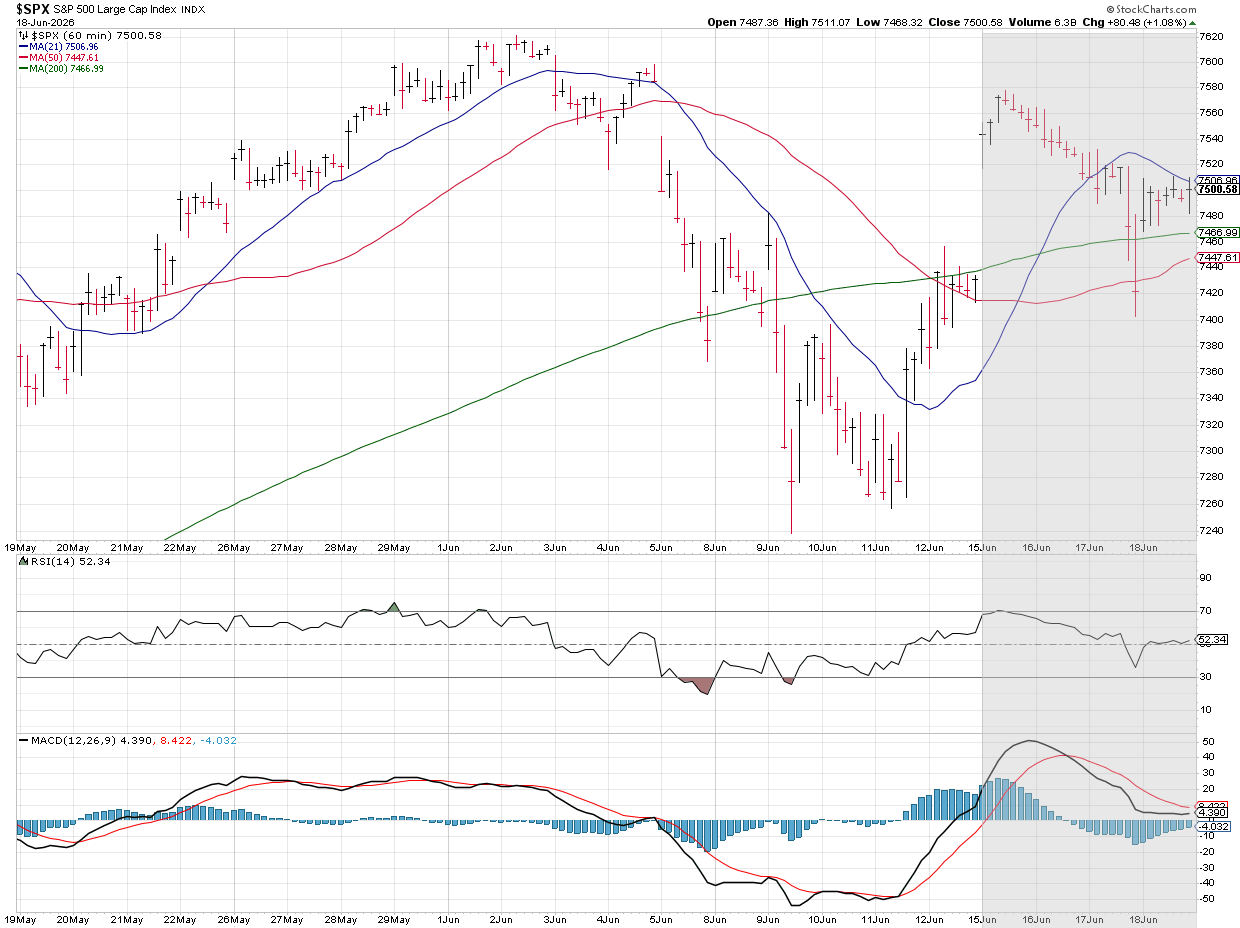
Stocks are up significantly since President Trump backed down on his "end their civilization" threats at the end of April.
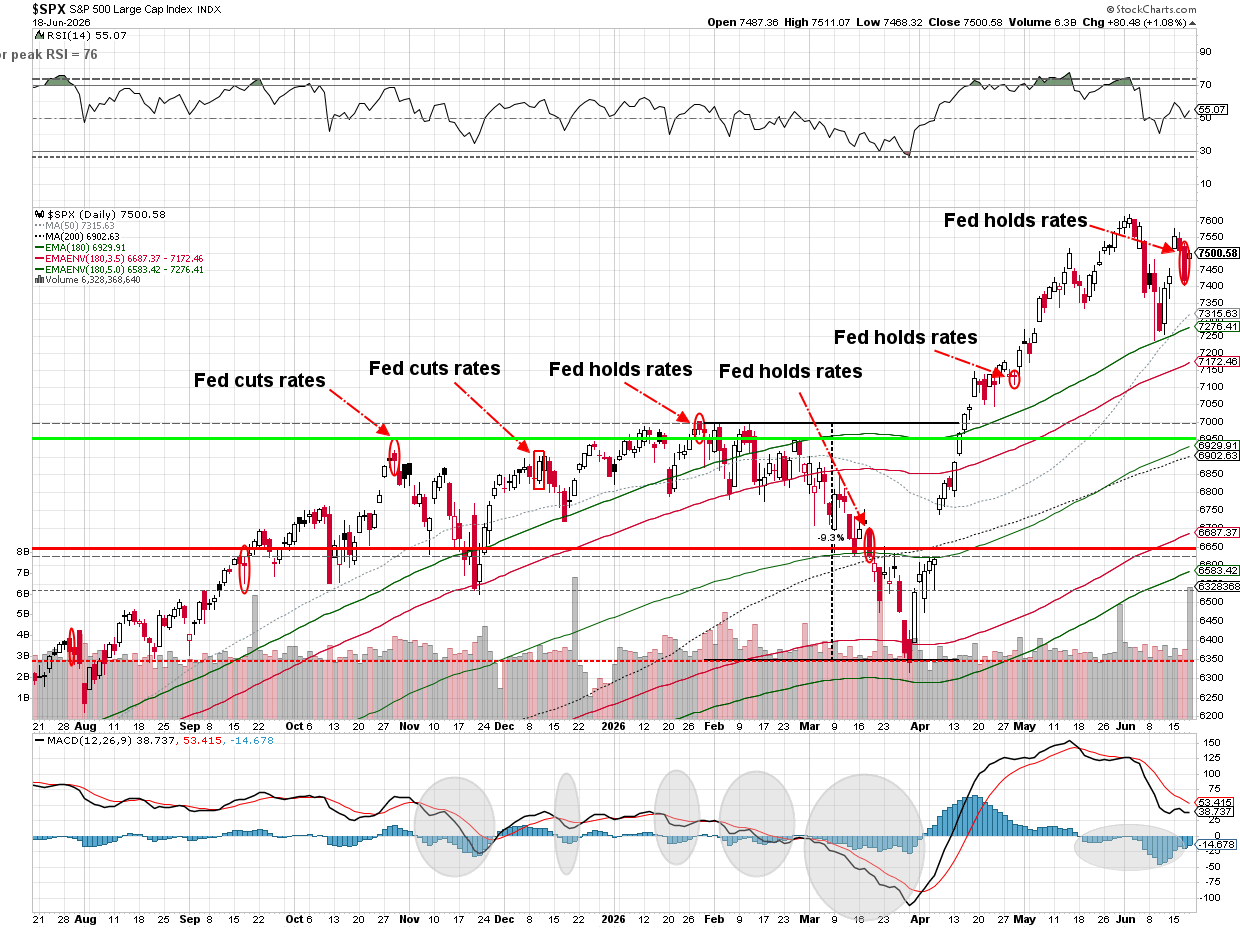
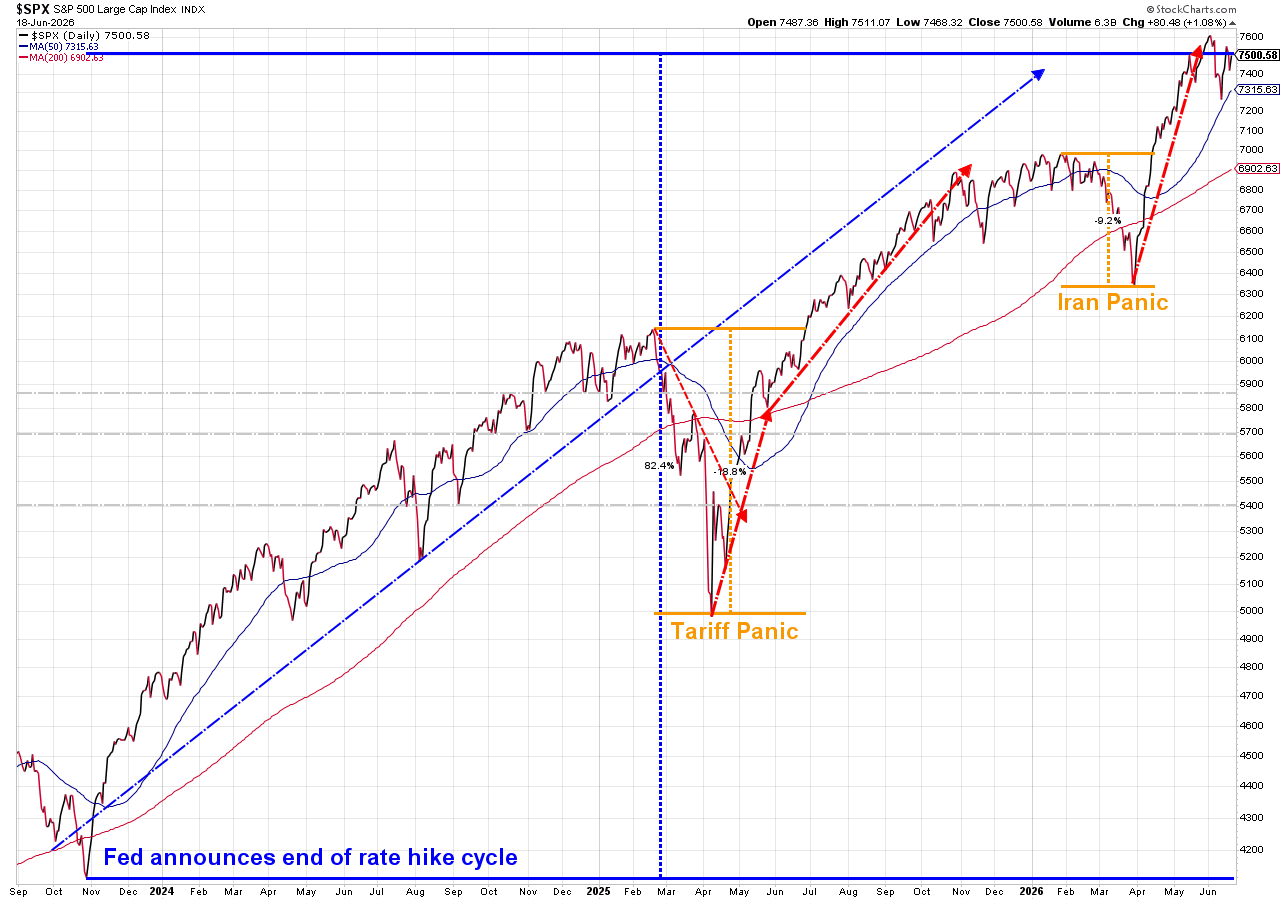
The key consideration after the Fed meeting is whether we are entering a "tightening" bias environment. We've been enjoying the "easing" bias since late 2023.
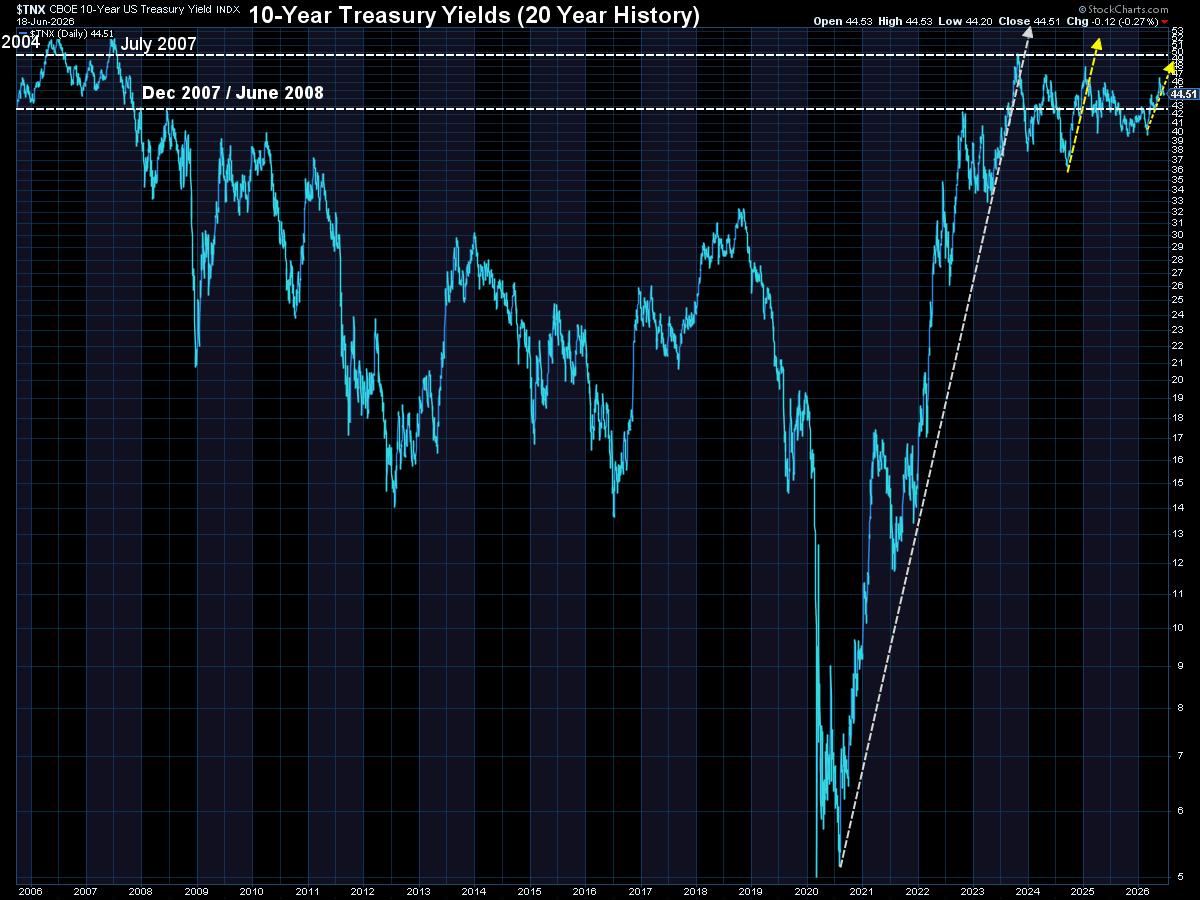
Interest rates on the shorter-end of the yield curve reacted negatively to the "hawkish" Fed meeting.
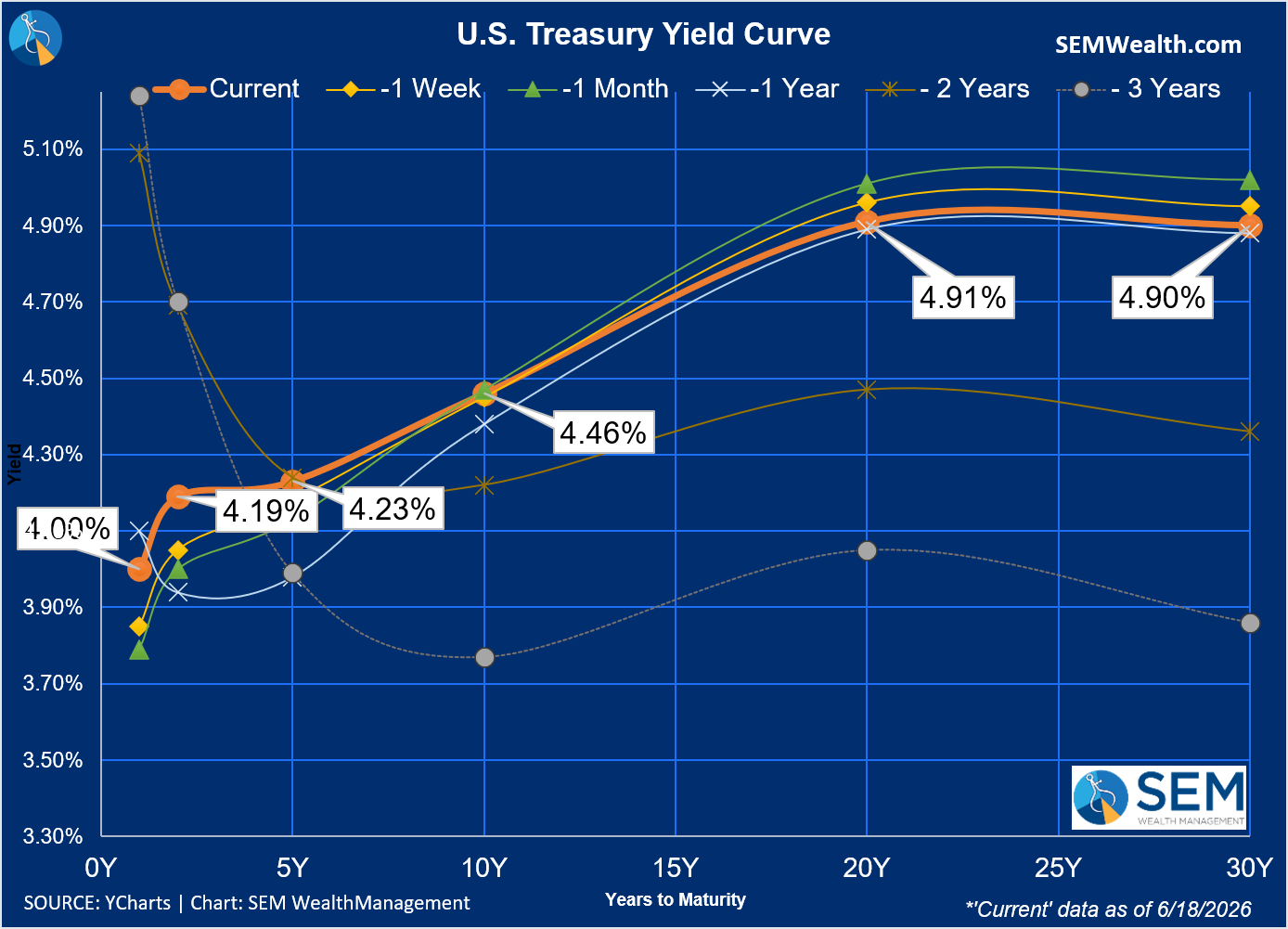
20 & 30 year yields cam down on the Fed announcement as a short-term sign the bond market is pleased to hear the "new" Fed under Warsh is more concerned with inflation than "Too Late" Powell was (despite President Trump's criticism of Powell and silence following Mr. Warsh's first Fed meeting.) The 10-year is basically back to where it was a month and a year ago.
SEM Market Positioning
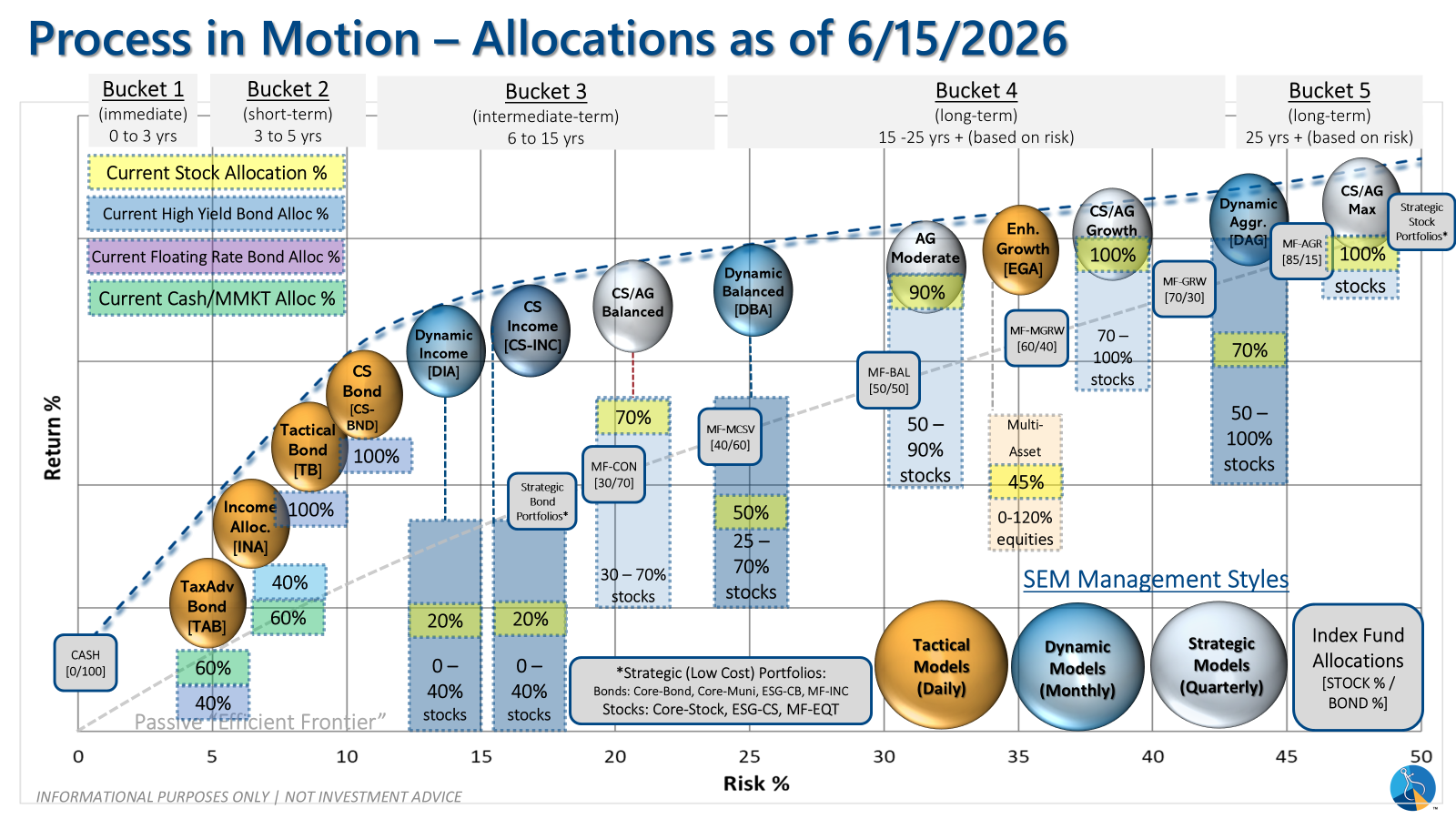
SEM deploys 3 distinct approaches – Tactical, Dynamic, and Strategic. These systems have been described as 'daily, monthly, quarterly' given how often they may make adjustments. Here is where they each stand.
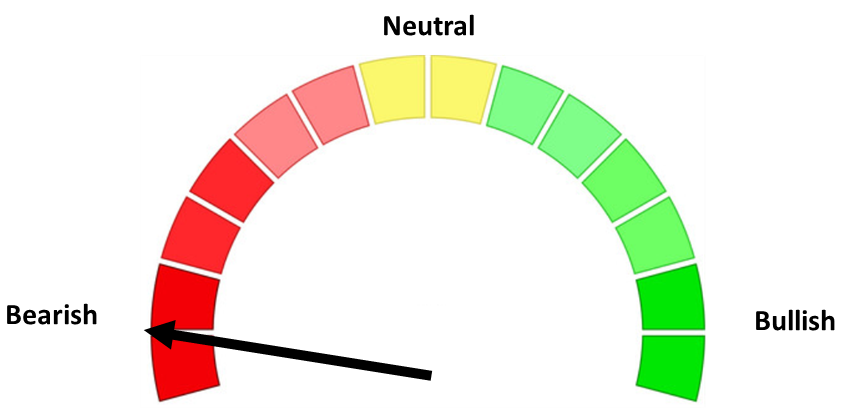
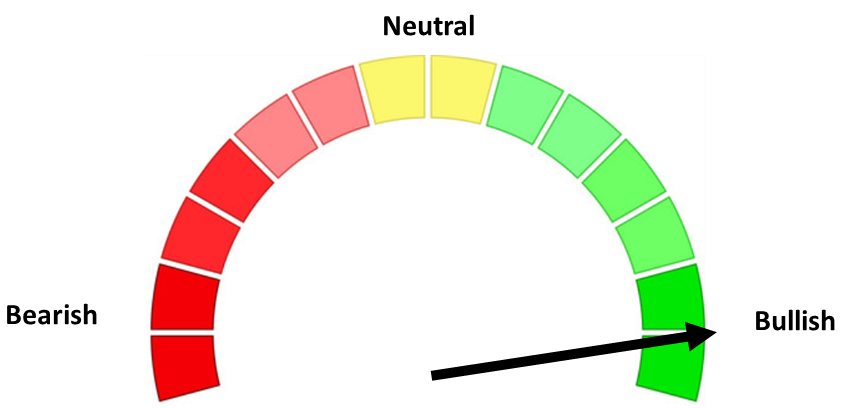
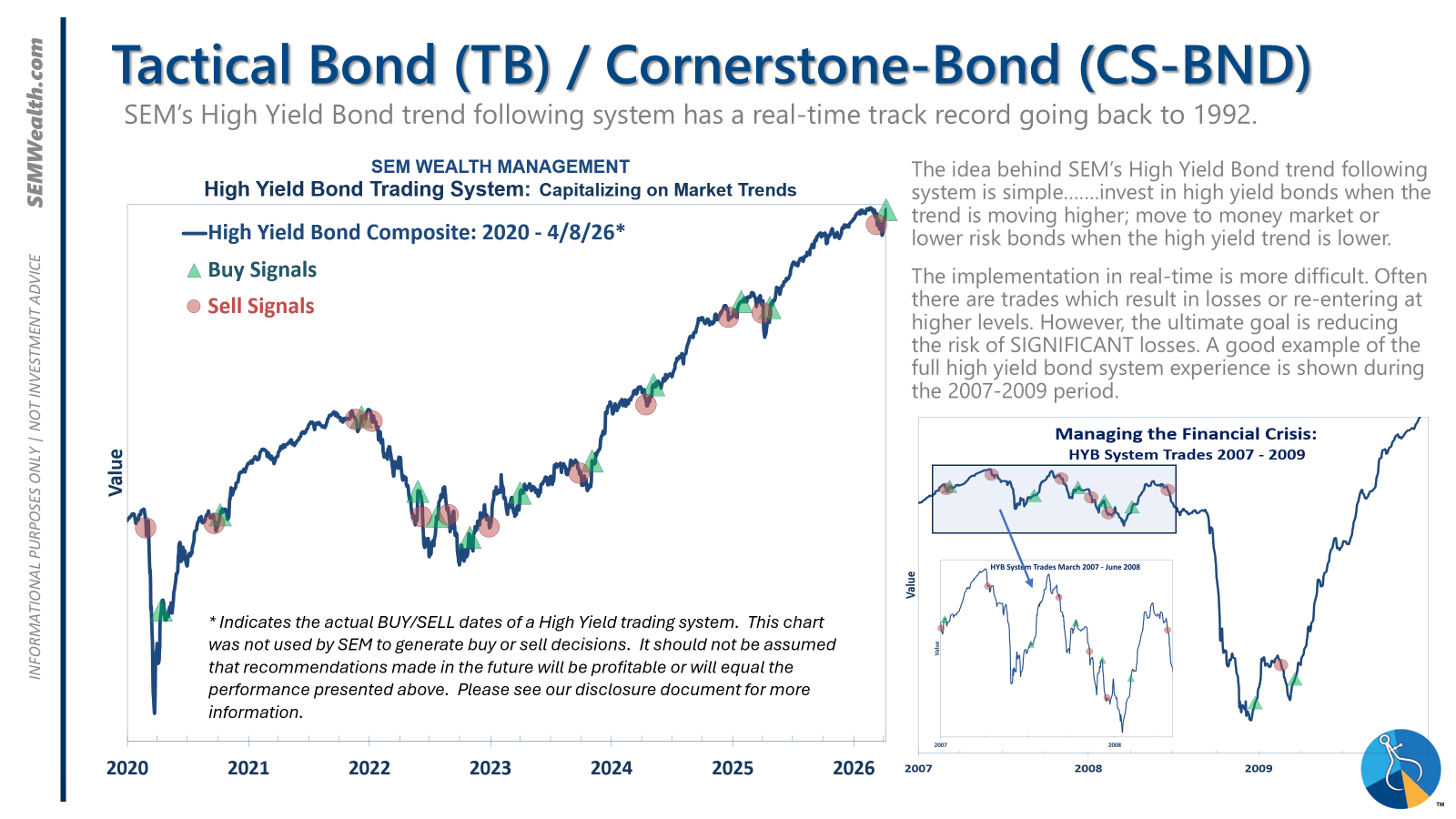
- Tactical = BULLISH | 100% High Yield Bond (4/8/2026) | High-yield spreads remain narrow but trend is slightly higher
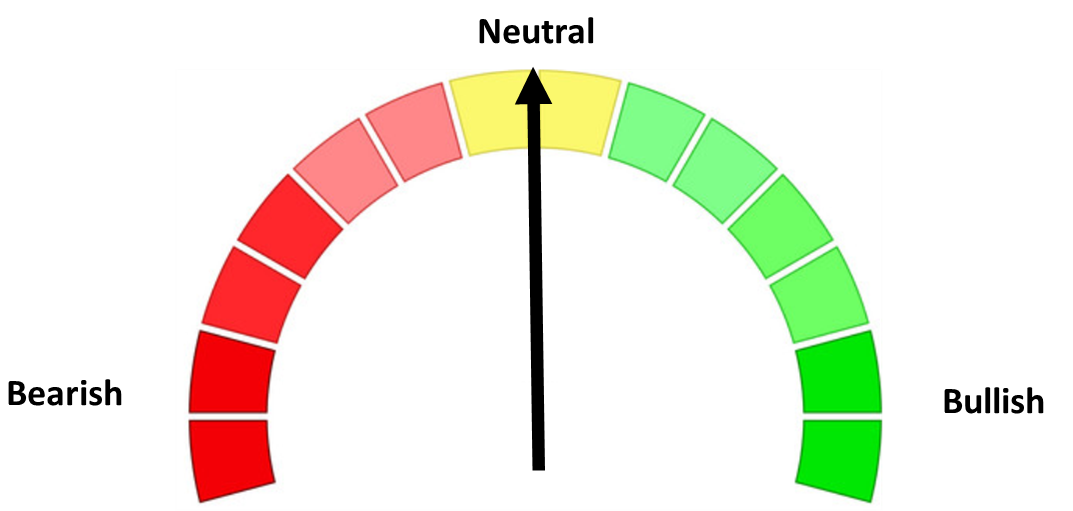
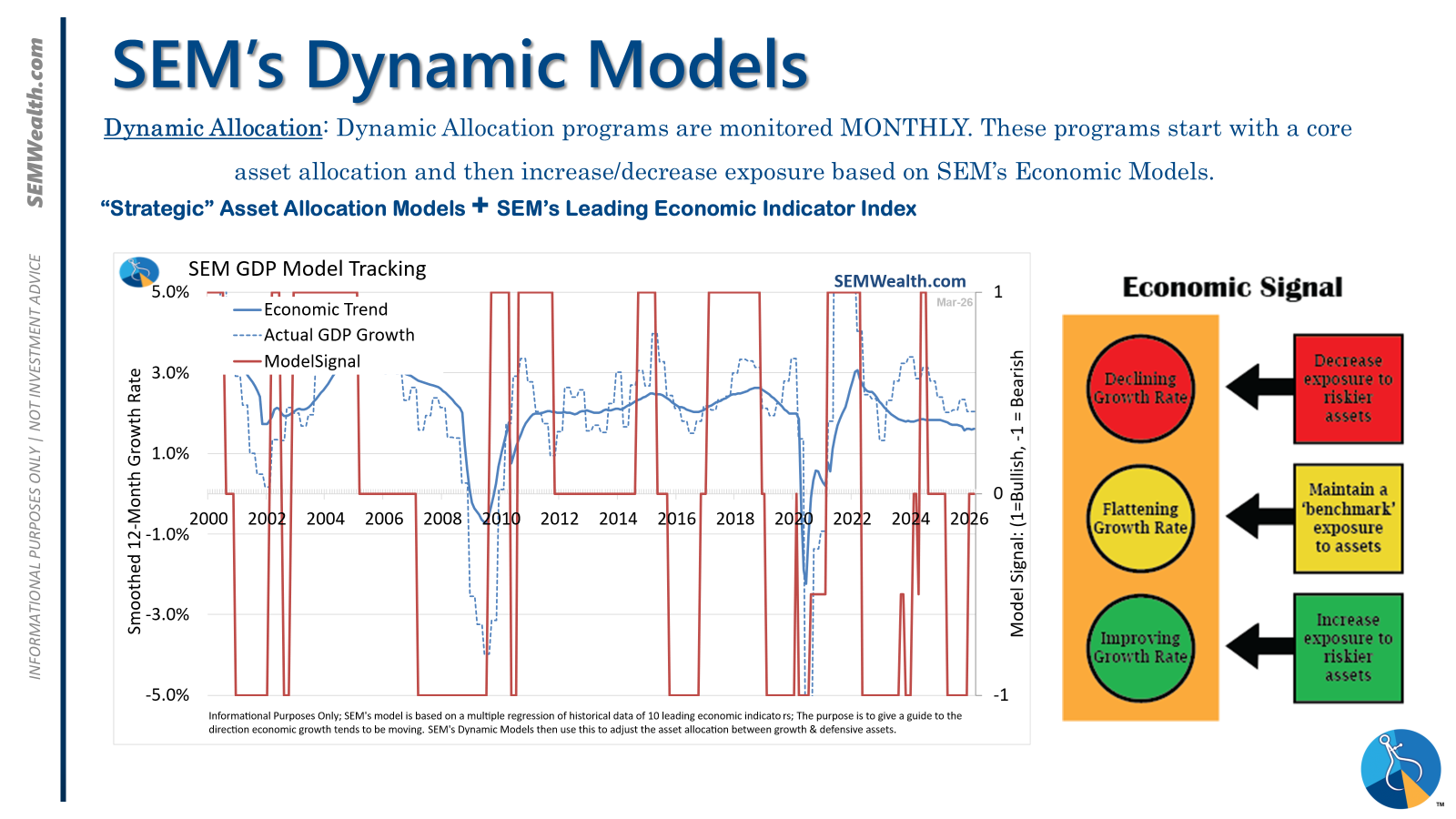
- Dynamic = NEUTRAL (2/15/2026) | "Benchmark" Allocation | Economic model inconclusive
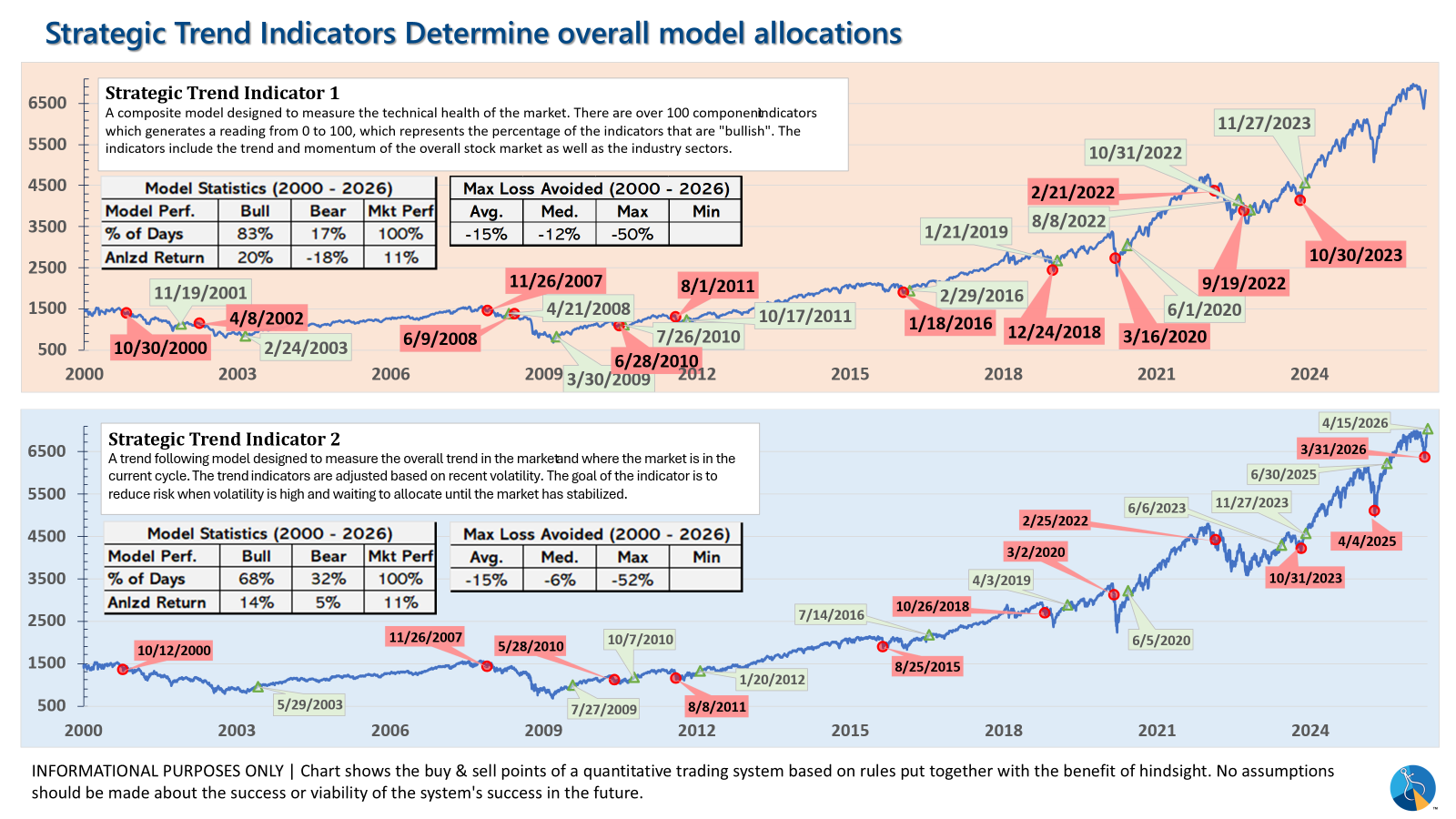
- Strategic = BULLISH (4/15/2026) | V-Bottom projecting "end" of Iran War
Tactical (daily):
- Monitored DAILY
- Models: Tactical Bond, Cornerstone Bond, Income Allocator, Tax Advantaged Bond
- Designed to follow the trends for use in our lower risk models
- BUY Signal issued April 8, 2026 (exiting the sell from March 13)
Dynamic (monthly):
- Monitored MONTHLY
- Models: All "Dynamic" Models (Income, Balanced, Growth, and Asset Allocator)
- Uses SEM's Quantitative Economic Model
- Designed to overweight riskier assets if economic trend is higher & underweight those assets if economic trend is lower.
- NEUTRAL signal issued February 15, 2026 (following BEARISH signal from July 2025)
Strategic (quarterly)*:
- Monitored QUARTERLY
- Models: AmeriGuard (Balanced, Moderate, & Growth) and Cornerstone (Balanced & Growth)
- Core Component: Quantitative Filter using 4 different time horizons across universe of asset classes
- Trend Indicator: Two different Quantitative Systems monitoring the intermediate-term trend, health of the market, and volatility
- CORE has been overweight small cap and international since October 2025 – overweight increased slightly in January
- Both TREND INDICATORS are BULLISH following 10% drop and "V-Bottom" reversal in early April
- AmeriGuard & Cornerstone Max DO NOT use the Trend indicator and are always 100% invested in stocks using our CORE rotation model.
The core rotation is adjusted quarterly. This quarter we saw half of our international positions reduced (we sold developed markets and kept our emerging markets exposure). We also saw the remaining share of mid-cap reduced in favor of more small cap exposure. We remain with a "barbell" core portfolio – about half in large cap and half in small cap as the models expect the market to "broaden".
The * in quarterly is for the trend models. These models are watched daily but they trade infrequently based on readings of where each believe we are in the cycle. The trend systems can be susceptible to "whipsaws" as we saw with the recent sell and buy signals at the end of October and November. The goal of the systems is to miss major downturns in the market. Risks are high when the market has been stampeding higher as it has for most of 2023. This means sometimes selling too soon. As we saw with the recent trade, the systems can quickly reverse if they are wrong.
Overall, this is how our various models stack up based on the last allocation change:
Curious if your current investment allocation aligns with your overall objectives and risk tolerance?