The Bond Market Takes the Wheel
If you only looked at the stock market, it was a relatively quiet quarter. The S&P 500 gained a couple of percent for the quarter and around 12% for the year (as of 9/28). Underneath the surface, it was anything but quiet. The market spent the summer sorting the AI winners from losers. Small-cap stocks (the big winners of the first half) gave back a big chunk of their gains in September.
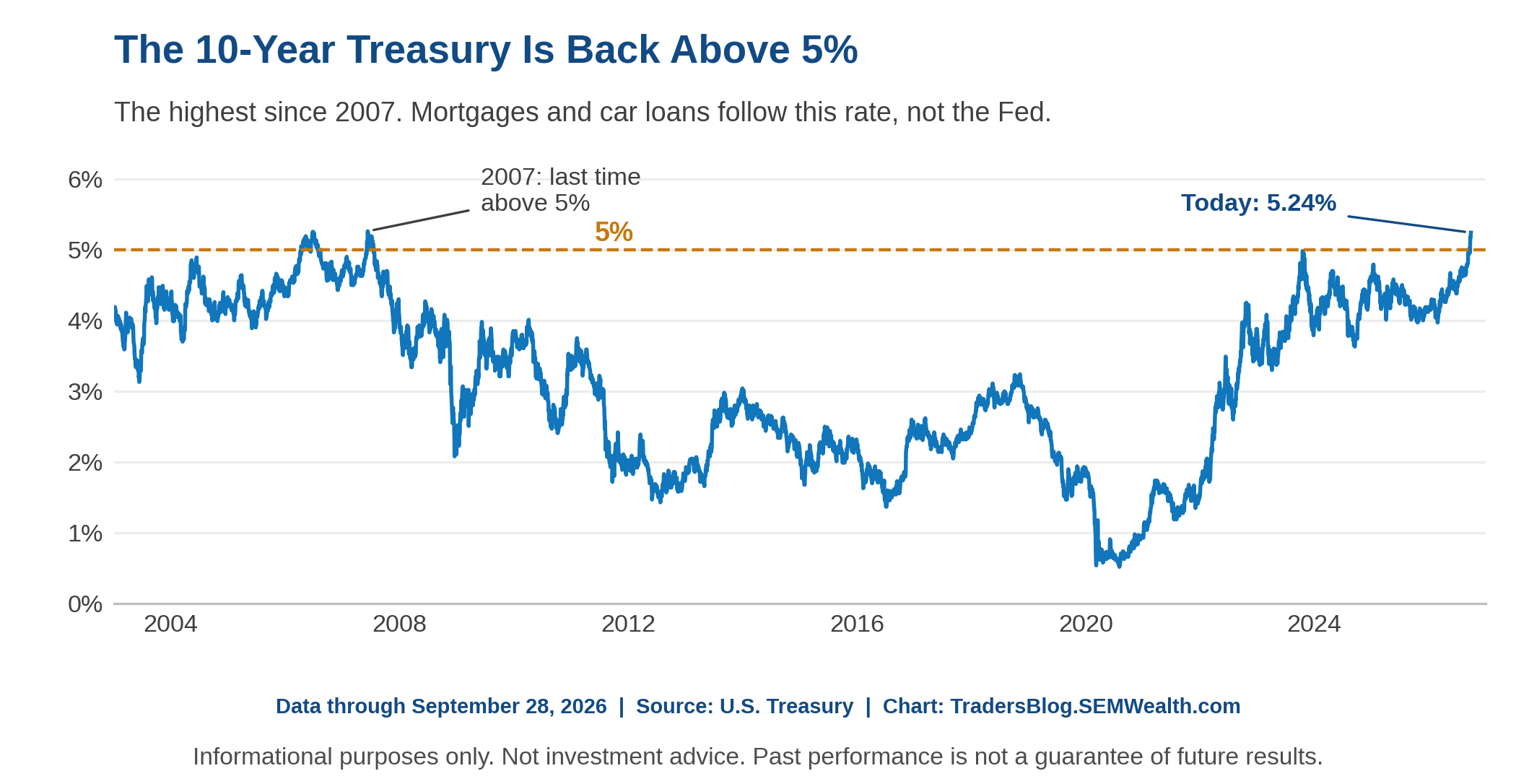
The real story was in the bond market. The 10-year Treasury yield climbed above 5% for the first time since 2007, and mortgage rates are back around 7%. In September, the Federal Reserve RAISED interest rates for the first time since 2023 and said it expects one more increase this year.
Why does that matter? The rates most of us actually pay (mortgages, car loans, credit cards, and business loans) follow longer-term rates, which the Fed doesn't control. If they stay high long enough, they slow the economy. So far the economy is holding up and corporate profits are still strong.
The pressure on yields did impact one of our models. Our Tactical (high-yield bond) system moved to money market on September 24. That isn't necessarily a crash prediction, but rather the system doing its job when the trend in riskier bonds turns lower. It can jump right back in when the trend improves.
For the latest market updates Subscribe to the TradersBlog.SEMWealth.com
Should I be invested in AI?
This is the question we continue to hear the most. The honest answer: you probably already are. Technology is now a bigger share of the S&P 500 than at the peak of the 1999 tech bubble, so a typical index fund or 401(k) option already has a lot riding on AI.
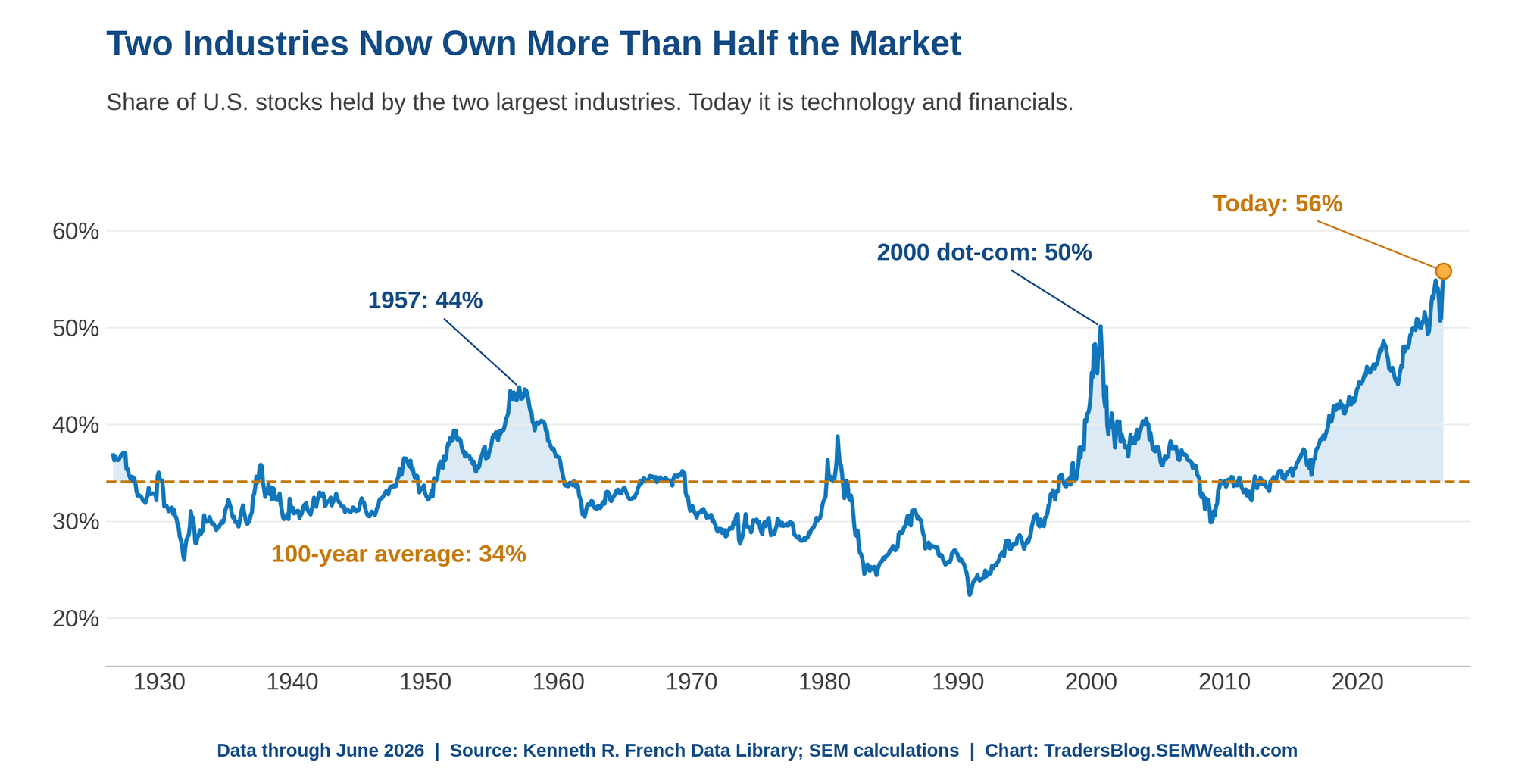
So the real question is, "Should I have more AI?" Like every "should I be invested in..." question, the answer comes down to three things:
1.) Financial Plan (when will you need the money?)
2.) Cash Flow Strategy (are you adding money or taking it out?)
3.) Investment Personality (could you sit through a 35–50% drop without selling?)
Money you won't touch for 15 years or more can ride out a lot of fluctuations. Money you'll need in the next 3 to 7 years can't. If your plan hasn't changed, your allocation probably shouldn't either. Included in this newsletter is our annual "Suitability Standard," making this the perfect time to let us know if anything in your life has changed.
AI: Boom, Bubble, or Both? One Year Later
Our fall newsletter last year asked whether AI stocks were a boom, a bubble, or both. Our answer was "both." A year later we'd give the same answer, just with much bigger numbers.
Since 2022 companies have spent roughly $1.6 TRILLION building AI data centers, chips and the power to run them. The revenue AI has brought in so far is closer to $0.2 trillion. That huge gap is the bet.
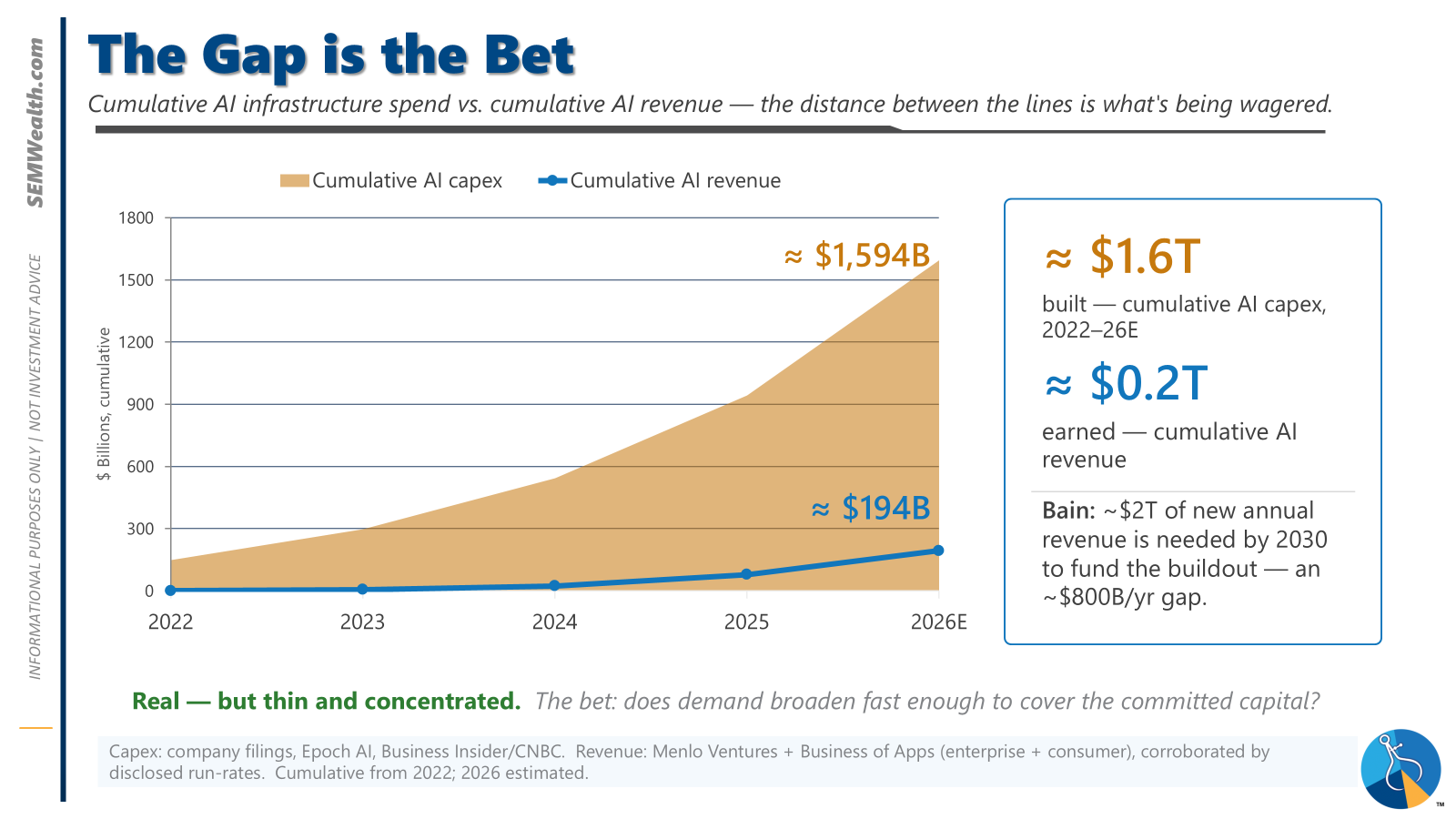
The "boom" side is most certainly real. Millions of people use these tools every day (I'm one of them). Corporate earnings have been exceptional ("jaw-dropping" is a term I’ve used frequently). Importantly, some of what's being built keeps its value no matter who wins. Power plants and transmission lines built for the data centers will still be useful in 20 years.
The "bubble" side is real too. More of the spending is now paid for with borrowed money and creative deals, including chip makers helping finance their own customers (or receiving stock in private companies instead of cash). History says not everybody wins. If you bought the five biggest technology stocks at the end of 1999 (Microsoft, Cisco, Intel, Oracle and IBM), you lost roughly 70% by late 2002 and waited over a decade to get back to even. The technology those companies represented changed the world, but the stocks just got (way) ahead of the payoff.
I joined SEM in 1998. I vividly remember how impressive the earnings reports were in April 2000, right before the bust. Great earnings and an overheated market can happen at the same time.
We won’t know until we have the benefit of hindsight whether we are being overly cautious or got swept up in the hype. Despite the rapid developments of the past year, nothing has changed in our analysis. Importantly, despite our cautious stance, our long-term focused models are still participating in the AI-fueled rally. Even more importantly, each of the models has triggers and mechanisms to adjust our allocations when the DATA tells us to make a change.
Bonus Content
AI's Growing Pains: Safety, Power Bills and the Neighbors
Two new risks emerged last quarter which could threaten the speed and costs of the AI Buildout.
AI Safety: On September 12, within hours of each other, the heads of three of the biggest AI developers (Anthropic, OpenAI and xAI) said the AI race needs to slow down. The headlines sounded dramatic. If you read what they actually proposed, it was checkpoints (independent reviewers checking new models before they're released), not a slowdown in spending. I like to think of it like crash-testing cars before they leave the factory. The cynic in me (and many others) says these companies are writing their own rules before the politicians write them. Either way, the spending plans didn't change, and spending is what we watch.
Neighbors: According to Gallup, about 7 in 10 Americans oppose a data center being built in their own community. Where I live there are nearly as many "No Data Center" signs than political signs, which is saying something! The number one reason is the strain on local resources (electricity and water). That opposition crosses party lines. Regarding electric bills, the research is mixed. Through 2024, data centers actually helped lower average electric rates in many states by spreading the cost of the power grid across more customers. In places already short on power, like the mid-Atlantic, bills went up. This could spread as demand keeps growing. We now are seeing some states pushing back. Ohio now requires data centers to pay for most of the power they reserve, and one large project there is paying for its own transmission lines rather than passing that cost to homeowners.
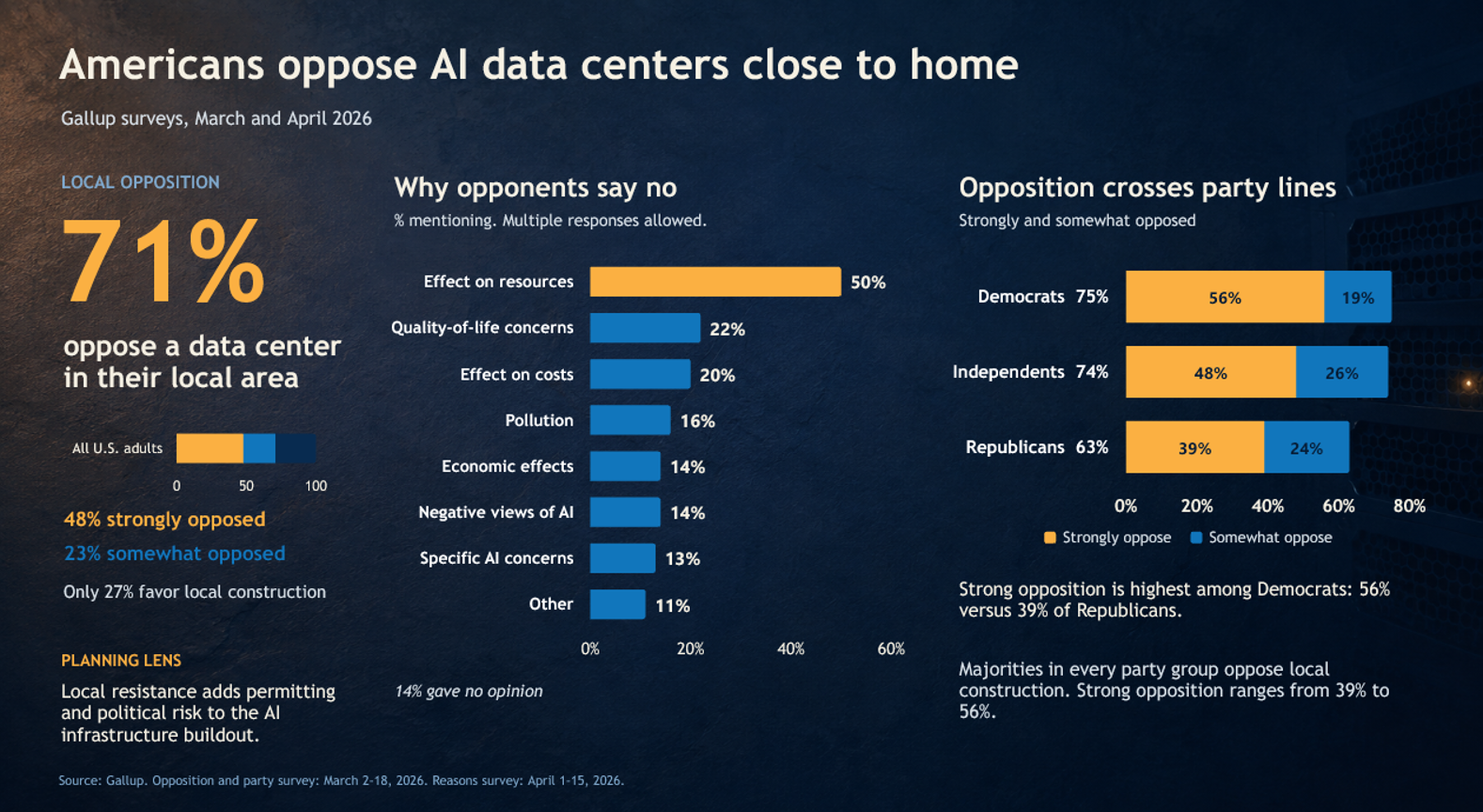
Why this matters to your investments: The spending on data centers has been one of the biggest things holding up economic growth the past two years. The real risk from safety rules and local opposition isn't that people stop wanting AI. It's delays: permits, lawsuits and pauses that push spending out. Delays can hurt the companies that borrowed heavily expecting the money to come in on schedule. Higher costs can extend even further the "payoff" of the huge investments being made to win the AI race.
We don't have to predict how these debates end. We watch the DATA and overall market TRENDS and let those drive our decisions.
Why Are Interest Rates Going UP?
One question we hear frequently this quarter was, "Why are interest rates going up?"
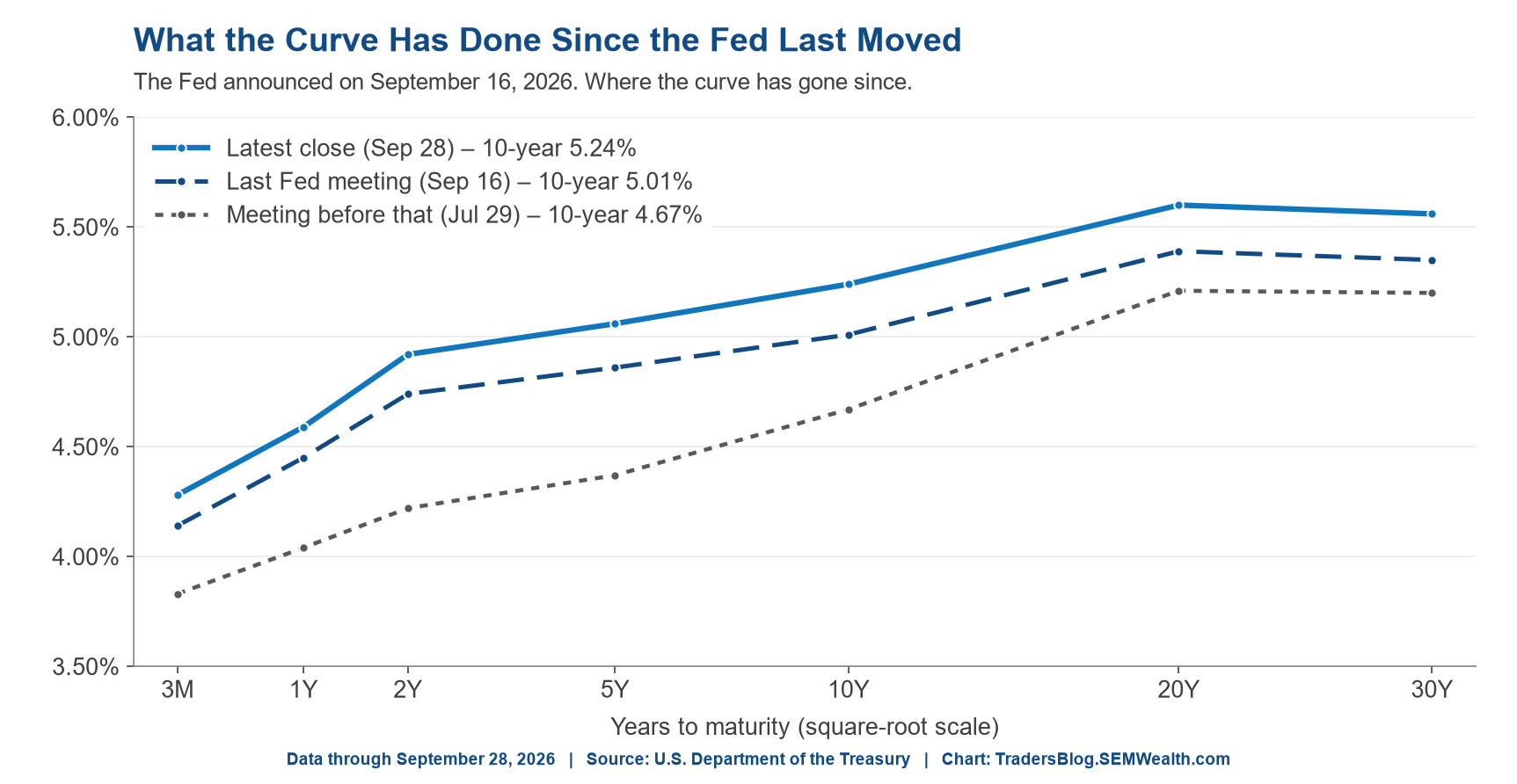
Many people believe it is the Federal Reserve causing this, but it helps to remember the Fed only controls SHORT-term rates. The rates that matter most to households (mortgages, car loans, etc) are set by the bond market, which follows the 10-year Treasury. That yield climbed above 5% this quarter for the first time since 2007.
Part of the reason is inflation. Depending on who you ask, inflation is coming down, it's temporarily high because of the war in Iran, or it's becoming "sticky" as the AI buildout drives up prices for power, materials and labor. You can make a case for all three. I've said many times I'm glad I'm not the Fed chair. For more, see the blog post below.
 Jeff Hybiak, CFA
The bigger reason is something else. The 10-year yield is made of two pieces: what investors expect inflation to be, and the extra return they demand on top of inflation. Inflation expectations have barely moved. Almost all of the recent increase is the extra return. That can happen for good reasons (a stronger economy) or not-so-good ones. The one that worries us: investors want to be paid more to lend money to a government with too much debt, inflation that's too high, and little being done to fix either. That's what some call the "debasement trade." (click here for a breakdown of what this means)
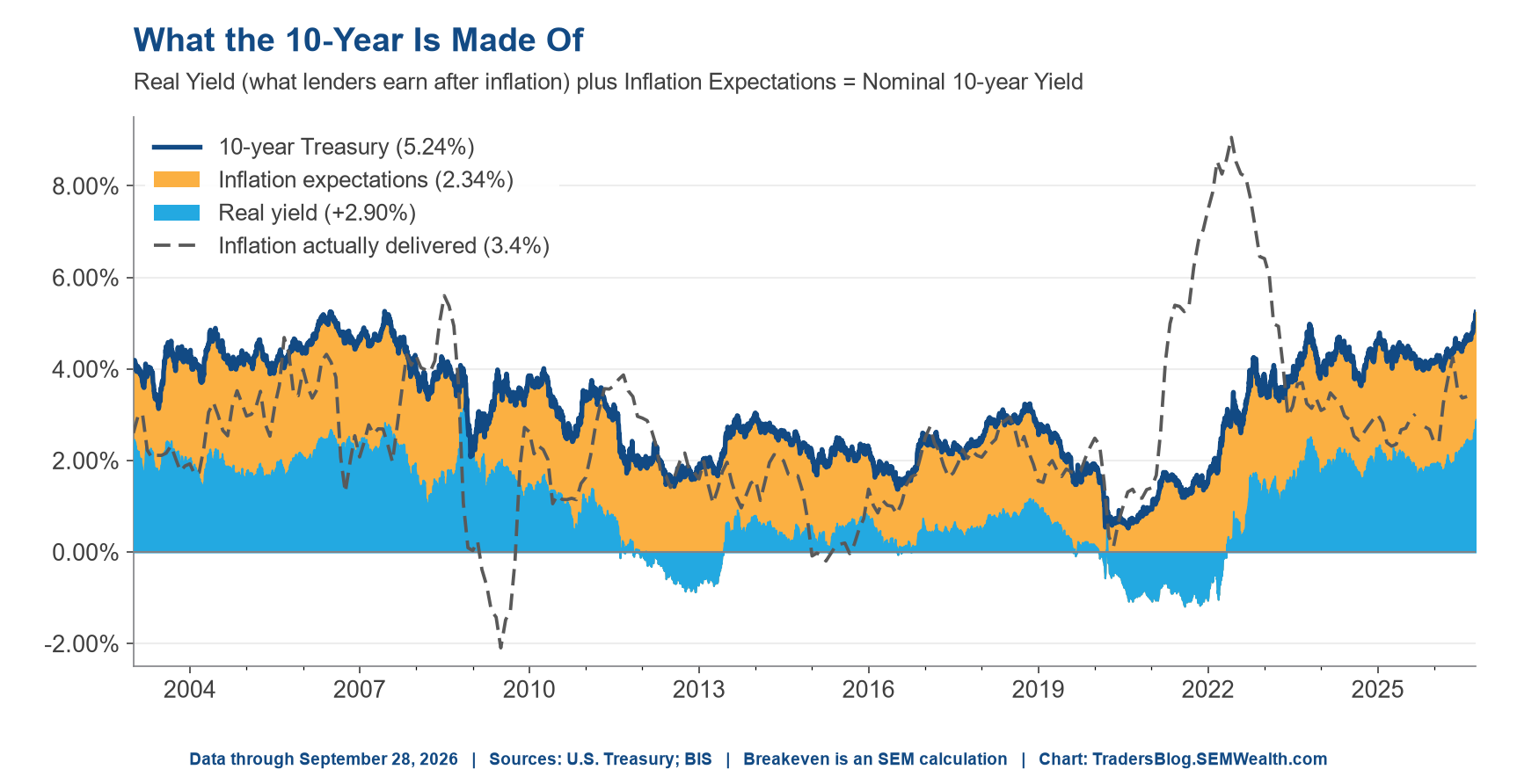
We've said for months that once the Fed gets serious about inflation, long-term rates should eventually come DOWN. After the September hike, the 10-year went up instead. One reason for this move higher is continued high prices for oil due to the war in Iran. Nobody knows for sure when that will be over, so it is a reminder the Fed can't fix our inflation or debt problems on its own.
The silver lining. For the first time in a long time, savers are getting paid. Money market funds, CDs and high-quality bonds are paying more than inflation. For retirees and conservative investors that's a genuine opportunity, brining us to our next article.....
Should I Lock In 5%?
For the first time since 2007, a 10-year Treasury bond pays more than 5%. CDs and money market funds are paying well too. We're hearing a new version of an old question: "Should I just move everything into bonds and lock it in?"
Like every "should I be invested in..." question, it depends on your plan.
When it makes sense. If you know you'll need a certain amount of money over the next several years (to supplement Social Security, or to cover a planned expense), locking in a known yield for that portion is reasonable. That's the whole idea behind the "buckets" in your financial plan. Money you need soon shouldn't be exposed to the stock market (ask your advisor about SEM's CASH Model as a possible solution).
What about a bond ladder? We've had clients ask us about a bond "ladder" (buying bonds that mature one after another) locks in a known yield, which is fine. It's still buy-and-hold, though. If rates keep rising or companies start having trouble paying their debts, a ladder just sits there. Inflation matters too. A 5% yield with 3% inflation is about 2% of real growth before taxes. That's good for safety money. It's not enough to fund a 25–30 year retirement on its own.
How we approach it. We've never been fans of simply buying and holding bonds. Our bond models follow the trend and can move to the safety of a money market when conditions turn. That's exactly what our Tactical system did on September 24. It won't always be right (sometimes it gets out early and jumps back in), but the goal is avoiding the BIG losses. It's also sitting in a money market (as of the end of the quarter) currently. If the Fed keeps raising rates, that yield goes higher.
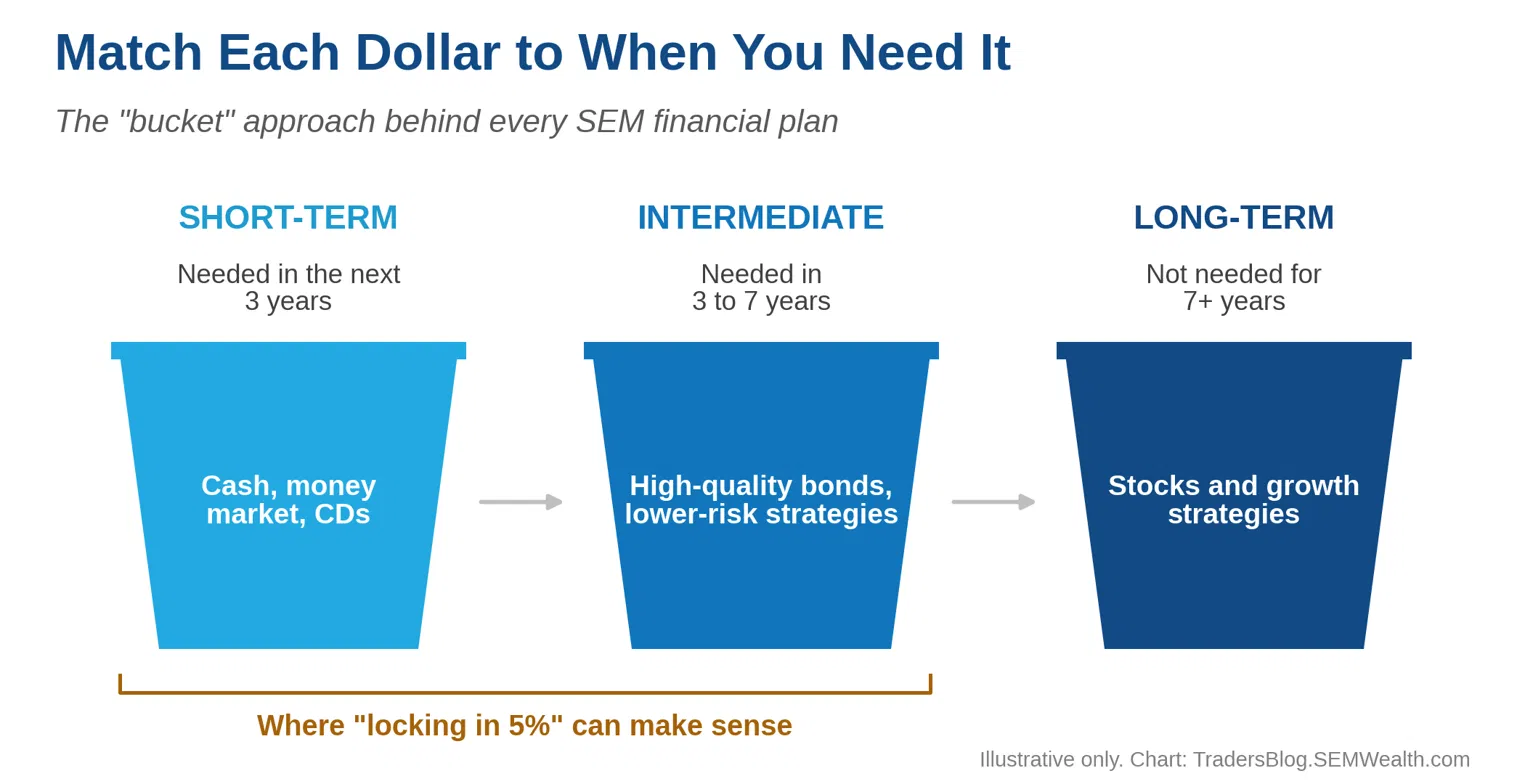
The right mix depends on your time horizon, your withdrawals and your investment personality, not on what rates happen to be this month.
If you would like a personalized review of your portfolio, go to Risk.SEMWealth.com
More on AI
This year our blog has spent A LOT of time on AI. That isn't because we're against the technology. I use these tools every day, and so does our team. It's because the amount of money involved is bigger than anything we've seen in my career (which began during the last tech boom). Here's a more simple guide to some of what we've written, with the links if you want to go deeper.
Why does it matter how the spending is paid for? For the first couple of years, the giant tech companies paid for data centers out of the cash their businesses were already generating. That's the healthy way to do it. This year the bill got bigger than the cash for some of the builders. Several of these companies are now spending more than they bring in and borrowing the difference. Most of their future commitments sit in long-term leases that don't show up on the balance sheet at all. We walked through all of it in The Everchanging AI Landscape, which we keep updating as things change.
The car-loan comparison. Decades ago GM created a finance company, GMAC, to lend customers money to buy its cars. It worked great, until it didn't. Today the biggest chip maker, Nvidia, is doing something similar: helping to guarantee financing for the data centers that buy its chips. That isn't automatically bad. It does mean that if the customers struggle, the chip maker shares the pain. We covered this in Hidden Dangers and The Fine Print.
Why earnings can be great and stocks can still fall. This summer several of the biggest companies beat their earnings estimates and their stocks still dropped, because investors were worried about how much more they planned to spend. The market has moved from "everybody wins" to picking winners and losers. See The AI Poker Game.
Safety and the neighbors. When the heads of the leading AI companies said in September that the race should slow down, it sounded like big news. What they proposed was outside checks before new models are released, not less spending. In our September 14 post I said the headlines would likely be "more noise than necessary" and that spending is the place to watch what companies are ACTUALLY doing. That's still our view.
The part I like. Not everything about the buildout worries me. One of the projects we studied in Ohio is cleaning up an old uranium plant site, paying for its own power lines instead of passing the cost to local homeowners, and adding new power plants to the grid. After the 1999 bubble, most of the fiber-optic cable laid was never used. Power is different. A power plant stays useful no matter which AI company wins (I discuss this in more detail in The Everchanging AI Landscape).
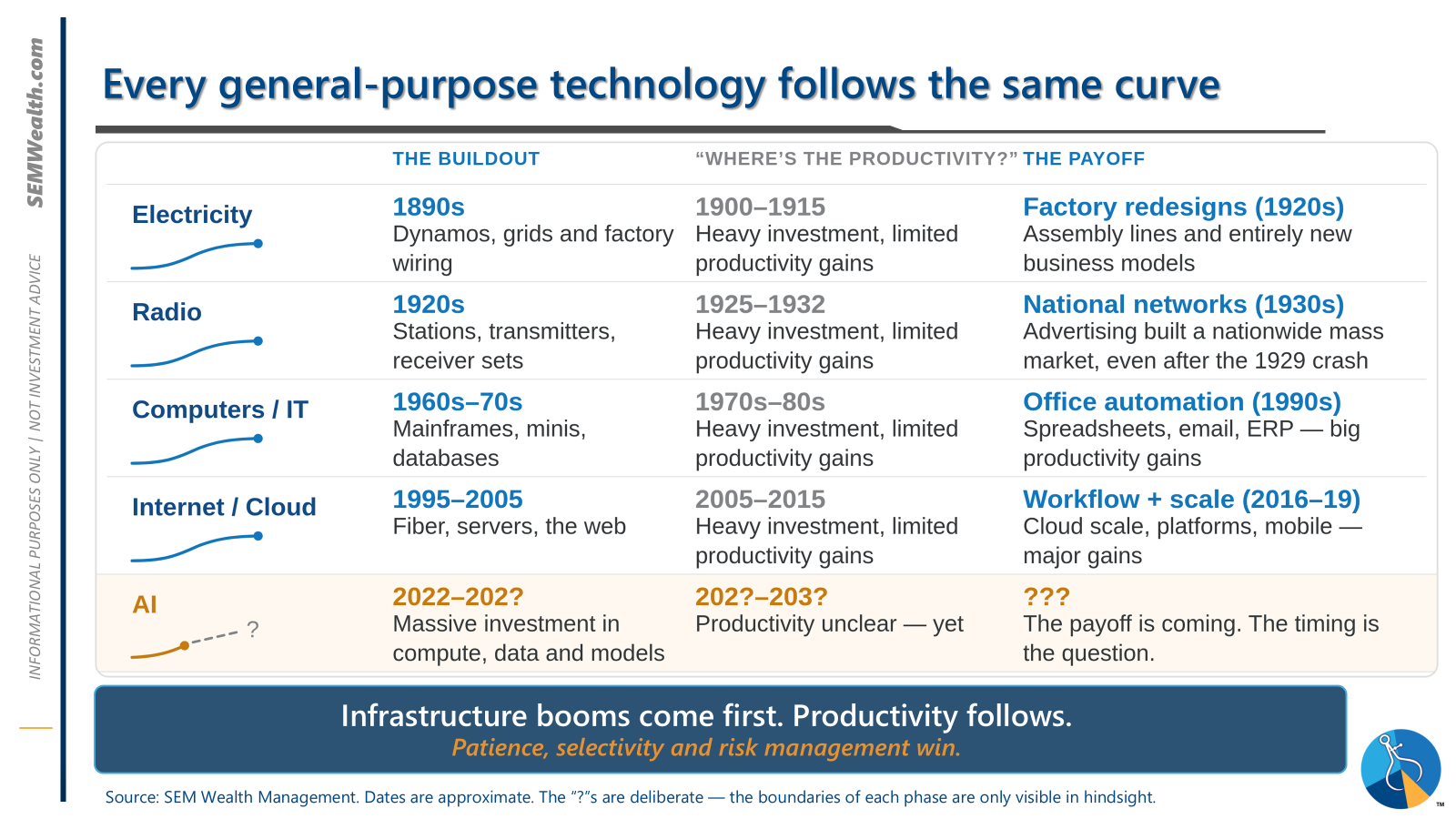
What would change our mind? We're watching four things: whether spending spreads beyond the handful of giant companies, whether businesses using AI actually earn more, whether orders turn into revenue, and whether worker productivity picks up. If those turn higher, we'll happily say we were too cautious. It wouldn't be the first time.
More on interest rates and inflation
Headline vs. "core" inflation. You'll hear two inflation numbers. "Headline" is what we actually pay. "Core" leaves out food and energy, which happen to be a big chunk of the budget for most families. Core inflation looks better lately. Headline is still above 3%, mostly because of energy. We broke the numbers down three ways in
Why the AI buildout can push prices up. Computers and computer parts are a category where prices almost always FALL. This year they're rising, because data centers are buying up everything they can get. The same goes for electricians, copper, transformers and power. That's one reason some economists think inflation is becoming harder to get rid of.
Short-term vs. long-term rates. The Fed sets the rate banks charge each other overnight. Everything longer (10-year Treasuries, 30-year mortgages) is set by investors. Those investors look at inflation, economic growth, and how much the government needs to borrow. In The Fine Print we explained the "debasement trade": when a government keeps borrowing heavily even when the economy is doing fine, investors start asking for more interest to protect themselves. The U.S. is running deficits we'd normally only see in a recession, while unemployment is near 4%. Interest on the debt is now back to the level of the early 1990s as a share of the economy (more than we spend on defense). This isn't a political point. Both parties got us here. It's a math point.
Who owns all these bonds? You may have heard that foreign countries are "dumping" Treasuries. They aren't. Foreign investors own more U.S. debt than ever. The government has simply borrowed faster than they've bought. Hedge funds now own a big slice, often with borrowed money, which can make the bond market shakier when things get tense (as happened in March 2020).
What this means for you. Higher rates are painful for borrowers and for stocks of smaller companies that rely on loans. They're good news for savers. A retiree can now earn more than inflation in very safe investments, something that wasn't possible for most of the last 15 years. The key is matching those investments to the part of your plan that needs safety.
Should I Be Invested in...? Part 2
Every quarter someone asks us whether they should be invested in something: more stocks, AI stocks, bonds at 5%, gold, a private fund, the latest IPO. Our answer never changes, because it doesn't depend on the headlines. It depends on three things:
1.) Financial Plan (what is the planned use of the money, and when will you need it?)
2.) Cash Flow Strategy (when, and how much, will you be taking out?)
3.) Investment Personality (can you handle the inevitable recessionary bear market?)
Why the timing matters so much. Stocks have done well over the long run, averaging roughly 10% a year for 100 years. There has never been a 15-year period where stocks lost money, including the Great Depression. There HAVE been 10- and 12-year periods where they did. If you started investing at the beginning of 1998, you were still underwater a decade later. That's why someone with a 15+ year horizon and a strong stomach should be heavily invested in stocks, while someone retiring in the next few years probably shouldn't be.
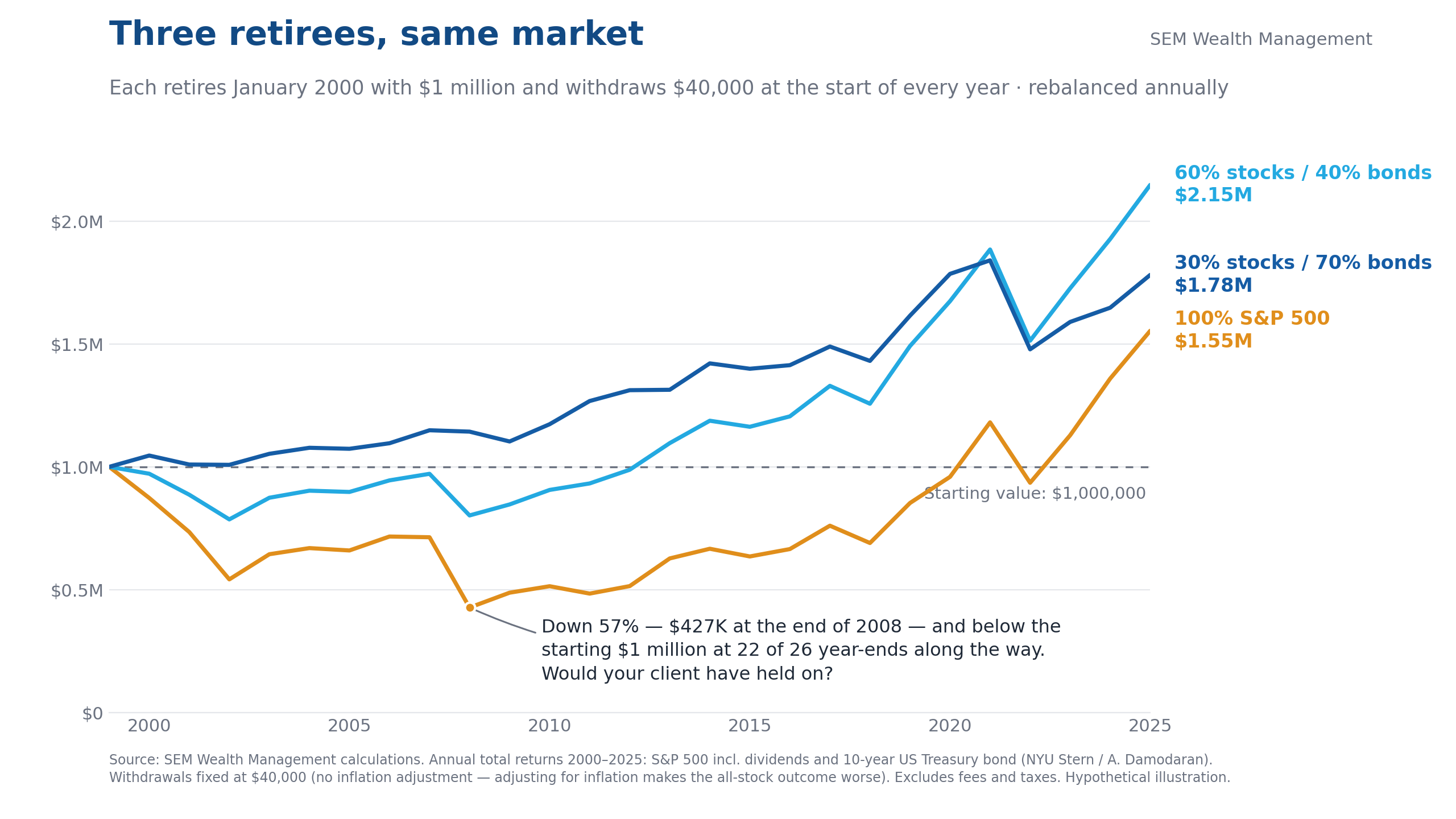
A lot of people are taking more risk than they realize. Vanguard's data shows people aged 60–64 hold about 64% of their retirement accounts in stocks, well above the roughly 48% Vanguard's own glide path recommends. A 50% stock market drop would cut that account by about a third right at retirement. We talked about this in 1999ish and in our summer newsletter on what happens when you don't rebalance.
Think of above-average returns as a BONUS. Stocks have returned well above average for several years. That's great, but it isn't a new normal. Markets have always gone back toward their long-term average, usually through a sharp decline rather than a gentle slowdown. Taking some of those bonus returns off the table (or making sure your portfolio has a way to manage risk) is how you keep them.
Your suitability update. This quarter we included "the suitability standard" in the printed newsletter. Please don't just file it away. If anything has changed (a new retirement date, a big expense coming up, a change in income, or simply that this year's headlines have you losing sleep), tell us. The best time to adjust a plan is before the market forces you to.
The best place to start is our risk questionnaire at Risk.SEMWealth.com. It kicks off an automatic portfolio review that goes to your SEM financial advisor for discussion.
SEM Model Positioning (end of Q3 2026)
SEM uses three different model styles. Here's where each stands as the fourth quarter begins.
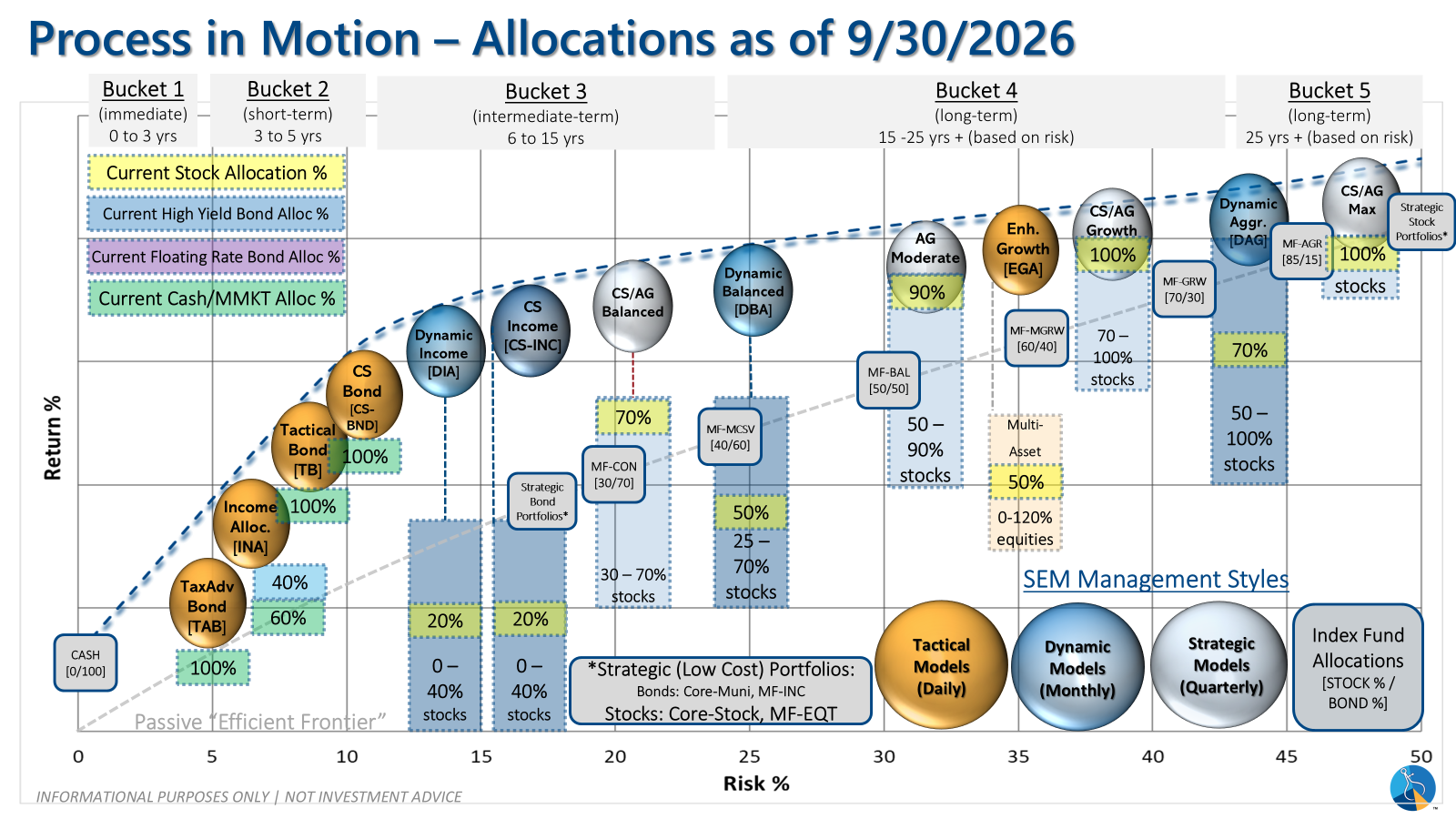
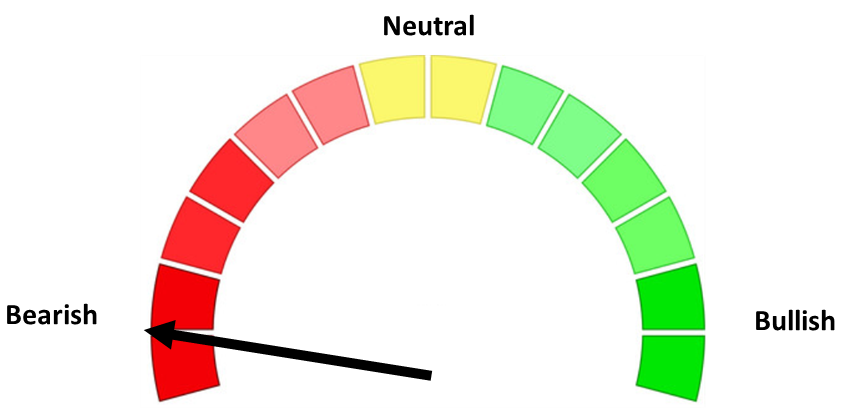
Tactical (monitored DAILY; Tactical Bond, Cornerstone Bond, Income Allocator, Tax Advantaged Bond). SELL signal on September 24, 2026, moving from high yield bonds to money market. This ended the buy signal from April 8, 2026. The system follows the TREND in high yield bond prices, which is driven by how the market sees the economy, not by what the Fed does. It will sometimes get out early and jump right back in. The goal is avoiding the large losses that come when the economy truly turns.
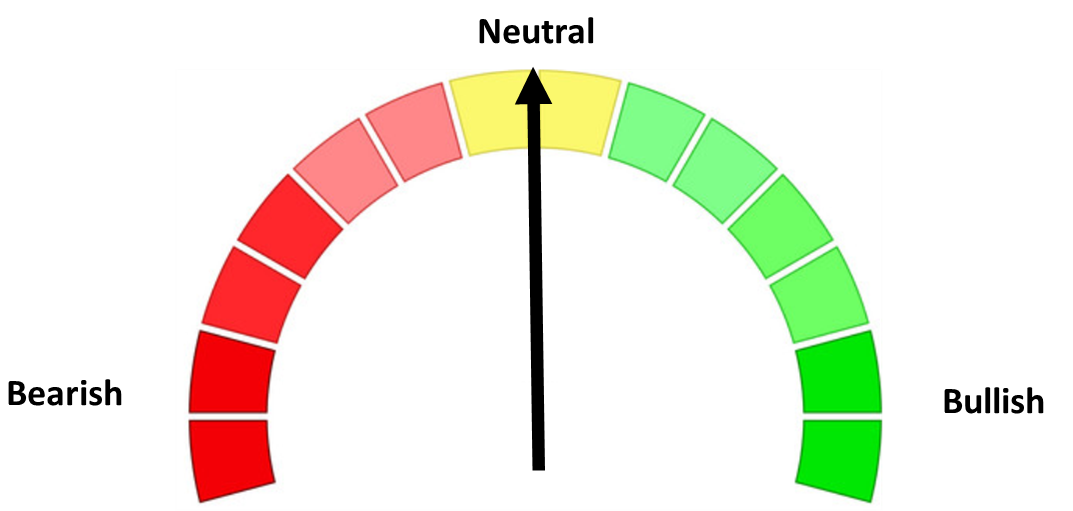
Dynamic (monitored MONTHLY; Income, Balanced, Growth and Asset Allocator). NEUTRAL since February 15, 2026. SEM's economic model sees the economy growing at roughly an average pace, so these models sit at their "benchmark" allocation. Our new economic dashboard shows the economy trending slightly up in the cycle, so this could turn bullish if the improvement continues.
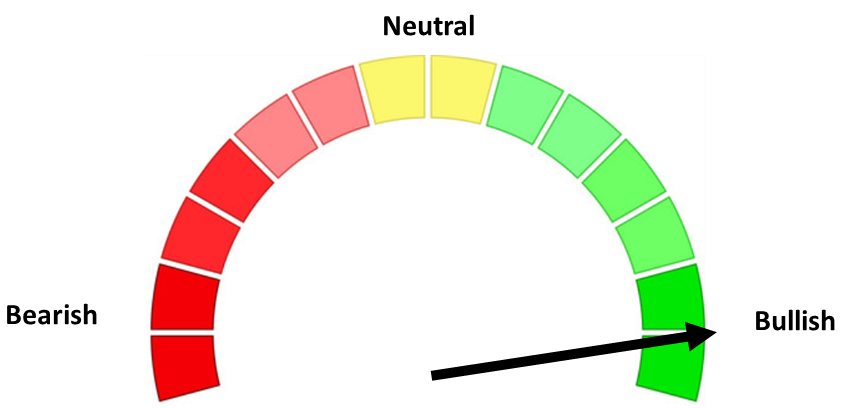
Strategic (monitored QUARTERLY; AmeriGuard and Cornerstone). BULLISH since April 15, 2026. Our core rotation system continues to favor a "barbell" of roughly half large company and half small company stocks, expecting the market to broaden out over time. It trimmed international exposure (keeping emerging markets) during the last rotation.
The Suitability Standard
In order to fulfill our role as an Investment Advisor, SEM requests certain financial information for the client accounts we manage. This information is important for the management of your account, and we request clients to contact their financial advisor within 90 days if there are any changes to their financial situation.
We are asking clients to complete the information online through our website. Your responses will be shared with your financial advisor and reviewed to ensure the investments match the financial profile. To do this clients can go to risk.semwealth.com or click on the “Take Our Risk Questionnaire” at SEMWealth.com. If we do not receive a completed questionnaire by 12/10/2026 we will assume your information on file is current.
Creating a Customized Solution
Every investor has a unique set of circumstances that makes it difficult to find a pre-packed solution. SEM offers a wide range of investment models that are designed to be risk efficient for a broad range of investors. The key to long-term investment success is allocating your assets to the portfolio that best suits YOUR individual needs.
Step 1: Determine Your Time Horizon
Investing involves risk. Risk is essentially the volatility of returns during the time it is invested. While over the long-run an investment may have superior returns, over short periods of time the returns may be negative. The shorter the time horizon, the less risk a portfolio should have. Keep in mind different portfolios may have different time horizons based on the purpose of the funds. For investors taking income from their portfolio, separating the income portion into its own portfolio is a popular strategy.
Step 2: Determine Your Risk Tolerance
Risk tolerance is generally thought of how much risk an investor is WILLING to take. This is certainly an important determinant, but it is typically driven by EMOTIONS. Often investor feelings toward risk fluctuate with the direction of the market. The more important determinant is the ABILITY to take risk. The ability to take risk is determined by data, not emotions. While time horizon is one portion of a portfolio’s ability to take on risk, other determinants are based on the individual situation.
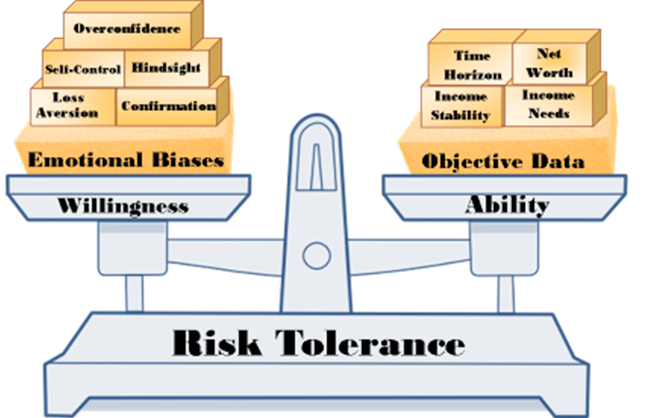
There are numerous questionnaires, including SEM’s, available to determine the WILLINGNESS to take risk. Your advisor can look at your overall situation to help you determine your ABILITY. Like Time Horizon, portfolios can be separated into different portions based on the purpose and objectives for that money.
Step 3: Understand Your Personality
Too often our industry places clients in portfolios using a pre-determined model based on age. Our behavioral approach understands that even if you have time on your side and the ABILITY to take on risk, if you are invested in a portfolio that does not fit your overall investment personality there will be times where you are not comfortable. Typically when we are not comfortable we are more likely to make an emotional decision.
Step 4: Determine Your Customized Portfolio Blend
SEM’s Risk Questionnaire generates a blend that matches your time horizon, risk tolerance, and personality. It is designed to be a starting point with additional adjustments to be made to make the portfolio fit into the overall financial plan. You may already be in an optimized, custom blend of SEM models, but when you submit your questionnaire results SEM will send them to your advisor to review your portfolio and how it compares to your results. Upon review your advisor may work with SEM and possibly recommend a change to your investment allocations.
Understanding Your Portfolio Allocation
Creating a Customized Behavioral Portfolio
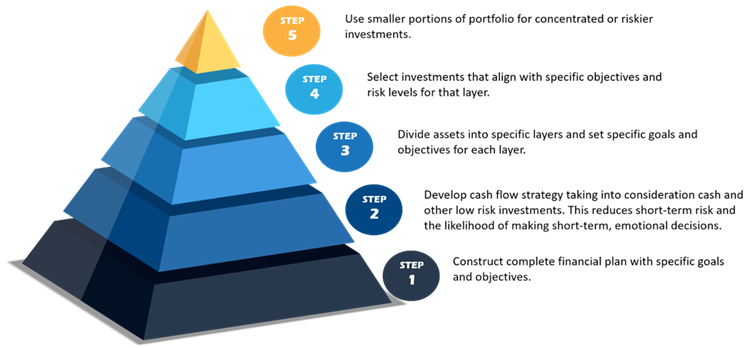
SEM works closely with our financial advisors to create a customized portfolio. We believe the strength of the portfolio starts with a solid financial plan and cash flow strategy as the foundation & then follows the steps in our Behavioral Portfolio Pyramid
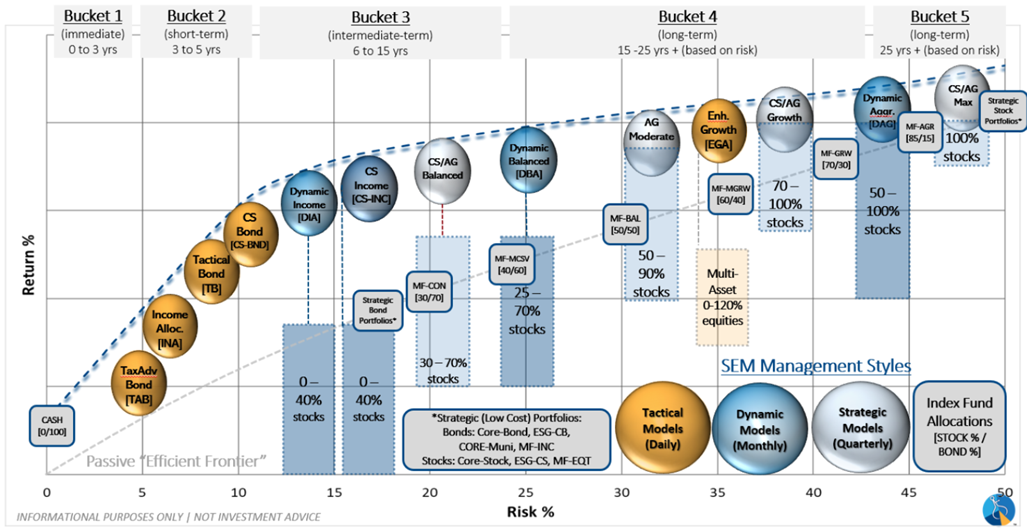
SEM’s Portfolio Building Blocks
Beginning in step 3 above, SEM works with the financial advisor to select investment models that fit the financial plan, cash flow needs, and the client’s personality. We have over a dozen building blocks to choose from across three distinct investment management styles (tactical, dynamic, & strategic). Each model has its own risk/return profile which can be blended with other models to create the customized portfolio. Each plays a different role. Note in general, the higher returns you seek, the longer time horizon you need to have, and the more risk you must be willing to accept.
Download/Print version of the Newsletter

What is ENCORE?
ENCORE is a Quarterly Newsletter provided by SEM Wealth Management. ENCORE stands for: Engineered, Non-Correlated, Optimized & Risk Efficient. By utilizing these elements in our management style, SEM’s goal is to provide risk management and capital appreciation for our clients. Each issue of ENCORE will provide insight into investments and how we managed money.
The information provided is for informational purposes only and should not be considered investment advice. Information gathered from third party sources are believed to be reliable, but whose accuracy we do not guarantee. Past performance is no guarantee of future results. Please see the individual Model Factsheets for more information. There is potential for loss as well as gain in security investments of any type, including those managed by SEM. SEM’s firm brochure (ADV part 2) is available upon request and must be delivered prior to entering into an advisory agreement.